• Skip to primary navigation
  • Skip to main content
  • Skip to primary sidebar
  • Skip to footer

Manhattan Digest

All you need to know about Manhattan culture and so much more...

  • LIFESTYLE
  • ENTERTAINMENT
  • LGBT
  • OPINION
  • TECHNOLOGY

ARTS

Theater Review: “London Wall”

by Ryan Leeds


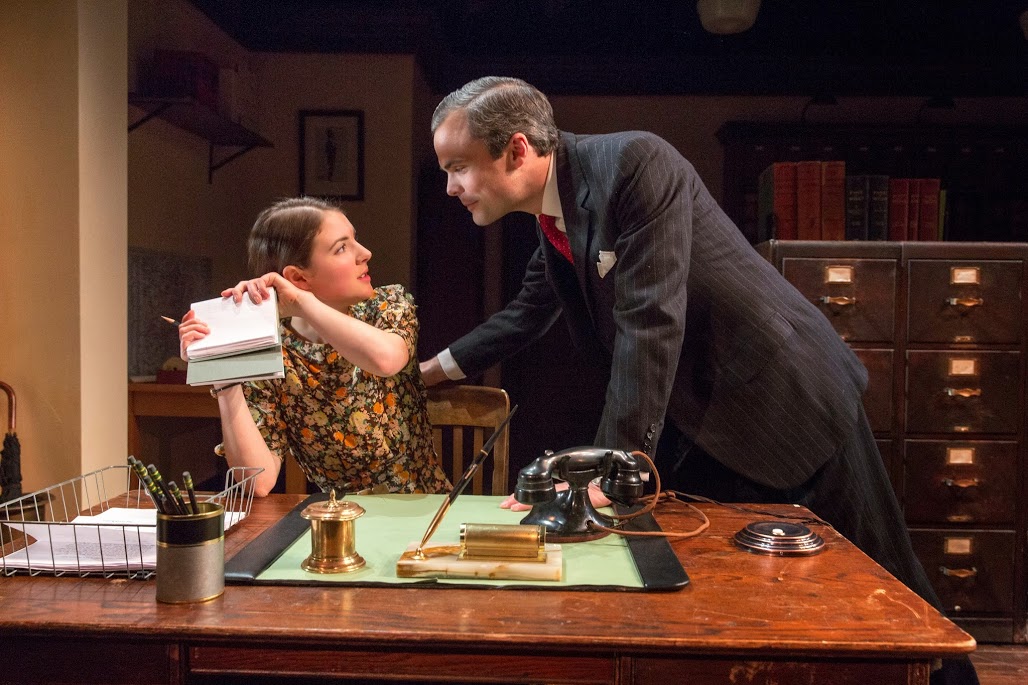
Photo courtesy of Richard Termine

Shady business is rearing its’ ugly head at the impeccably impressive law offices of Messers. Walker, Windemere, and Co.  It turns out that their boy wonder, Mr. Brewer (Stephen Plunkett) , has taken a liking to the ladies-too much in fact. The object of his affection happens to be his sweet-tempered employee, Pat Milligan (Elise Kibler), who is hesitant to accept his advances, but ultimately feels trapped. Meanwhile, the tough talkin’ “I’ve been around the block and can see through this guy like cellophane” Miss Janus (Julia Coffey) is protective of her fellow secretarial colleague. Janus has a friend in mind for Milligan, Mr. Hammond (Christopher Sears).  Hammond is much more age appropriate and not nearly as lecherous. But my oh my…is he ever shy.  Will he work up the courage to court Miss Milligan?

Such issues were at stake in the 1930s in  the Mint Theater’s charming revival of John Van Druten’s London Wall.  While a Broadway production never materialized, this law firm did open its’ practice across the pond. It opened in the West End  in May 1931, where it ran for 170 performances. Mint Theater is known for finding lesser known classic works and giving them a touch-up.  Happily, they have done a marvelous job here with capturing the essence of the period.

The first act plays out much like a more formal version of 9 to 5, but it does not move at a terribly  fast clip. Yet under Davis McCallum’s  hand, the dialogue is as frothy and light as it can be. In act two, justice does prevail and the proverbial “dog has his day.”  Along the way, there are some lighter subplots which all make for an enjoyable night at the theater.

London Wall plays  through April 13 at the Mint Theater, 311 West 43rd Street between 8th and 9th avenues. For tickets, call:  1-866-811-4111 or  visit www.minttheater.org.
Filed Under: ARTS, ENTERTAINMENT, REVIEWS, THEATRE, uncategorized

Award-Winning Literature Comes From Behind Bars

by Jessica Klein

Manhattan Digest, Pen Writing Program

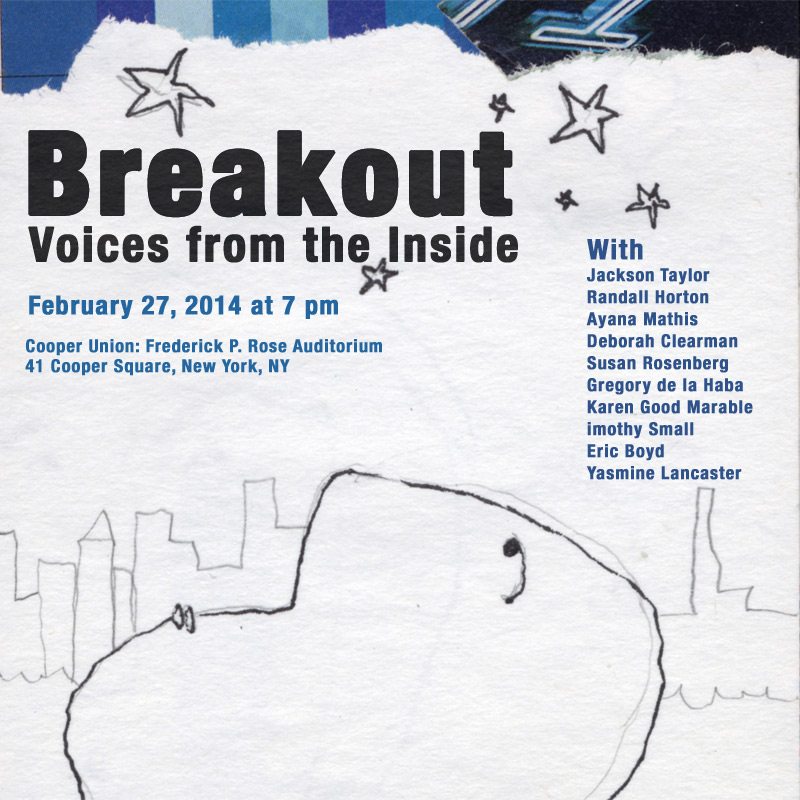
The PEN Prison Writing Program has been bringing the power of words to inmates for over forty years. Led by dedicated mentors with workshops exploring nonfiction and poetry alike, the program provides free Handbooks for Writers in Prison so that they can explore a craft that may provide an escape even from behind bars. Each year, inmates in the program can submit their works to PEN’s Prison Writing Contest. Eligible contestants must be “incarcerated in federal, state, or county prison” prior to the submission deadline, as outlined in the PEN American Center’s guidelines. Prizes range from $50 to $200 in the categories of poetry, fiction, drama, and nonfiction.

A reading of the 2014 contest-winning poetry and prose took place on February 27th at The Cooper Union in Manhattan’s Cooper Square. Open to the public and free of charge, the reading featured works from prisoners across the country. Every last piece not only inspired and awed with crisp description and striking nouns, but also with technical prowess. In other words, line breaks and meter that one only hopes to find in the most accomplished college (or graduate) student’s work adorned the inmates’ pages with beautiful sincerity.

The night’s readers (of course, not the prisoners themselves) sat on stage in a semi-circle, ascending to the microphone when it was their turn to read a piece from one of this year’s winners. A varied demographic, the readers included PEN employees and the formerly incarcerated. One such employee, the prison writing program’s mentorship coordinator, Timothy Small, even read a work of his own. Small’s piece, “Return to Sender,” detailed his duties as the coordinator before delving into a chilling and real scenario.

What starts out as list of menial tasks (“cutting through adhesive seals, deciphering all styles of penmanship, scanning letters for key words, and entering addresses into spreadsheets”) comes to tell the story of a 2013 PEN Prison Writing Contest winner, whose date of lethal injection prevented him from seeing his congratulatory letter for second place, fiction. The most harrowing part of the story, one could argue, was that letter was “returned to sender” five, whole days before William Van Poyck, the award-winning author, was scheduled to die.

Poyck’s fictional piece contained unsettling descriptions of incarceration marked by inspired prose. “The maximum-security prison was a depraved place, a hermetic kingdom of the damned, haunted by its own terrible spirit,” he wrote. For the rest of the piece that won second place for fiction in 2013, read “Death by Dominoes.”

Though PEN has yet to name to officially name this year’s winners, the rest of the works from 2013 are open for readership online. Awarded first place in poetry in last year’s contest, Joe Rickey Knight’s “Midnight at the Manatee” uses no extraneous words to detail a memory “for Dad.” You can read Knight’s winning piece here, as everyone who attended the reading on the 27th had the pleasure of hearing it spoken aloud.

When the reading was done, many lingered in the Rose Auditorium, picking up pamphlets for donation or even purchasing literature available for sale by inmates. What everyone heard that night will probably not only linger in their minds, but it will also make them think differently about the separation between those who live behind bars and those who are free.

Filed Under: ARTS, ENTERTAINMENT Tagged With: award winning, literature, Manhattan, manhattan digest, pen writing prison program

Art & Commerce: the Street Art of Jilly Ballistic

by Jordan Mattos

Jilly and bunny buddy.
photo by  Roberto Vincitore


Socially oriented themes are vital in keeping today’s art community from obsolescence. Desensitized by post-modern theory, many of today’s artists subscribe to the idea that personal narratives are as equally worthy as history’s. Often, the individual opinions, quirks and tastes of the artist trump objective social matters and form the impulse and focus of the work. As art schools and the needs of the marketplace teach the same, the common issues and conditions faced by large sections of the population go untouched as worthy subject matter in the artistic arena. This is a 21st century concern.

Artists such as Caravaggio, who worked in service of the Church at first, worked to interpret daily life. His practice of picking up street urchins and prostitutes and using them to create portraits of religious figures offered an edgy commentary on hypocrisy in the religious community. His portraits, rendered in murky chiaroscuro, asked us about the validity of the Church’s claims to moral authority. Without question, we need more artists that consciously choose to interpret and comment on their surroundings and the political goings-on of everyday life.

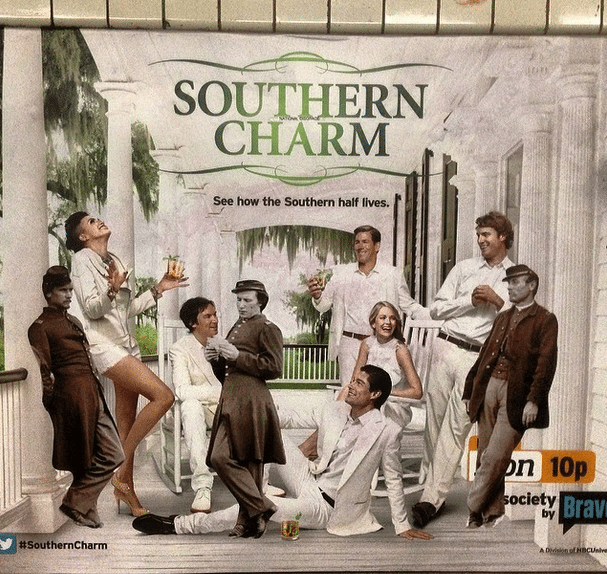
The Brooklyn-based artist known as Jilly Ballistic chooses to use the advertising seen in New York City as canvas. Ballistic augments subway adverts and movie posters with unique, one-off photo cutouts that comment and question the ad’s initial purpose. By displacing the reason behind the production of a given piece of advertising, she creates her own intent – to question the ad and engage in dialogue with the potential consumer.

A poster for a reality TV show about wealthy Southerners inserts black and white cutouts of Confederate soldiers next to the modern-day socialites; a glass-enclosed subway map is taped up with a fictional police advisory: “if it ain’t broke, break it”; a Sports Illustrated ad featuring an attractive model in bikini is amplified with the sticker “Beauty has been modified from its original version.”

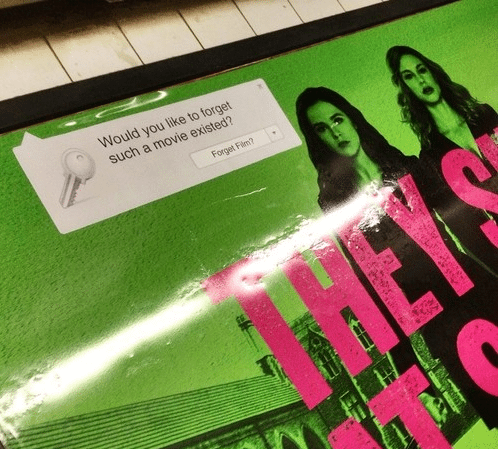
One of my favorite subvertisements is Ballistic’s Would you like to forget this movie ever existed? The question is posed in a pop-up icon on the movie poster for Vampire Academy. You don’t have to dislike the movie to connect with the work. There is an ongoing critique of warfare that runs through the majority of Jilly’s interventions. Cutout soldiers and gas masks are key images that keep popping up in her work. If you catch either of these, you know it’s a Jilly Bomb.

I was able to ask Jilly several questions about her work.

Where were you born?

Born and raised in New York City.

How has NYC influenced your art?

Every piece I put up is inspired by the City, from its architecture to the ads in the subway. They are all site-specific and have a relationship with the environment, a purpose.

What recent changes in the city have affected your creative process?

My process hasn’t been affected in any negative way. Despite the huge influx of cameras and the unjustified number of stop-and-frisks, the work still gets up. You develop a strategy for things like this and adapt. For example, you alter what paste you carry and what containers; can the print go up all in one large piece or in sections? Actually, the number of obstacles makes the process more challenging and even fun to work around.

Ballistic's swimsuit odyssey.
Ballistic’s swimsuit odyssey.


Many artists shy away from being political in their work for fear of being “on the nose” or appearing sincere. What are your thoughts on the matter?

You have a right to express or not express your thoughts on any topic. For myself, I’ll approach a political issue or respond to something in our pop culture if the time and location is right. Like I said, all my pieces are inspired by/site-specific, so if the City offers me an opportunity I take it and try to say something meaningful, either in a subtle way or with humor.

By playing with advertising, your pieces subvert the commercial. What is your overall relationship with commerce in NYC?

You can’t escape capitalism in New York. Even if you’re not actively purchasing anything, you’re exposed to the advertisements–they’re next to you in the train car, they’re on your building. We’re all in a relationship with commerce. And I use that as a common denominator; I attempt to say what the public is thinking about a product, be it a new film or Apple product.

What is a less obvious risk of creating street art?

With all the effort you put into a piece, there’s a chance the public puts little effort into understanding it.

 The ‘would you like to forget such a film existed?’ piece plays with the public’s expectations of interactivity and being positioned as tastemakers. On one level it critiques media of questionable value (a cheesy, senseless teen movie) while using interactivity to offer the viewer the option to disregard content. What are your feelings on ‘tastemaker culture’ such as the foodie movement and its relationship to city life? Where do you position your art in the consumer/tastemaker culture?

Technology has changed the way we interact with the world around us, specifically allowing us the ability to talk back instantly with submitting comments, “liking,” or “disregarding.” It’s made each of us individual critics, or a “tastemaker” as you put it. This is another one of those common denominators I work with; most of us recognize alerts or error messages because they’re in our lives everyday. It has become a form of communication and a medium artists can use. 

Jilly's Southern Comfort, modified.
Jilly’s Southern Comfort, modified.


Your pieces use existing advertising and material as jumping off points. Do you have a “dream ad” or physical space that you’d love to Jilly-bomb?

One of the best parts of doing ad or site interventions is that moment when you’re commuting as you usually do, and the train passes an ad/space you know you have to hit. It’s a gut feeling, an instinct. So I don’t usually sit and dream about spaces, I let the world surprise me.

What is your opinion on a hacking group such as Wikileaks? To you, what is the relationship between art and hacking?

When mainstream media and journalists no longer take risks to uncover what’s truly happening, we have to depend on ourselves. There’s a creative way to do this-like with cinema, graffiti, or visual arts for example-or direct reporting, like revealing official documents.

Social and historical icons figure largely in your pieces. What else do you draw your inspiration from? What does the gas mask mean to you?

2014 marks the hundredth anniversary of chemical warfare and the gas mask has/is currently undergoing an evolution. War is becoming more accurate and the products needed for war are becoming more accessible, to anyone – citizen, soldier, or government. This work is a reminder of such an uncomfortable reality. And this reality isn’t an inspiration, per se, but something I feel needs to be revealed.

Would you like to have forgotten this ad? I would've.
Would you like to have forgotten this ad? I would’ve.


You can see Jilly’s work at http://jillyballistic.tumblr.com/  Her pieces are now featured in Outdoor Gallery, a standout book by Yoav Litvin, collecting pieces from several street artists. Outdoor Gallery is available at the MoMA, Guggenheim, Strand Bookstore and Zakka (BK) next week. 

Filed Under: ARTS, NEW YORK Tagged With: graffiti, outdoor gallery, street art

Theater Review: “My Mother Has 4 Noses”

by Ryan Leeds

Photo courtesy of Bill Coyle

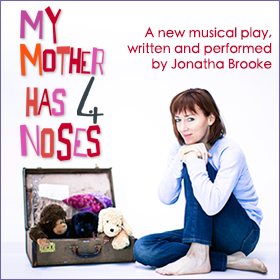
My Mother Has 4 Noses.  It’s not exactly a title producers would endorse  if they are banking on a box office theatrical smash. Yet it certainly invites (and rightfully receives)  raised brows of curiosity. This autobiographical “play with music” delves into the often overlooked, but much needed  area  of caregiving. And it is a gem worth seeing.

Singer-songwriter Jonatha Brooke  elaborates on the offbeat title and bares her soul in this one woman vehicle, now playing at the Duke Theater on 42nd St.  Brooke, who was one half of the duo, the Story, is a successful artist whose life took a much unexpected turn in 2010 when her mother began suffering from dementia. Her mother’s eccentricities were nothing out of the ordinary. As a christian scientist, Mother Brooke shunned modern medicine, ignoring a cancerous growth which consequently led to having a portion of her face removed. Thus, the nose prosthetics. As a larger than life personality, mother Brooke attempted to compensate by dressing in full clown regalia for her  then junior high school-aged Jonatha; the nightmare of every adolescent fully realized.  Still, her mother’s deeply perceptive and quirky musings (particularly her published poetry).  shaped her daughter’s work as a musician and drew them closer together towards the inevitable end of mom’s life.

Brooke’s songs are hauntingly gorgeous, backed minimally by Ben Butler (guitarist), and Anja Wood (Cello). Yet sometimes, they seem so lyrically arcane that it is difficult for them to propel the story forward.  Still, Brooke has taken her mother’s advice of “getting this down” by  sharing her intimate story. No stone is left unturned either.  As Brooke describes, in full detail, the challenges faced by her mother of everyday bodily functions, there is an uncomfortable aura felt by the audience.  I applaud her for the bravery in this because it depicts life on an unconditional level. Most love stories, whether familial or romantic, ignore the unpleasantries and ugliness of love. Here, she  places it all on the table with unflinching courage and unedited heart.

As I meandered through the lobby after the show, Ms. Brooke came out to meet her fans. From two different ladies, I heard words of thanks. They had experienced the same struggles Brooke did with their own mothers. I was already a fan, but the compliments magnified how strongly this show resonates with audiences. It is a human story of sacrifice and compassion that should not be missed.

My Mother Has 4 Noses now playing  through May 4 at the Duke on 42nd Street, 229 West 42nd Street (between 7th and 8th). For tickets, call: 646-223-3010, online at www.dukeon42.org, or at the box office.


Filed Under: ARTS, ENTERTAINMENT, OPINION, REVIEWS, THEATRE, uncategorized

Theater Review: “Hurlyburly”

by Ryan Leeds

Photo courtesy of Abi Classey

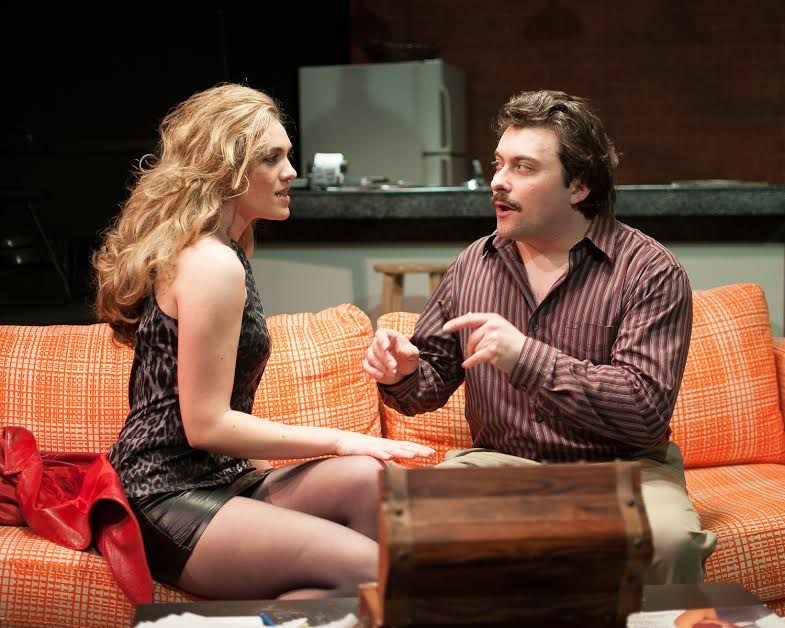
If you like despicable characters with no values or redemption–and you like to hear them talk as much as they love to hear themselves talk- then you’re going to love Hurlyburly. The 1984 play by David Rabe is currently receiving a competent revival by  the Variations Theatre Group.  It follows casting directors Eddie (Kirk Gostkowski), Phil (Brandon Scott Hughes), and Micky (Deven Anderson), on their painfully long road of self-indulgences and ultimate implosions.  Along the way, they meet  Donna (Rachel Cora),  Darlene (Christina Elise Perry), and Bonnie (Jacklyn Collier) all three of whom are involved in love triangles in the apartment shared by these Hollywood “hot shots.” Much like a David Mamet play, the women are used, abused, and tossed away-all against the backdrop of their booze binging, pill popping, coke snorting, misogynistic leading men.  Sweet people, huh?

Tales of  glamorous gluttony may have been unique in 1984. Rabe’s story earned him a 1985 Tony nomination for best play and its original length exceeded 3 hours. Since then, we’ve seen Hollywood itself cover the topic:  Oliver Stone’s iconic Gordon Gekko in Wall Street (1987), George Huang’s depiction of a ruthless movie producer in Swimming With Sharks (1994), and Steve McQueen’s glimpse of a sexually addicted advertising executive  in  Shame (2011) . All of them  summarized their points with much more concision and focus.  While Variation’s production has been presented with special permission by the playwright, it still clocks in at two hours and forty five minutes. By the end, after we’ve endured endless, substance fueled diatribes, we are ready to yell, “Enough, already!” Perhaps that is the point? Yet  Director Rich Ferraioli has assembled a committed and capable (albeit mostly miscast) group of players who must be recognized for the stamina and determination it takes to bring this show to life.  For those unfamiliar with Hurlyburly who wish to add more knowledge to their personal theater history archives, head to the intimate Chain theater and purchase an affordable ticket.

Hurlyburly, presented by Variations Theatre Group runs through Saturday March 1st at the Chain Theater (21-48 45th Road Long Island City, NY)  For tickets and more information, visit http://variationstheatregroup.com/newsite/hurlyburly/.

Filed Under: ARTS, ENTERTAINMENT, OPINION, THEATRE

3D Printing: Enter the Void

by Jordan Mattos

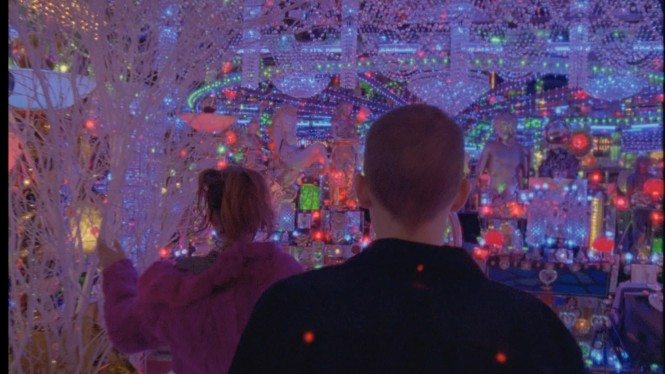
enter-the-void-1

As a film student in college, I often viewed my production-oriented classmates as tech-heads and gadget hounds. Tied up by electrical wires, I came up with sportive nicknames for them: the camera buff, the visual FX junkie, the techno-fetishist. To them, content and story were means to an end; it was the rush of copulating with metal that really seemed to agitate their senses.

I preferred theory to being on set. I never managed to obtain that tactile high; the current of electricity that shot through their veins whenever they plugged in a wire or pulled a strip of celluloid through a Steenbeck. With no less fervor, I enjoyed discussing the social implications of the latest film with my friends in the cinema studies department, who eschewed “making stuff” for the loftiness of deconstruction.  The general gist was that detachment from the creative process – not sticking your hands in the primordial goo – offered you true objectivity.

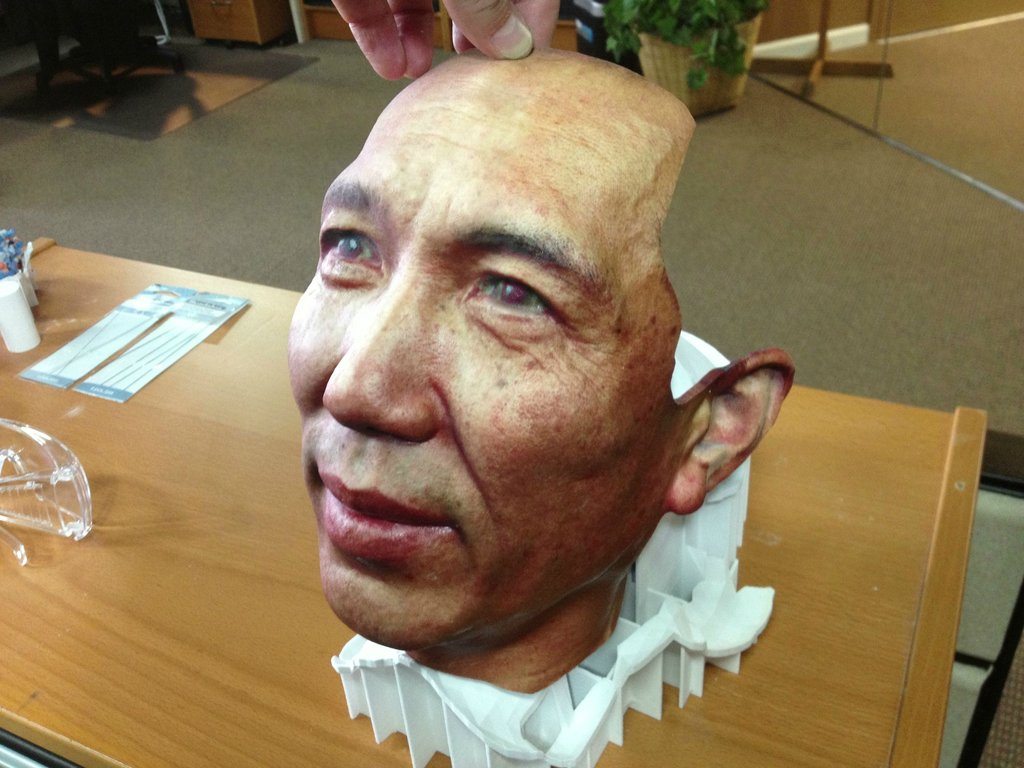
The 3D Printshow, an annual four-day consumer-friendly event at Manhattan’s Metropolitan Pavilion, aims to satisfy the urges and convictions of both doers and deconstructionists. Three floors exhibited the various uses of plastic printing machines that ranged from the ornamental (3D printed jewelry) to the potentially life changing (bionic ears), and showed the advantages of the theoretical and the hands-on, with varying degrees of success.

uncanny valley: 3D-printed face

Three-dimensional printing stands in relation, in theory and in practice, to the Maker movement, which has now become a part of international lexicon. Maker Faire, Make Magazine‘s festival, secured a place in the DIY parthenon back in 2006 with the first event in San Francisco. This 3D Printshow in particular was created in the UK by an intrepid Brit. The event has toured Paris and London. Even my boss, a self-identifying Neo Luddite in his 70s, uses the term in casual conversation.

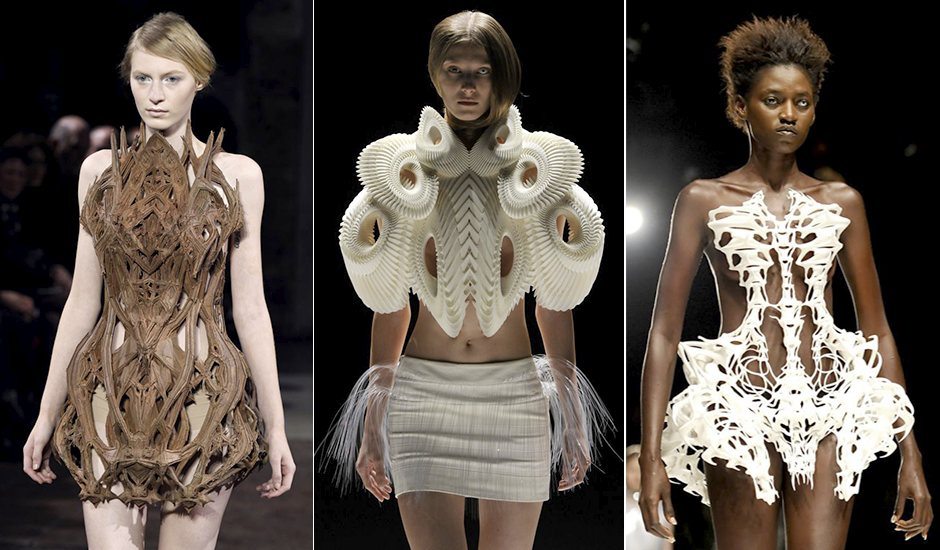
Looking at the event as a whole, there is a valid tendency among certain circles to praise the potential of the radical elements and dispense with the more fanciful as the whimsy of business-minded Silicon Valley types with a fetish for fun fur. A recent article in The New Yorker pointedly called out the money crowd for overshadowing the innovators and placed Maker culture in a refreshing economic and social context. The event I attended offered an Elite Business Conference to understand how 3D printing could help corporations, as well as an Investor Session with plenty of opportunities to flash witty business card designs. But it also offered a live runway show of fashion designs that highlighted the conceptual over the commercial, green thumb student thesis projects, and a Medical and Planet Earth section, which focused on teams that use the printing process for ecological and medical innovation.

Iris van Herpen’s 3D fashion

Permeating the show is a palpable respect for play. One exhibitor, Extreme Flyers, created a tiny remote-controlled helicopter with a built-in HD camera. I watched it glide through the air and weightlessly alight in the palm of my hand. As it hovered above the crowd I wondered what it would be like to make a film shot exclusively by a toy helicopter. For a moment, I found myself joining the crowd, jointly craning my neck in thrall of the beautiful plastic poetically trapped in mid-air.

In this instance, the event successfully married the techie with the conceptual, the politically and socially minded with the thrill of the hands-on. Makers “make” just for the fun of it, but seem all the better for it. It’s in the exciting stages of experimentation, error, and play that their ideas seemed best suited for refinement and further developments in advocacy. Perhaps that’s something we can all stand to benefit from – Neo Luddites and gadget hounds alike.

Filed Under: ARTS, NEW YORK, REVIEWS, SCIENCE Tagged With: 3d printing, design, DIY, maker, Silicon Valley, tech

Theater Review: “Till Divorce Do Us Part: the Musical”

by Ryan Leeds

Photo courtesy of  Janine N. Adjamian
Photo courtesy of
Janine N. Adjamian

The worst thing about an apparently satisfying marriage is that divorce could abruptly bring it to an end.  The best thing about an obviously dissatisfying show on the topic of divorce is that it does end-although not soon enough  in the 90 minute, terribly unfunny Til Divorce Do Us Part, a new off-Broadway musical at Union Square’s DR2 Theatre.

Ruthe Ponturo, creator and lyricist, wrote this show after being dumped by her Broadway producer husband. Her chutzpah for self-respect and reinvention is inspiring.  Her lyrics, along with the elementary music, are not. “Better Mad than Sad” opens the show as a sort of “screw you” to the ex. After 85 more minutes of bland, inane humor, we are forced to sit through a reprise-only this time with a minor tweak:  “Better Glad Than Mad.”  My advice: better run away than pay.

The revue style premise features three gifted singers, Erin Maguire (Kate), Gretchen Wylder (Audrey) and Dana Wilson (Suzy). Each of their songs are introduced by music director John Thomas Fischer (who also composed the flimsy score).  Fischer serves as an advice columnist under the pseudonym “Dottie.” Why Dottie? The writer’s aunt was named Dottie and he inherited the column when she passed away.  This was an actual joke in the show. You’ll muddle through more cutesy, lame jokes and songs including, “If Only You Were Gay”, which suggests that a divorce would be less painful if the husband turned out to be gay because “at least we could be best friends.” Right around that time I checked my watch and estimated my steps to the nearest exit.

Jilted love can be fodder for  delicious musical theatre vengeance. One need to look no further than classics including  “Cell Block Tango” from Chicago, “I’m Gonna Wash That Man Right Outta My Hair” from South Pacific, or “I Hate Men” from Kiss Me, Kate. Even the more contemporary I Love You, You’re Perfect, Now Change offered  crafty insight into broken love. Til Divorce Do Us Part has none of the caustic wit that any of these previously mentioned shows possess.  What it does have is an offensively gaudy pink set adorned with  conversation hearts and a mindless string of vapid comedy. By the time the curtain closed, my broken heart yearned only for this talented cast. I hope that their  relationships with future stage endeavors are  more fulfilling and substantial than  this ill-fated romance. Aside from all of this, it’s wonderful!

Til Divorce Do Us Part now playing at DR2 Theatre (103 E. 15th street). For tickets call (212) 239-6200 visit Telecharge.com or go to the box office.

Filed Under: ARTS, ENTERTAINMENT, OPINION, REVIEWS, THEATRE, uncategorized

Theater Review: “Sex Tips for Straight Women from a Gay Man”

by Ryan Leeds

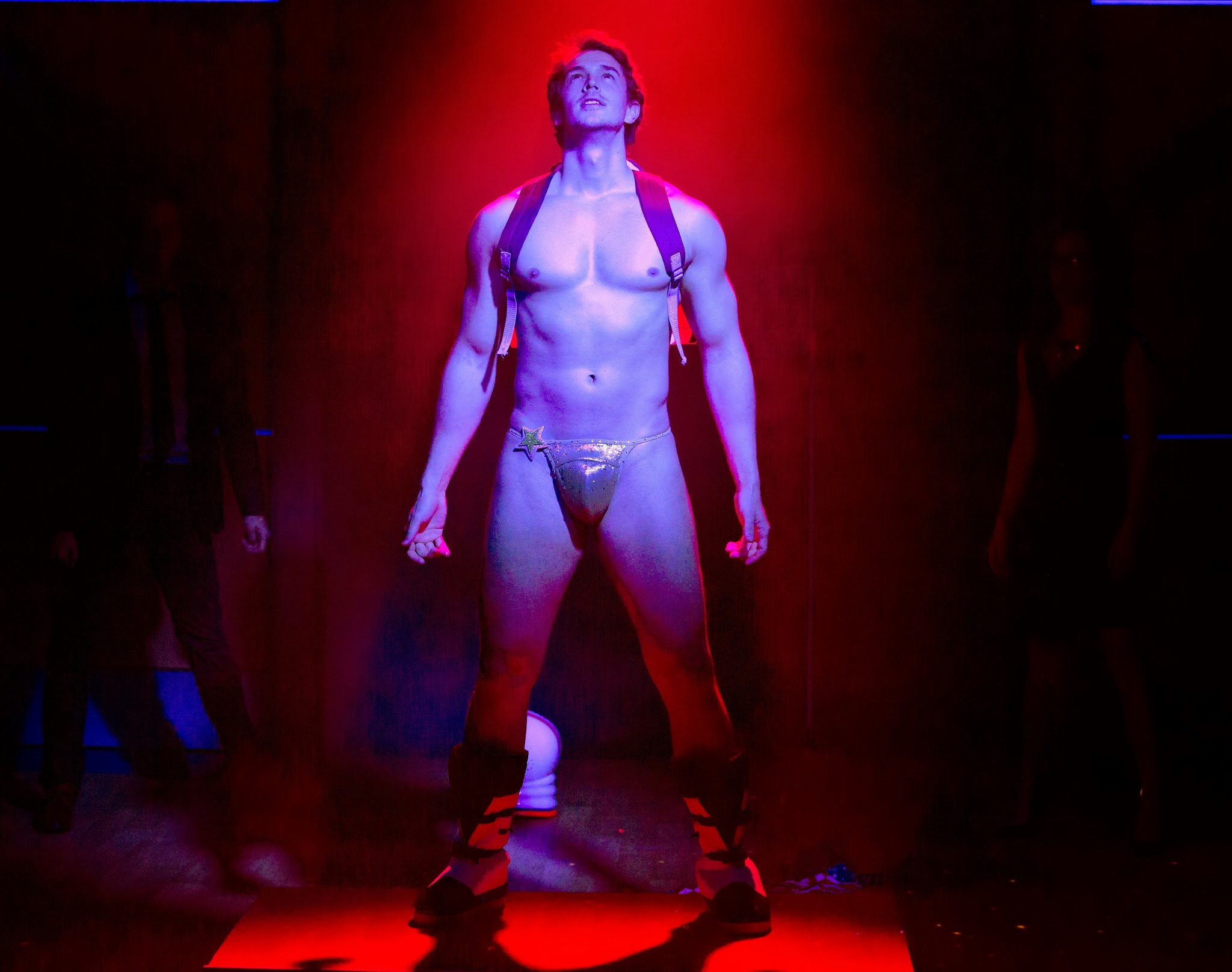
Photo Courtesy of Jeremy Daniel

Sex Tips For Straight Women From A Gay Man. The title alone will elicit some hand-over mouth, embarrassed, red-faced giggles. The joke could easily stop there, much like movies which reveal all of the funny moments in the trailer. And while this cotton candy theater piece is not the most intellectually….er..um…”stimulating” bit to hit the off-Broadway boards, there are plenty of comical and charming moments in Matt Murphy’s sex-capade.

The plot and character development is nearly as thick as the 6 page program which, incidentally, is used later in the show for an audience participation “lesson”. But really– were you expecting the depth of Chekhov here? Sex Tips  is set at the Midtown Manhattan Community College where Robyn (Lindsay Nicole Chambers) is hosting a “Meet the Authors”  forum.  Robyn is filling in for the professor who usually hosts the talk, but who has mysteriously died earlier in the afternoon. Could it be that Robyn has 86-ed the professor in order to catch the eye of Stefan (Andrew Brewer) , the hunky stage manager slash would be scientist who just might be talked removing his clothes. You just  know where this is headed, don’t you?  Leading this talk is guest author Dan (Jason Michael Snow), a fabulously gay Tony Robbins type. One can almost see the gleaming reflection and hear the “ding” when he smiles- and he does smile often.  It’s no surprise that Snow has stepped into this role after having just been seen in The Book of Mormon.  His squeaky-clean persona is on display once again, this time with impish delight. Chambers is endearing as the nerdy girl pining for her long time crush. With the look of a young Kathy Griffin and mannerisms of Kristen Wiig, her comic  timing is flawless. Brewer rounds out this trio by simply being sexy, which was most likely the only character description in the script.

Sex Tips is rife with stereotypes by assuming that straight women are clueless in the sack, straight men are mere objects of lust, and flaming homosexuals wrote the book on sex. I suppose part of the latter is true given the fact the source material is derived from the 1997 best-selling work of the same name from Dan Anderson and Maggie Berman. Yet all is forgiven by the cartoonish cast of characters. Can we really analyze the sexual and gender  politics  of a play that includes a striptease starting in an astronaut suit with the song lyrics “I Am Scientist?”  Exactly. Murphy is well aware of his audience and is rightfully banking  on bounties of bachelorettes and gaggles of gays to fill the seats.  Overall, Sex Tips is fun, but not nearly as naughty as the title suggests. The talented cast and sitcom-like pace will keep audiences blushing, smiling, and laughing  for its’ intermission-less 80 minute running time. How you’ll practice and on whom is up to you.  _________________________________________________

 Sex Tips for Straight Women From a Gay Man  now playing off-Broadway at the 777 Theater, 777 Eighth Avenue, at 47th Street, NY NY. For tickets, call:  866-811-4111 or visit the website www.sextipsplay.com


Filed Under: ARTS, ENTERTAINMENT, LGBT, OPINION, THEATRE, uncategorized

An “Interactive” Conversation with the “Goldstar” Visionaries Behind TEDxBroadway

by Ryan Leeds

Few people would associate the biological term “ecosystem” with the theater community–unless, of course,  one taps  into the  passionately innovative minds of on-line media gurus Jim McCarthy, CEO of the popular  ticket site, Goldstar (https://www.goldstar.com)  and Damian Bazadona, founder and CEO of digital marketing advertising agency Situation Interactive Media (http://www.situationinteractive.com.) The two of them, along with Broadway producer Ken Davenport (http://www.davenporttheatrical.com)  are joining forces for the third annual TEDxBroadway Conference, which will be held  on Monday February 24th, 2014 at New World Stages.

I  sat down with McCarthy and Bazadona to discuss how the conference is taking form, the importance of technology within the live entertainment community,  and what we can expect from an event that aims to make Broadway brighter, better, and more relevant.

RL: This is the 3rd annual TEDxBroadway Conference. Tell me a bit about the  origin. 

JM:  For a couple of years, there were unaffiliated loose conversations over dinner and drinks with Damian and Ken where we would discuss the need to make sure that the Broadway ecosystem was having conversations that were bigger picture conversations. And this was just by our mutual interest in that sort of thing. At some point, we developed a vague idea that we might do one of these ourselves. I had been involved in the TEDx program early in its inception and after being around that, I decided to do something within that format.  The three of us talked and agreed that this was consistent with what we thought the conference should be: bigger picture, longer term, less nuts and bolts and  more aspirational. TEDx provided us with some framework for how to do it. So TED gave us a license for TEDx Broadway and we set a date and started working for it.  This gives us a chance to think big and think broad and I think we can have a good time with that.

RL: How will this year be different in terms of scope and content? Can you tell me about some of the speakers? 

JM: In some ways the same and in others, quite different. The basic structure is quite similar in that we’ll have three sessions again. There are no panelists but just a single presenter for each topic.

DB: The reason I got involved in this from the beginning is because we’ve nailed down the question: “What is the best Broadway can be?”   One of things that drove me to get involved with this conference  with Jim and Ken is that we all  look at the aspirational side of where the industry could go. Too many conferences focus on a) too many “nuts and bolts” and b) less about the longer term- So  when you structure the question “What is the best broadway can be”, it makes each speaker look at it in that framework.  The key difference this year is that we’ve become much better at the structure. Since this is our 3rd  year, we’ve just become sizeably better and the speakers have a better understanding of what we’re trying to accomplish. The speakers we have lined up are just excited to involved in the process. All of them  come to the stage with a certain level of passion and they have a context from speakers over the last two years. If you look at our sponsors which include Google, Jujamcyn Theaters, and Broadway.com,  you realize that everyone wants to get involved in this.  I mean, who doesn’t want to answer the question “What is the best Broadway can be?”

JM: Plus, we have people who may not be household names, but they’re just gonna go up there and knock people out. I try to encourage the speakers to discuss what people are  not likely to hear from them. Having worked with Robert Lopez on his talk, I know that what  he’ll talk about will be interesting to the audience, but there are other people in the line-up who are less familiar names,  but who I think will be pretty dazzling. Even people outside the Broadway ecosystem will contribute. This year we have Annisa Ramirez, who is a tremendous science educator and  one the best people in the world to break down science for the layperson. She’s going to discuss the science that we’re going to live with over the next five to ten years and the emerging aspects of science that are going to  impact our daily lives. Certainly Ramirez is prolific in her field, but not as well known among the Broadway community, so we’re really happy to have her on board as well. We also have the amazing singer and actor  Lea Delaria, who is now recognized for the series “Orange Is the New Black”.

RL: Can you each give me a brief elevator pitch on the contributions your companies are making to the Broadway community? 

JM: Goldstar is basically  a seller of tickets to all kinds of  live entertainment. We call ourselves “the world’s largest ticket booth.”  We have approx.. 5 million registered members, we’re in 30 of the biggest markets in the U.S.  and we sell tickets on behalf of any kind of live entertainment and arts you can imagine. Our goal is to connect people who want to go out more to the venues who would love to have them. We become the starting point for matching the two, they buy the tickets from us, and we take very good care of them. NY is our second largest market after LA (where we are based)  and the health of Broadway, both here and on the road is extremely important to us. When Broadway is healthy, we benefit. We talk about the Broadway “ecosystem”, which is not just the theater  but the tourists ,restaurants, hotels, academic institutions, and residents.  One of the beliefs we all share is that this ecosystem rises and falls together, so we want to help make it healthier now and into the future.

DB: Situation Interactive media operates under the basic principle that the world is a better place when people are doing things rather than having things.  Therefore, we power the brands that do. We started in arts and culture and worked on over 100 Broadway productions since 2000 and now we have expanded by working with Brooklyn Academy of Music, Metropolitan Opera, the Super Bowl, One World Trade Center, Madison Square Garden  and other experiential outlets. Our roots started in Broadway but have expanded. I’m in this primarily because I hope to be here for many  years and Broadway is a tremendous part of our business and is where my roots are from.

JM: I think Damian is being a bit modest because Situation Interactive was really the on-ramp for Broadway in terms of internet marketing. Prior to him, it wasn’t even a given that you should be marketing on the internet.

DB: (Humbly) Well, thank you. I think it was just a matter of being at the right place at the right time, but I’ll take it!

RL:  How have Broadway marketing strategies changed from the days of relying solely on print to the newer techniques of digital advertising and is one more important than the other? 

DB: Digital marketing is the best trend that has happened to Broadway and live events  because they benefit from digital a lot more than other folks and industries. Primarily, it is all about content.  The product we offer is literally our market. A majority of my brands are in the story telling business and they sell stories that people get to connect with. Digital is the greatest way to connect people. I wouldn’t say that there is no need for traditional media because it  all fits into the puzzle, but the new channel into the mix is obviously all of the digital pieces. You can connect all the people in the world this way.

JM: If you only had traditional means of marketing the product, those means are slow, static, and expensive. It takes a long time to launch them, you can’t change them, and they  cost a lot of money, so you had better get it right on the first try. The thing about digital is that we have a product (those of us in the live entertainment business) that is like bread. So the notion of slow, static, and expensive are the last things you want for a product  that is  here today gone tomorrow.

DB: Another thing is that great ideas come from everywhere.  I know everyone says that but in a world where content is becoming king, we work differently. Now you can ask the cast for ideas of marketing the show, which wasn’t previously thought of  in the theater.  Now they say, “We want to promote  the show like this” and we respond with, “Great! Here’s a channel by which we can do that.”  It’s the most fun time to be in the industry on the marketing side since I’ve been doing this.

RL: With regards to the productions themselves  how has technology changed the face of theater? What trends are currently implemented and is there anything new that theater goers can expect ?  

JM: We actually have two speakers talking on that topic this year.

DB: It depends on how you’re defining it. We think of Broadway as the place, not just the industry so the growth I’ve seen over the past 5 years is in alternative models.  The business models which are starting to pop up is that live theater and the experiential piece  are playing out in all different ways.   I feel like you’re going to see more  shows along the lines of  Sleep No More and  Fuerza Bruta. From a pure technology perspective, I’m working on a show right now that is primarily all projections. So we’re starting to get to a place where projections are working themselves into productions, which changes the whole game for scenic design and set design-not necessarily as replacements but as enhancements.  The business side really is going to dictate some of the creative decisions over time. What are the cost structures  to put these shows on? Because they are going up and to make money on Broadway is not easy, so you must have cost controls put in. Where does theater live beyond the four walls?

JM: Exactly. And that is another area we’ll hit in this incarnation of TEDxBroadway. How do you take the thing that is happening in the theater and leverage it elsewhere?

DB: Right.  Right now, that conversation is being led by marketers and it needs to be led by creatives since  creatives can  take the content and apply it specifically to each  platform. That is why places like National Theater (who was at TEDx last year) are fantastic because they create for the platform. When they shot Curious Incident of the Dog in Nightime , they shot one version for National Theater Live, so when you watched  it in the movie theater,  it looks like it was shot exclusively for the movie screen. We’re just at the beginning of that. You have to believe that there is a lot more value in the content. We have an amazing talent pool of people who create for the stage every night

RL: Who is your target audience, both for advertising and show attendance.

DB: If you’re looking  NY theater ticket buyers today, the average demographic is 40+ women. I would argue that the bigger issue is cultivating talent over time. One of the reasons I’m involved in the  TEDx conference is because we’re looking at the question, “What are we doing today to build the audience of 20 years from now?” the topic of target audience, I think. is a huge conversation for the industry. The easy, short  term answer is definable: 40, wealthy, in-bound tourists but it is clearly not aligned with the longer term demographics of this country, which is why I  like conferences like this- so we can discuss that.

JM: Now that you’ve taken us down this path, there are 3 programs I’d like to mention which we’ll also be discussing at the conference.  One that Damian has driven with kids in the Bronx at a high performing middle school who have been sort of the toehold  for a program that has broadened out since then. A) It gives  them some exposure so they know that there is a thing called Broadway and theater and B)  it helps to build the connection in the other direction too.  Damian was instrumental in getting the cast of Spider Man to go to their school in the Bronx. The result is that these kids from a high achieving, low-income area are now  thinking  “Maybe I can have a career in the area of the arts.”   Our perspective is that Broadway needs those kids as much or more as those kids need Broadway.  Think about the talent you can  find in areas like this and that is where the future is often built. If this program has the result of just one brilliant writer or director emerging in twenty years, then this  will have made everything worth it.  On another level, we’ve subsidized some college students  to attend, so they’ve made this part of the curriculum of the class. These students are able to go to the conference without costs being so prohibitive.  We also had an open call for anyone 30 and under affiliated with the Broadway ecosystem to apply for free admission to the event by writing  a brief description about why they wanted to attend.  So a nice chunk of our audience this year will consist of those decision makers of  the future. We’ve talked about that in the past, but this year we made a commitment to making sure they are there.

 RL: What are some of the  take-away you want to give attendees to the TEDx Conference or do you see this more as forum for open thought and creativity? 

JM: I’d say more the latter than the former.

DB: The sign of success for me every year when I get emails and messages back from people telling me that it was a great day and they left feeling inspired. That is all I care about. I think if we go into the territory of “what is the take-away”, it’s dangerous because you’re trying to script something and the idea is that we’re trying to bring open ideas to the table from other people. I see myself as much a participant as an organizer.

JM: The idea of the TED format is to spread ideas. So our job is less to have a pointed view than it is to ask, “Who are some people who have interesting ideas that are relevant to this community”,  and then give those people the opportunity to say interesting things in this setting.  Often times, maybe a side point that you’ll hear from a speaker  or a conversation you had in the lobby during a break will take you down a trail and open something up in your head as a huge idea and then can be an amazing thing we’ll all benefit from in some way.

DB:   We didn’t want to take a bunch of speakers, put them up there, and then talk about all the things you can’t do. That is probably one of the biggest traps  in conferences I attend in any industry. But when you frame the question:  “What is the best Broadway can be?”, You can isolate a problem and that aligns with the question of “Is this something that inspires you?” and then it gives you a runway to make that possible.

JM:  Look- every industry has deficiencies. But we’re not asking , “How do we fix a broken thing?”  Instead,  with an active imagination  we are asking, “What is the best possible thing- and then let’s re-set the trajectory towards that. In the course of doing that, maybe we  fix a broken thing or two along the way.”  And ultimately,  it’s  supposed to be a fun! If it’s not fun, we’re not doing it.

RL: You’ve talked an awful lot about this “Broadway ecosystem.”  What do you think is the greatest challenge, economics aside, facing this ecosystem? 

JM: What is the audience  years from now and more to the point, will this be a vital place in 10 or 20 years? The answer to that is going to come from whether or not there’s a connection made to the people who will need to be the ones showing up in order for it to work. The audience of today will have sort of moved on in its’ relevance. The demographics are kind of set. So if we know who is going to be here and who is going to have dollars to spend, then the question is ‘Will they be interested in this neighborhood  as theater goers and as restaurant goers.’?  We don’t need to go back that far in history to a time when they weren’t interested. The biggest macro question is that the neighborhood has gotten much much healthier in the last couple of decades, but what if it doesn’t sustain? What if, as a whole, that ecosystem doesn’t hit the mark in quite the way of where it was in the 80s until now?  It’s not a guarantee, so there’s an audience question in there, there’s a relevance question in there and there are even bigger financial questions there as well. Those are all threats.

DB:  A lot of people I’ve talked to from restaurants and hotels and  are of  the “now”  thinking. They are wondering,  “Is the show across the street from my restaurant  going to stay open  because when that show is open, my restaurant is full.”  So they are hoping that Broadway remains strong.  Everyone I talk to in this ecosystem has a different angle, but it all connects back to the same thing, which is the overall health of the region. Even though they live on a block to block basis, they are all connected by the idea of Broadway and Times Square. This week, for example, the blizzard and the super bowl changed the entire eco-system of that neighborhood dramatically. So you have these extraordinarily different businesses that are  completely inter-dependent on each other

JM: We use this word “ecosystem”, which is borrowed from nature. The animals and plants in a certain part of the natural world don’t live there in isolation. The deer and grass and squirrels and grass, etc. do depend on each on each other. At a certain point, when the ecosystem degrades, everyone suffers. So this  is very real and very complex, and we’re looking forward to having the conversation.

What: 3rd annual TEDxBroadway Conference

When: Monday February 24th 2014, 11am -6pm

Where: New World Stages, 340 W. 50th Street between 8th and 9th ave.

Tickets and more information: http://www.tedxbroadway.com


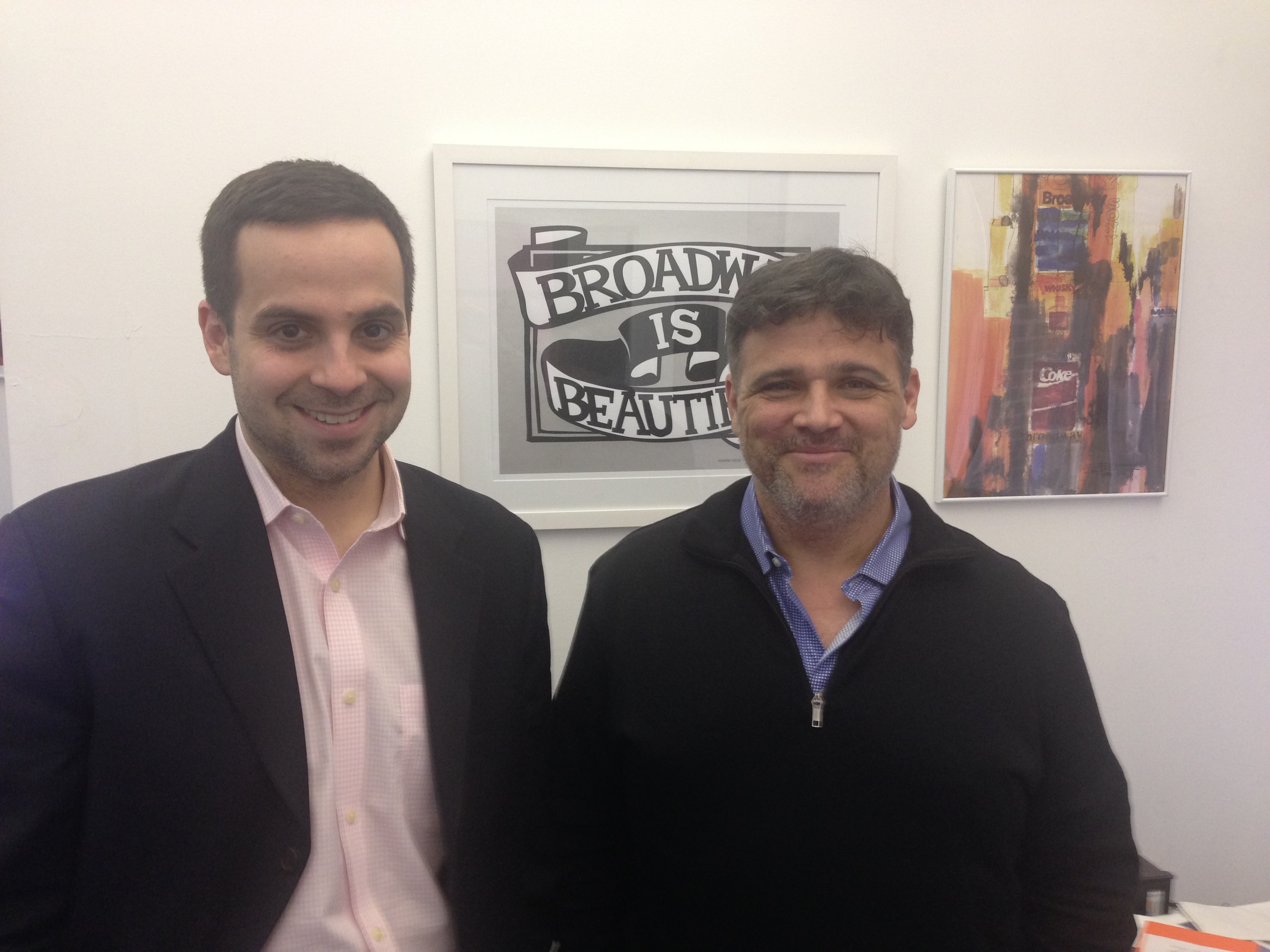
Damian Bazadona, Founder and CEO, Situation Interactive Media (Left)  and Jim McCarthy, founder and CEO  of Goldstar (Right).   Photo courtesy of O&M.
Damian Bazadona, Founder and CEO, Situation Interactive Media (Left) and Jim McCarthy, founder and CEO of Goldstar (Right).
Photo courtesy of O&M.


Filed Under: ARTS, ENTERTAINMENT, NEW YORK, TECHNOLOGY, THEATRE, uncategorized

Theater/Performance Review: “iLuminate”

by Ryan Leeds

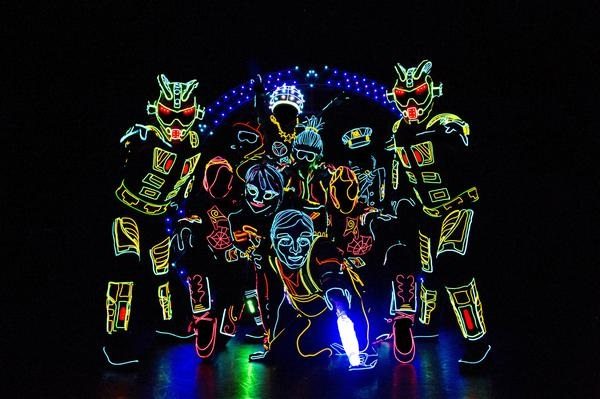
photo courtesy of iluminate.com


Are you willing to spend approximately $50 to sit in a dark room for nearly an hour, watching talented dancers “get their funky grooves on” with wireless neon lights strapped to themselves? The producers of off- Broadway’s performance piece iLuminate hope so. After enjoying a brief New York City run in 2012, this vibrant troupe has taken an open-ended residency at New World Stages and the result is visually appealing and uniquely entertaining.

Founding director Miral Kotb, who was a software engineer at Bloomberg, attended an Apple conference in 2009 and was inspired to create this unique idea which blends dance performance with technology.  The 11 members are draped in black body suits to which various colored, neon lights are affixed. They then have the ability to control these lights  in the palms of their hands. Kotb’s vision has catapulted them to International fame: As finalists and guests on TV’s  America’s Got Talent and as co-performers with artists including Katy Perry and Usher.

While iLuminate is billed as a performance piece, the 50 minute experience makes a valiant effort to form a simple, G-rated  plot. It centers around Jacob, a quiet artist who finds  comfort in  “painting” the world with joy and happiness. His artistic bliss is shattered when an envious bully tries to thwart his happiness and take him down a path of terrible nightmares- all of which are of course, vivid and brightly lit. In true family friendly fashion, the protagonist wins and the giddy troupe rejoices to a memorable song called “Shine So Bright (So the World Can See your Light)”    For the most part, the plot works even though the  novelty does tend to tire after 30 minutes.  Techno, Classical, Hip-Hop, and salsa  pepper the show and the dancing is undeniably electric and inspired. Think lite brite and wikki sticks meets Daft Punk.

Following each performance, the audience is invited to meet and  take pictures with the cast, a kind gesture which is sure to spawn inspiration in young would-be dancers and performers.   This all audiences show is  an excellent pick for families seeking respite from Mother nature’s current wrath of winter.

iLuminate is now playing at  New World Stages Stage  4  340 West 50th Street ( between Eighth and Ninth Avenues). For tickets, call (212) 239-6200, visit telecharge.com or the box office.

Filed Under: ARTS, ENTERTAINMENT, OPINION, REVIEWS, THEATRE, uncategorized

  • « Go to Previous Page
  • Page 1
  • Interim pages omitted …
  • Page 53
  • Page 54
  • Page 55
  • Page 56
  • Page 57
  • Interim pages omitted …
  • Page 60
  • Go to Next Page »

Primary Sidebar

Navigation

  • HOME
  • OPINION
    • REVIEWS
  • BUSINESS
  • LGBT
  • ENTERTAINMENT
    • ARTS
    • MOVIES
    • MUSIC
    • TELEVISION
    • THEATRE
  • LIFESTYLE
    • TRAVEL
    • FASHION
    • HEALTH
    • FOODIE
    • STYLE
  • POLITICS
  • SCIENCE
  • SPORTS
  • TECHNOLOGY
  • U.S.
    • NEW YORK

Footer

  • ADVERTISE
  • TERMS OF SERVICE
  • CAREERS
  • ENTERTAINMENT
  • Home
  • Contact
  • Legal

Copyright © 2026 · ManhattanDigest.com is run by Fun & Joy, LLC an Ohio company · Log in

Loading Comments...