• Skip to primary navigation
  • Skip to main content
  • Skip to primary sidebar
  • Skip to footer

Manhattan Digest

All you need to know about Manhattan culture and so much more...

  • LIFESTYLE
  • ENTERTAINMENT
  • LGBT
  • OPINION
  • TECHNOLOGY

TV reviews

Fleming Makes For A Fun Origin Story

by Michael Tyminski

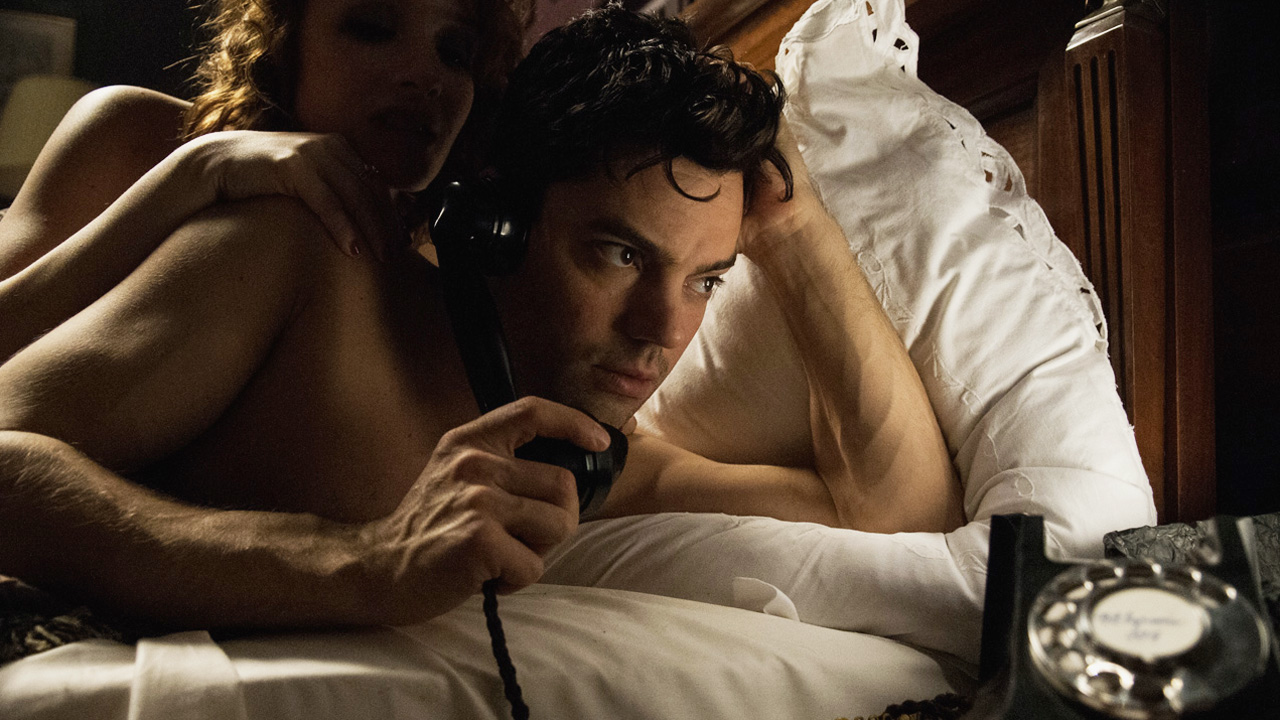
Dominic Cooper as Ian Fleming (Source: BBC AMERICA)

Fleming: The Man Who Would Be Bond: Wednesdays at 10 Eastern on BBC America

It’s pretty amazing how often we take our neighbors across the pond for granted when it comes to pop culture (especially TV). Whether it’s been wholesale appropriation of British series for American audiences (series as diverse as All in the Family and The Office were adapted from British shows) or straight up cult fandom of existing British content (I personally cannot go a day without someone posting something about Doctor Who on my facebook news feed), it seems that the BBC has managed to play a surprisingly strong role in shaping pop culture on this side of the Atlantic as well. Tonight, the BBC has a four part miniseries delving into yet another piece of British culture that has a strong foothold in American’s entertainment consciousness, delving into a man who tended to act like his most famous creation.

Fleming: The Man Who Would Be Bond (from here on out referred to as Fleming), follows it’s titular character and James Bond (Dominic Cooper) creator Ian Fleming in the 1940’s as he operates in a naval intelligence unit during the second world war. In many ways Fleming is like the man he would eventually write about: a great spy, a debonair playboy, and a man who thinks big. This four part series takes a look into his rise from the black sheep of a wealthy family into the superstar novelist he would become after the war.

From a purely visual perspective, Fleming is absolutely beautiful, whether it’s focusing on Jamaica, the Swiss Alps, or pre-blitz London. This is furthered by incredible use of the camera, whether it involves the wide angle shots wherever Fleming takes us to those exotic locales or the use of cuts such as when a Nazi officer shuts the curtain in front of a stunned Fleming preoccupied on the atrocities occurring just outside the window. Particular credit has to be given to the camera work in the episodes climax, as the camera freezes on both exploding windows and a passionate kiss between Fleming and the married woman he’s been chasing all episode. If there is one knock that I will mention, it’s some conspicuous and often fake looking CG graphics that are used in establishing shots whenever a train or plane becomes part of the plot.

I also appreciate how Fleming manages to take no prisoners with it’s central character. This mini-series is about the making of the man, and the first episode relentlessly reinforces the notion that Ian Fleming circa 1939 is both a complete disappointment and a completely insatiable poon-hound. Unfortunately, with it’s short run-length, and what overall seems to be a war story, it somehow spends a little too much time focusing on Fleming’s attempts at romantic dalliance at the expense of setting up the spy thriller that the series is attempting to market itself as.

I also must highlight the amazing casting choice of Dominic Cooper for the lead role. It’s a difficult task to play a thoroughly unsympathetic protagonist (at least at this stage in the series) without turning people away, but Cooper brings a wry, almost puckish charisma to the role, making it impossible to turn away. Cooper is surrounded by a fairly strong supporting cast that excel in both bouncing off of and stifling him at every turn.

The Final Verdict: This is the second time I’ve gone to BBC America on a slower TV week (premieres are grinding to a halt as the networks brace for the Winter Olympics) and for the second time I can say that I haven’t been disappointed. Fleming at it’s core is about the evolution of a flawed individual, and it fearlessly shows the flaws in it’s central character from moment one. I would recommend checking it out, especially if you’re looking for a new TV fix in what will be a slow February.

Filed Under: ENTERTAINMENT, OPINION, REVIEWS, TELEVISION Tagged With: BBC America, Fleming: The Man Who Would Be Bond, Ian Fleming, TV reviews

Rake Is The Strongest Show of A Weak January

by Michael Tyminski

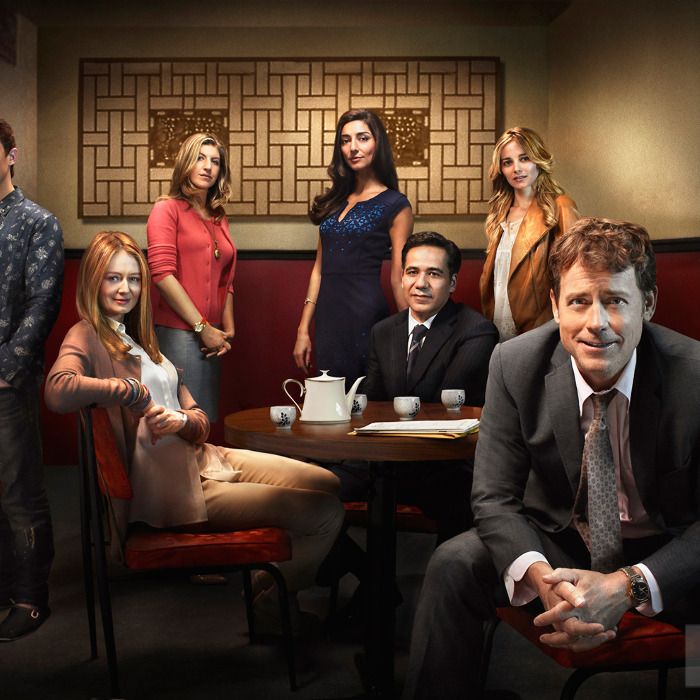
The Cast of Rake (Source: Fox)

Rake: Thursdays at 9 Eastern on FOX

It’s been a pretty dismal January for the big four, with unhealthy amounts of mediocrity being strewn around the major networks. I think that a large part of this is that shows that seem like they would traditionally drop in mid to late spring (such as the eight episode The Assets and Killer Women) are being thrown under the Olympic bus in favor for a packed slate of late February and early March debuts. The one network that has seemed to buck this trend is Fox, which put out the surprisingly good Enlisted (it kills me a little inside that Dads is still leading into Brooklyn Nine-Nine over this) and seems to put a lot of ad time (doubly so if you tend to watch a lot of FoxNOW or Fox on Demand) towards it’s newest legal drama: Rake.

Rake follows criminal defense attorney Keegan Deane (Greg Kinnear), a man seemingly as immoral as the people he defends. Keegan is a womanizer, a habitual gambler (to the extent that he gets a tab from his bookie), and the IRS is going after him for tax evasion. To make matters worse, his ex-wife (to whom he owes alimony) doubles as his therapist. Behind all of that chaos, however, is a brilliant defense attorney willing to take on the cases that no one else has the gumption to take.

Rake is surprisingly funny for a drama, with tons of levity and witty one liners. Almost every character and every scene in the show (up until the climactic arc) is punched up, regardless of whether a scene is supposed to be funny (like Deane and Leanne trying to sell a tuna to a sushi restaurant), sexy (like Deane’s dealings with his prostitute), or dramatic (such as the mayor’s interrogation of his police chief), and lands with it’s jokes more often than not.

Where the show doesn’t work is as a procedural. The pilot seemed to treat it’s case (in which Deene defends a serial killer in what should have been an easy “guilty” plea) as something on the side. Instead we get what seems like a series of anecdotes of Deane’s life being completely out of whack with a little bit of lawyering on the side. These anecdotes however, often also fall flat from a dramatic perspective, as the stakes of Deane’s dysfunctional lifestyle always seem to inexplicably be skirted (such as the beating from Roy he is destined to receive at the end of the episode).

At times it seems like Greg Kinnear is called on to carry the entire show, and Kinnear succeeds in that regard, as the hyper-charismatic Deane. Unfortunately, Rake reduces everyone else to bit-player status, whether it’s his favorite prostitute, his ex-wife, his friend’s wife/housemate, the killer of the week, or Roy (his loan shark’s muscle). Part of this comes from the seemingly disconnected structure of the pilot, as the show spends it’s time bouncing from story to story with even it’s A and B plots often seeing no more than three or four beats over the course of an episode.

The Final Verdict: Rake is immensely entertaining but seems to struggle in finding it’s natural niche, having equal parts personal drama, legal drama, and comedy. The premiere seemed to overemphasize the comedy to a degree, making for a show that often fell into a sort of plot quicksand up until the show’s third act. Despite my seeming negativity, I’d probably recommend checking it out, as it’s up against fairly weak competition (and is strictly funnier than what CBS and NBC are calling comedy in the Thursday 9pm hour) and with some minor tweaks easily become one of the better shows on network TV.


Filed Under: ENTERTAINMENT, OPINION, REVIEWS, TELEVISION Tagged With: Fox, Rake, TV reviews

#Richkids of Beverly Hills is #Painfultowatch

by Michael Tyminski

Source: E!
Source: E!
Source: E!

#Richkids of Beverly Hills: Sundays at 10 Eastern on E!

Over the last six or so weeks, between the holiday gap and a smorgasbord of new scripted series, I managed to get a nice break from the reality genre. Unfortunately, all good things must come to an end. With only a handful of scripted series left to debut before the Olympics create a second mini-break in the middle of the season (including the very hyped Rake later this week), it’s time to look back over to cable, where inexpensive reality shows typically rule the roost. Tonight, it’s E!’s turn to bring us to the relative warmth of Southern California with it’s newest series: #Richkids of Beverly Hills.

#Richkids of Beverly Hills (from herein being referred to as #Richkids) follows five twenty-somethings, all of whom are the children of multimillionaires or billionaires. There’s Johnny, the aspiring musician, interior designer Roxy, grounded real estate magnate Brendan, party animal Dorothy, and Morgan, a follower of the most noble of pursuits (that would be internet writing for those of you keeping track at home). Together, the five shop, party, and try to achieve their wildest dreams in the California sun.

#Richkids of Beverly Hills is the emptiest show I have ever had to watch. It is vapid, self-important, completely inarticulate, and plays to every bad stereotype imaginable, whether it’s obnoxious legacy kids, ditzy blondes, or the entire millenial generation (get used to language I’ve only heard in those Sprint commercials with James Earl Jones and Malcolm McDowell, because it’s omnipresent throughout the hour). Many of the key problems come from the shallowness of our principal cast: we’re led to believe the show focuses on five main rich kids, but the show seems to revolve around the two least interesting of the five: the shopping and party obsessed duo of Dorothy and Morgan.

Normally, this shallowness has been played off for comedy in the past, whether being sent off on adventures (The Surreal Life) or fish out of water situation (The Simple Life), but #Richkids doubles down on this audacity by not really providing much in the way of action, instead settling for tepid drama (our premiere focuses entirely on a spat between Johnny and Dorothy over a BLOOD DRIVE). Even worse are Morgan’s attempts at manufacturing drama, which seem to either go nowhere (an attempt at making Brendan pay for some pretty decent life advice backfires horrendously), or are incredibly petty (mostly built around being obnoxious to anyone placed in a role of authority in a manner basically the same as that of a petulant teen).

So without any real plot or even likable characters, is it possible that the show could work as one large lifestyle piece showing off where the obscenely rich go out to play? Sadly, that is also a negative, as the show tends to focus on the mundane, whether it is small sangria gatherings, wasting screen time on Dorothy and Morgan taking selfies, or watching people agonize over donating blood. Even when the show does go to exclusive places, such as a high-end party or down rodeo drive, we glean little from it, as the show places the entirety of it’s focus on the self-centered cast.

The Final Verdict: Vain, vapid, and worst of all boring, #Richkids of Beverly Hills fails horrendously by trying to create a cult of personality around people whom are neither charismatic nor interesting. The end result is a show that doesn’t have a logical audience: The people who would watch Simple Life to laugh at Paris and Nicole won’t glean humor, and the people who would Jersey Shore to watch the cast raise hell will bored to tears by the tepidness of the show’s drama. Skip this one at all costs, there’s a decent size chunk of me that’s wishing I did.


Filed Under: ENTERTAINMENT, OPINION, REVIEWS, TELEVISION Tagged With: #Richkids, E!, TV reviews

Intelligence Works Best When Mindless

by Michael Tyminski

(L to R) Josh Holloway and Marg Helgenberger (Source: CBS)
Josh Holloway and Marg Helgenberger (Source: CBS)

Intelligence: Mondays at 10 Eastern on CBS

Is there a network that gets more out of the procedural perpetual motion machine than CBS? For what has been seemingly close to fifteen years, the network has been able to pump out a never-ending string of crime dramas from JAG to CSI and NCIS (and their respective spin-offs) to Elementary. At times, it seems like every non Good Wife or Person of Interest drama is about either policemen, detectives, or a little bit of both columns. So needless to say, when CBS has a hole to plug in their drama lineup, they know where to go, a decision that leads to more shows like tonight’s new offering.

Intelligence is about a Gabriel (Josh Holloway), a high level government operative who has a microchip planted in his head that allows him to function as a living computer, putting access to large amounts of data right at his fingertips. This information is used by Gabriel and federal government in order to protect the country from all sorts of cyber crime. Gabriel doesn’t have to go it alone however, getting aid from his director Lillian Strand (Marg Helgenberger), a secret service agent Riley Neal (Meghan Ory), and Dr. Shenandoah Cassidy (John Billingsley) who started to program to help him.

This show, much like last week’s Killer Women and Chicago PD is built around it’s action, but unlike the other two shows mentioned, it’s action scenes are built on a base of levity, whether it’s Gabriel making his escape from an Indian military base or a gun battle that trails through a black-lighted paintball venue. The camera work is hit and miss, with the cyber-rendering effects looking pretty cool (and somewhat reminiscent of Will Graham’s investigation sequences in Hannibal), but the shows tendency to quick pan through some of the action sequences can turn disorienting.

My real complaints tend to be with the writing. While Intelligence works as a interesting case-of-the-week show, it’s underlying story and characterization seem to lack depth. This is particularly egregious in the case of some of the most prominent characters: Lillian tends to get written as a stock boss reduced to stock platitudes about how they save lives while Riley’s character feels completely undefinable. Even our most central character only seems to use his gift to dote on his ex-wife, which along with his rule-breaking seem to be Gabriel’s sole character traits.

The acting as a whole is pretty solid, even if the parts aren’t insanely meaty. I appreciate in particular John Billingsley’s work as Dr. Cassidy, as he maintains enough tough guy cred in the second episode that he earned in the pilot, while also being forced to handle the comic relief scene throughout Red-X. Marg Helgenberger and Josh Holloway also deserve commendation for holding their own in spite of the mediocre material, with Holloway in particular being a strong fit for the shows numerous action scenes.

The Final Verdict: After two episodes, I’m still not entirely sure what to think about Intelligence. In the pilot, we had a lighter, less moody show that clicked and was pretty enjoyable. However, the follow up felt lacking, being much heavier and not showing any real character progression past the first episode (closing twist excluded). That being said, it seems like the sort of show that makes for more than acceptable mindless viewing, so my recommendation is to check this out, particularly if you’re into procedurals.

Filed Under: ENTERTAINMENT, OPINION, REVIEWS, TELEVISION Tagged With: CBS, Intelligence, TV reviews

Killer Women Packs Heat, Slips On Own Soap

by Michael Tyminski

Source: ABC
Source: ABC
Source: ABC

Killer Women: Tuesdays at 10 Eastern on ABC

Is there a more confounding night on TV than ABC’s Tuesdays? The night, which the network rebuilt from scratch last fall after being ABC’s prime reality real estate for the better part of a decade, has seemed to lack any real sense of continuity this season from moment one. A large part of this was due to following tent-pole Agents of S.H.I.E.L.D with two family comedies (The Goldbergs and Trophy Wife) as well as with a drama so mundane that it got axed after two episodes (Lucky 7). The reason I mention this odd scheduling decision is because it seems that we once again are going to see that jarring discord, with ABC now closing it’s Tuesdays with a soapy law procedural that seems like an awkward fit with the rest of the night.

Killer Women follows Texas Ranger Molly Parker (Tricia Helfer) as she navigates law enforcement as a woman in a male dominated field, including the political pitfalls and a rival police lieutanant (Vic Trevino). While there seems to be enough there for a meaty drama, this is ABC where no one can have both a career and a stable personal life, so marital troubles also poke through, with Molly wanting to divorce her husband Jake (Jeffrey Nordling) and driving her to an affair with a DEA agent (Marc Blucas).

The show is first and foremost a western-style police procedural and as a feminine Walker: Texas Ranger style show, it succeeds in spades. The show brings the action in droves, whether it’s the initial gunning down at the wedding, a car chase scene, or the climactic gun battle in a rodeo (though the fact that Parker has pulls out a semi automatic as her first gun is slightly disconcerting), making for some entertaining television. The camera work on many of these scenes is additionally top notch, whether using a tight angle to garner suspense in the open, a wider angle shot to show off the rolling fields of South Texas, or just a long shot of a sluiced open potential informant laid out in a prison shower.

When Killer Women goes into it’s soapier elements everything starts to fall apart. In particular, the subplot regarding Parker’s divorce starts to veer into Lifetime movie territory, with ex-husband Jason being portrayed as a complete creep with zero redeeming values. Similarly, Parker and Winston’s affair is portrayed equally awkwardly, with an odd mix of sex and careerism, only to finally produce a genuinely binding moment at the end of the pilot.

The pilot otherwise seemed myopic in other ways, such as a hyper focus on Parker that led to numerous silent video packages (we only move off of Parker twice: for the murder itself, and a scene where our shooter gets stabbed in the shower). While it’s standard issue for a show to put it’s central character in the spotlight, it seemed to background just about everyone except Winston down to being glorified extras who exist to question her thinking or credentials (our shooter of the week seems to have the second most screen time by a sizable margin).

The Final Verdict: When Killer Women is a cop show, it’s downright entertaining, particularly with the buddy cop dynamic that Molly Parker and Dan Winston provide. Unfortunately, the show falls apart when it becomes focused on Parker’s personal life, as those scenes tended to be either extremely boring or extremely melodramatic. The biggest surprise to me though, is how well this show could fit next to a show like S.H.I.E.L.D if the action side is played up. I’d wait and see on this show, since there’s enough potential for Killer Women to become a thrill ride, but it needs to avoid the soapy pitfalls and further develop a very thin supporting cast to work.

Filed Under: ENTERTAINMENT, OPINION, REVIEWS, TELEVISION Tagged With: ABC, Killer Women, TV reviews

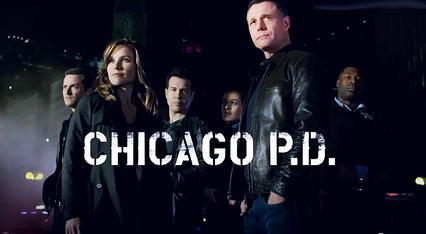
Chicago PD Tries To Sizzle Without Steak | TV Shows

by Michael Tyminski

Source: Wikipedia
Source: Wikipedia
Source: Wikipedia

Chicago PD: Wednesdays at 10 Eastern on NBC

Some show runners have vast TV universes that span multiple shows, but few have some as expansive as Dick Wolf. The Law and Order creator managed to place three shows (over two networks) within that franchise (with passive connections to shows as far flung as Arrested Development and Sesame Street through Richard Belzer’s Detective Munch). However, now in partnership with NBC, Wolf is attempting to create a second universe, trading in New York for the second city as his sophomore hit Chicago Fire gains a complementary show in Chicago PD.

Chicago PD follows both uniformed cops and the undercover intelligence unit as they pursue the major criminals on the streets of the windy city. The squad is headed up by Hank Voight (Jason Beghe) and Antonio Dawson (Jon Seda, playing a character that loosely ties into Chicago Fire), who follow the renegade vs. by-the-book dynamic that is commonplace in most police-related fiction. These men lead a squad that includes a veteran undercover cop who happens to be the bosses closest confidant (Elias Koteas), a young brash detective (Jesse Lee Soffer), his female partner whom Voight treats like a daughter (Sophia Bush), and a cadet getting his first big break (Kyle Ruzek).

So how does it turn out? Chicago PD plays in the ball field of the corrupt cop, but instead of making one cop corrupt, it turns almost all of it’s field agents into loose cannons– whether through corrupt bargaining with street gangs, cold clocking cat callers, or stealing rings from dead people. Even the cops that are seemingly not corrupt tend to have black hat tendencies such as withholding vital intelligence that leads to an officer’s death.

Speaking of dying officers, Chicago PD ends up leaning on shock like it’s a crutch. The pilot focuses on wall to wall action and plot development, and the pacing tends to lead to major developments coming down the pike in bursts, often leading to diminishing returns by the end of the episode. Similarly, by my account there were at least four no holds barred beat downs over the course of the show, implying the show seems to think that tons of violence will be some sort of ratings panacea. The end result is a show that seems to generate it’s characters solely for the purpose of being acted upon rather than creating characters who can drive the action.

That being said, it’s when Chicago PD stops taking itself so seriously that the show shines brightest. For a relatively rag-tag group of officers (the unit has existed for eight weeks as of the start of the show), there seems to be a strong familial attitude among those in the intelligence unit from minute one, and the chemistry within the unit is a pretty strong fit, although one would expect such a thing when one considers that the show uses every stock character trope that the sub-genre happens to offer (except for the veteran cop who’s one day away from retirement).

The Final Verdict: Chicago PD goes out of it’s way to create a gritty universe, but all of it’s grit feels there solely for grits sake. It’s a shame because if they let the characters breathe and bounce off of each other a little more in lieu of the blatantly flow chart like show that made it to TV (which is a touch ironic because Chicago PD isn’t built on being a full blown procedural like CSI or NCIS). Skip this one unless you really like cop shows, though even then you’re better off watching The Shield on DVD.

Filed Under: ENTERTAINMENT, OPINION, REVIEWS, TELEVISION Tagged With: Chicago PD, NBC, TV reviews, TV Shows

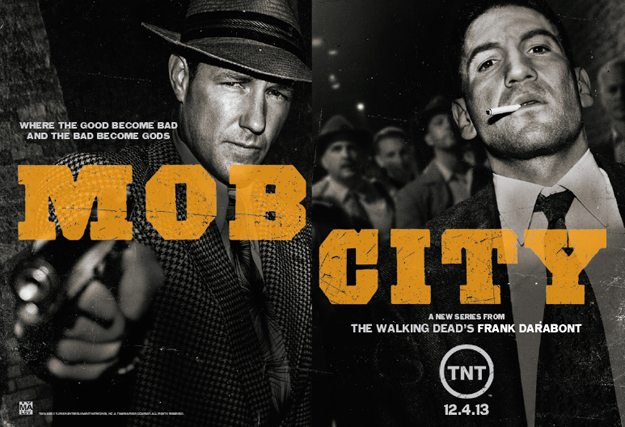
Mob City Is All Sizzle, No Steak

by Michael Tyminski

Source: TV.com
Source: TV.com
Source: TV.com

Mob City: Wednesdays at 9 Eastern on TNT

As we slowly march through December interseason (it isn’t fall, but mid-season hasn’t kicked in yet either), we tend to stumble upon the shortest of new series, often running six episodes or less multiple times a week (more on another of those “event” shows next week). Often these shows run either as a teaser for a full series, though often they exist because they fit the network’s holiday schedule better than running two new weeks of regular prime-time over a period where pre-emptions can be found all over the dial. TNT, however, is taking the opportunity to instead go big, placing a premiere mini-series in the course of the two weeks before Christmas from a big-name showrunner with some top notch guest stars.

Mob City is the brainchild of Frank Darabont, former showrunner of The Walking Dead and is a noir-style show set in the mid-20th century oasis of LA. Here, an embattled and corrupt police force must square off against Bugsy Siegel’s (Ed Burns) infamous mob group. However, Captain Frank Walker (Neal McDonough) is trying to shine as a beacon of light in the department, ridding it of corruption while making the fight against organized crime his own. The whole story is told through the eyes of Jeff Teague.

Visually, Mob City is very lush, with the sort of cinematic feel that the best of television now provides. In addition to its’ striking visual scenery, the show doesn’t hesitate to bring that same quality to the foreground, as the show does not hesitate to bring the effects to the forefront, including one cool shot where a failing underling is blown straight through the back wall of his church confessional. The more intricate scenes are also slickly shot, as shown in both the opening firefight of the pilot, and the climactic showdown at the end of the pilot.

Unfortunately, while the show is stylistically amazing, the underlying skeleton is weak. The show’s focal point, the detective Jeff Teague is incredibly boring, even by the stoic noir-lead standards. We spend the bulk of the first two episodes circling around the same points (in what had to indicate a burn-off, we see Necky tell a story about Mickey Cohen’s origins only to see the same exact story visualized in the open of the second episode—with maybe 10 minutes of real time passing between the two). The end result is a show that feels incredibly empty at points while belaboring a mystery that we already know about while failing to develop any other real plot lines to accompany it.

The Final Verdict: Mob City creates a wonderful playground and is a grandiose exercise in world building, but it’s all squandered on a slow moving story with not particularly well flashed out characters (in particular, it’s lead). The end result is the sort of show that seems ideal in the background, with one only really focusing on the TV when the guns come out. I’d skip this one, normally this would be the sort of show I’d call wait and see on (because it’s not necessarily bad), but with a six episode run, the lack of any urgency is alarming, and there’s minimal hope a third of the way in that the show is going to improve it’s structural issues.


Filed Under: ENTERTAINMENT, OPINION, REVIEWS, TELEVISION Tagged With: Mob City, TNT, TV reviews

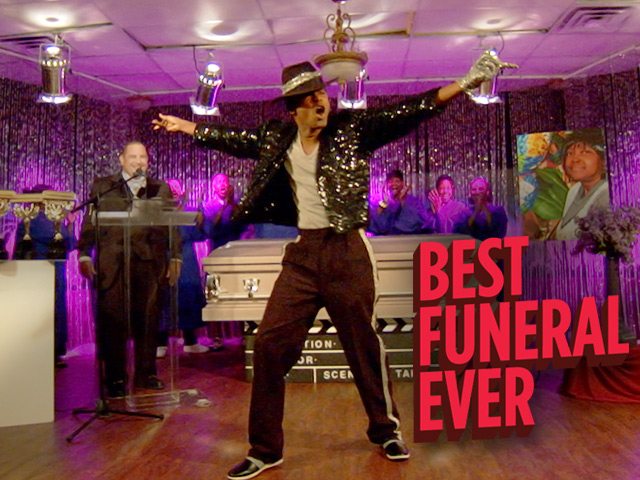
Best Funeral Ever Defies Expectations (For The Better)

by Michael Tyminski

Source: TLC
Source: TLC
Source: TLC

Best Funeral Ever: Mondays at 10 Eastern on TLC

For many people, the death of a loved one is a difficult and trying time. The survivor is often overcome with both grief and the pain of knowing that they will never see a person whom they spent a large portion of their life with again. Many times, however, during the funeral itself, the phrase “ a celebration of [the deceased’s] life” is often used with the promise of better times to come in the afterlife. TLC is focusing on that phrase with the intensity of a laser in it’s newest offering, which premiered Monday night.

Best Funeral Ever follows Texas funeral director John Beckwith Jr., whom has a reputation for putting together some of the most outlandish “life celebrations” the world has ever seen. Instead of the typical funeral, where the deceased initially goes through a wake before the funeral mass and burial in a traditionally somber mood, the “going home” ceremonies are full blown parties with contemporary music, custom caskets, a less formal dress code, and all sorts of interesting activities. Beckwith puts on about 125 of these ceremonies a year, and TLC is there to take you along for the ride.

When I first heard about this show, I had some serious concerns that the show was going to get in the way of the grieving process by putting too harsh of a spotlight on the mourning family (by forcing their constant input). However, thankfully, the producers instead opted to take the surprisingly more tasteful track of taking elements of an office comedy through the process of planning the most off-beat funerals most people have seen.

The show tends to shine it’s brightest when it operates in that office comedy mode. In our pilot, the best parts often involved Treanare and E awkwardly trying to explain to various people in the wedding profession that they are trying to have a wedding for two dead people while the wedding professionals look on with a mix of puzzlement and disdain. The second episode furthers this dynamic, as Beckwith’s bumbling son B3 bites off more than he can chew trying to get a casket to move 100 meters at track star speed.

Best Funeral Ever‘s cold opens concern me most, as that is where it seems like the show starts to drift into self-parody a little bit. This is particularly notable in the second episode, where we got a four minute musical production about Breakfast. While I understand these moments allow for the show to crystallize its’ premise of putting the fun in “funeral”, when it starts to veer towards ridiculous, it doesn’t reflect well on anyone. Similarly, boss Beckwith’s commentary feels lacking, often spouting out the same statements repeatedly, which is extra unfortunate because he’s our de facto narrator.

The Final Verdict: I went into this show thinking that I was going to end up exploding, LA Shrinks style. Instead, I stumbled into what’s mostly an office comedy about people who happened to work making unconventional funerals, as opposed to a show that exploited funerals for the televised eye. This is probably worth checking out once-or-twice for the spectacle and to watch funeral workers get over their heads during the course of their unconventional event planning.

Filed Under: ENTERTAINMENT, OPINION, REVIEWS, TELEVISION Tagged With: Best Funeral Ever, TLC, TV reviews

Getting On Adeptly Mixes Drama, Comedy

by Michael Tyminski

Source: HBOwatch.com

Getting On: Sundays at 10 Eastern On HBO

2013 has been a pretty strong year for HBO. Game of Thrones, The Newsroom, Boardwalk Empire, and True Blood each keep churning along, holding the drama side of the ledger together. However, if there’s an area that HBO seems to have made a leap it’s in its comedies. Veep broke out in it’s sophomore year, receiving even some surprise Emmy love. Eastbound and Down made a triumphant return for it’s fourth (and second farewell) season. Even low-rated newcomers Family Tree and Hello, Ladies had managed to score some critical acclaim. HBO is looking to keep that streak going over the course of the winter with it’s newest show: Getting On.

Getting On follows the staff of the fictional Mount Palms hospital in California, where they must take care of those who are aging less than gracefully while fighting through red tape. Amongst the staff members who must deal with these circumstances are the ambitious Dr. Jenna James (Laurie Metcalf) as well as nurses Dawn and Didi (Alex Borstein and Niecy Nash).

The writing on the show is fairly nimble due often juxtaposing the grim nature of death (and end of life care) with a neurotic obsession towards fecal research and the guys who work in the hospital. However, where Getting On truly succeeds is not where these topics merge together, but rather in it’s ability to quickly change tone over the course of three quick scenes, as shown in the last five minutes as it flips from funny, to heartwarming, to tragic all over the course of about two or so minutes while hitting all of the correct notes.

What really stands out, however, is the sheer amount of talent on the principal cast. Laura Metcalf shines as the wild-eyed Dr. James who clearly puts her research ahead of her patients, leading to a glorious breakdown that closes out the show’s second act. Niecy Nash and Alex Borstein both do an excellent job as nurses who are essentially polar opposites of not only each other, but previous roles they’ve played (after 14 years of playing Lois Griffin, hearing Borstein not deliver in a the nasal, shrill Lois Griffin tone felt like a clear departure).

Visually, the show operates in a very cinema verite feel, often mixing in unorthodox camera angles, that one can only assume mimics the look of the geriatric patients from their beds. Similarly, the lighting tends to give off the same sterile, unnatural tinge as one would expect from the geriatric ward of the hospital, though it often comes off dullish, closer to a horror movie in visual tone.

The Final Verdict: Getting On is incredibly dark, but can also be incredibly funny and incredibly sweet as the staff of our fictional hospital seem as brittle as the patients they watch over. The writing is inventive and the cast takes quickly to angles that run counter to their prior television roles. The end result is the sort of show worth watching if you’re into more morbid dramedies and an excellently crafted show, but I can also see this not being for everyone.

Filed Under: ENTERTAINMENT, OPINION, REVIEWS, TELEVISION Tagged With: Getting On, hbo, TV reviews

Almost Human Will Grow On You

by Michael Tyminski

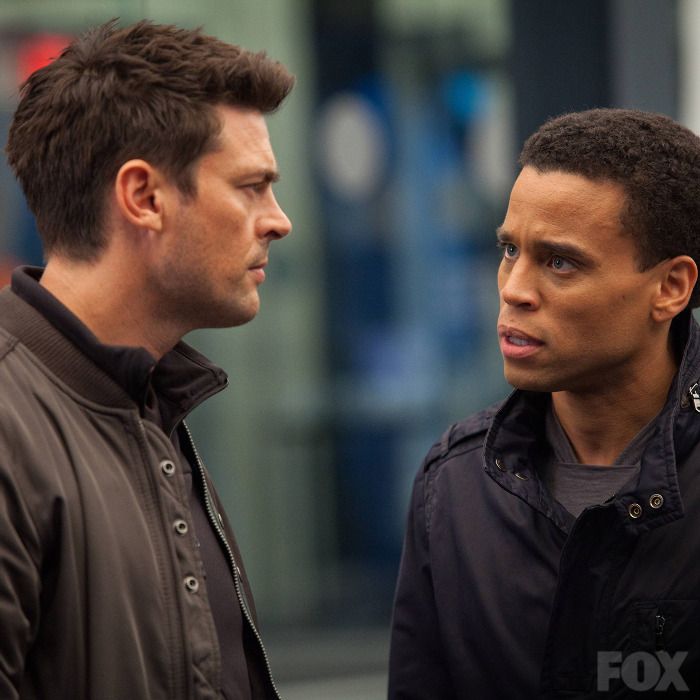
Karl Urban and Michael Ealy (Source: Fox)

Almost Human: Mondays at 8 Eastern on FOX

When I was growing up throughout the 1990’s, one of the more prevalent themes seen throughout pop culture was a generally futuristic vibe, whether it was cyberpunk (The Matrix), 21st century what-ifs (the much mocked MLB “Turn ahead the clock” promotion), or a pretty large amount of sci-fi on your TV screens (Star Trek: TNG, Deep Space Nine, Voyager, Seaquest). However, as the new millennium progressed, many of these things dropped like flies from pop culture consciousness. Fox is banking on the notion that what’s old pretending to be new will be new again by dipping back into that well with it’s newest big show which debuted Sunday and Monday night.

Almost Human takes a look forward into the alarmingly crime-riddled future of 2048. In this world, police work has gotten so incredibly dangerous that the police force is forced to use robotic partners in order to perform their duties. So when John Kennex (Karl Urban) is brought back onto the force two years after getting ambushed by a shadowy crime syndicate, he is forced to adjust and deal with the robots he has learned to loathe after their rationality killed his partner. After killing his first robot partner, he gets paired up with a Dorian model (played by Michael Ealy) who was deemed too human for police work, and the two go off to fight crime in the city.

Courtesy of FOX turning this premiere into a two-night event, I’m taking the opportunity to catch both episodes before putting out this review. More stock will be put into Monday’s episode if only because second episodes tend to be more representative of what the series will resemble episodically as opposed to pilots which tend to devote time to exposition and origin stories.

Almost Human has some bright spots Michael Ealy shines as Dorian, a difficult task considering he has to come off more human than the bland MX units that were later assigned to the cops and still just uncanny enough that it’s clear you’re aware he’s a robot. Continuing a subtle trend this year of comedic actors occupying the science labs of our new crime shows Mackenzie Crook (The Office UK) gets the privilege of being a perfect fit as the very socially-awkward Rudy, the resident’s lab technician. Unfortunately, many of the other peripheral characters seem to get short shrift in terms of story and could use some further development.

I also appreciated that in a TV landscape full of cop and detective shows, Almost Human sets itself apart by being closer to Die Hard and Lethal Weapon as opposed to functioning like yet another Law and Order or CSI clone. The action sequences themselves are pretty cool looking, using tight camera angles and wide open palate to maximum effect.

Where the second episode truly seems to benefit over the pilot is that the show added moments of levity to counterbalance the grimness that pervades much of the series. The show definitely borrows a lot from the Blade Runner universe, with it’s seedy city underbellies, pervasive crime, and generally dystopian balance of power.. The pilot did it’s job unloading the ton of exposition that is essential for world-building fantasy worlds, but got a little dull at points and definitely would have lost my attention had the same ultra-serious tone remained for the full series.

The Final Verdict: Once you get past the wall of exposition and stereotypical hero origin-story pilot, Almost Human turns the corner into a refreshing different take on the cop drama with it’s shoot first- ask questions later mentality. While there are some obvious tweaks the show could use (most notably in developing it’s side characters and making Kennex a little less one-dimensional), there’s enough good in the first two episodes to justify Fox’s hype. It’s definitely worth checking out if you’re looking for an action fix on Mondays, a night where only Fox really has cop dramas on the broadcast dial.

Filed Under: ENTERTAINMENT, OPINION, REVIEWS, TELEVISION Tagged With: Almost Human, Fox, TV reviews

  • « Go to Previous Page
  • Page 1
  • Page 2
  • Page 3
  • Page 4
  • Page 5
  • Interim pages omitted …
  • Page 11
  • Go to Next Page »

Primary Sidebar

Navigation

  • HOME
  • OPINION
    • REVIEWS
  • BUSINESS
  • LGBT
  • ENTERTAINMENT
    • ARTS
    • MOVIES
    • MUSIC
    • TELEVISION
    • THEATRE
  • LIFESTYLE
    • TRAVEL
    • FASHION
    • HEALTH
    • FOODIE
    • STYLE
  • POLITICS
  • SCIENCE
  • SPORTS
  • TECHNOLOGY
  • U.S.
    • NEW YORK

Footer

  • ADVERTISE
  • TERMS OF SERVICE
  • CAREERS
  • ENTERTAINMENT
  • Home
  • Contact
  • Legal

Copyright © 2026 · ManhattanDigest.com is run by Fun & Joy, LLC an Ohio company · Log in

Loading Comments...