
• Skip to primary navigation
  • Skip to main content
  • Skip to primary sidebar
  • Skip to footer

Manhattan Digest

All you need to know about Manhattan culture and so much more...

  • LIFESTYLE
  • ENTERTAINMENT
  • LGBT
  • OPINION
  • TECHNOLOGY

TV reviews

Bad Teacher is Better Than I Thought It Would Be

by Michael Tyminski

Source: CBS
Source: CBS
Source: CBS

Bad Teacher: Thursdays at 9:30 on CBS

Last week, when discussing FX’s new take on Fargo, I brought up the fact that movie rehashes seem to be in vogue this year. However, what makes this year’s version seem considerably more different is that CBS, which tends to be more likely to stick to it’s own way of multi-cam comedies and procedurals seems considerably more game to jump in on these trends as it’s rating slowly descend back to earth. September’s Hostages was part of a cluster of hostage crises, January’s Intelligence was similar to ABC’s the assets, and tonight’s Bad Teacher is part of a string of movie adaptations we can expect to see over the next few months.

This version of Bad Teacher comes with a very fairly similar (if slightly more open ended) path of the original movie. Trophy wife Meredith Davis (Ari Graynor ) is kicked to the curb by her wealthy husband, and is forced to work as a middle school teacher while looking for a new sugar daddy. In this new world, she encounters a number of faculty members, including a stodgy faculty president (Kristin Davis )and a gym teacher from her past (Ryan Hansen) who show some skepticism about this new faculty member.

Typically, I find that CBS comedies tend to feel pretty monotonous in terms of their pacing, their jokes, and their styles. Instead, we get an interesting mix that combines zippy punchlines with a touch of surrealism and some great moments where Meredith goes on rants with much delusions of grandeur. For me the mixture was fairly reminiscent of a show like Sex and the City, with a bubbly tone that also carried a decent mix of snark to accompany it.

A large part of the credit goes to the amazing veteran cast the producers managed to assemble. Ari Graynor is a revelation as Davis, owning her character from minute one. Backing up Graynor are some formidable comedy veterans such as Kristin Davis (Sex and the City), Sara Gilbert (Roseanne), and David Alan Grier (In Living Color). We even get some extra support from Richard Kind, playing a close friend of Meredith’s who lets her crash in their guest house.

If there is one knock on the pilot, it’s in the storytelling. While I appreciate the fact that Bad Teacher did not draw out it’s origin story too long – it’s wrapped up before the credits begin – it also seemed to shoehorn in sitcom conventions a touch awkwardly. This was particularly notable when the show went to the “heart” moment in the third act, as it created the sort of emotional whiplash when one considers that a real bond was not well formed in the initial two acts.

The Final Verdict: While I was initially skeptical, I’ll be the first to admit that Bad Teacher is the most I’ve laughed at a CBS show aside from How I Met Your Mother. It’s a fast, fun, series that doesn’t try to occupy too much mind space (perfect for both the CBS lineup and 9:30 on a Thursday). Check it out, you won’t be disappointed with it.


Filed Under: ENTERTAINMENT, OPINION, REVIEWS, TELEVISION Tagged With: Bad Teacher, CBS, TV reviews

Fargo is Superbly Acted

by Michael Tyminski

Source: FX
Source: FX
Source: FX

Fargo: Tuesdays at 10 Eastern on FX

Every year there seems to be one macro-level trend that every network on the dial jumps on at the same time. Last year, for example, that theme was serial killers, spawning The Following, Cult, Bates Motel, and (the strictly superior) Hannibal. This year, we’ve seen some subthemes with hostage crises (Hostages, Crisis), and spy work (Intelligence, The Assets). The real trend sticking through this year however, is to spin older movies into shiny new TV shows. NBC is trying it with Rosemary’s Baby, CBS is launching Bad Teacher next Thursday (I’ll have the review for you here), and FX is attempting the same feat with Fargo.

Fargo, loosely based on the Coen brothers picture of the same name, is built around the small town of Bemidji being thrown into upheaval when Lorne Malvo (Billy Bob Thornton) comes into town who changes the life of local insurance salesman Lester Nygaard (Martin Freeman). From here the show spins into the crime drama and black comedy roots of the original film, following not only Lorne and Lester, but the local Bemidji police force.

So how is this new Fargo? Well at a minimum, you can say the series starts with a bang, with the body count inching upwards from minute one. The show probably does well to instead do away with recounting the old story and moving towards a new, but parallel track. The superficial aspects are still present: the bitter cold, those upper-midwestern accents, a seeming commitment to niceness (unless someone’s talking to Lester, in which case the niceness tends to take that facetious “bless your heart” sort of tone), but anyone looking for familiar characters are not bound to find them. Unfortunately, if there is one knock with the series, it’s that it feels a little hollow at points (and also possibly the result of FX showing extended cut pilots for many of their drama debuts).

If you’re looking for the quirky, midwestern, homespun brand of dark comedy, you will find it in this Fargo as well. Often the humor is found in the spaces between the action, such as when Molly gossips to her local coffee shop owner about one of the murders just as her boss is walking in. Similarly, any time Lorne is forced to interact with teenagers, we are bound to get a comedic scene of him talking someone into mischief (or worse) while preying on the stupidity that tends to accompany kids of that age.

The show is superbly acted. Billy Bob Thornton is amazing as Lorne, a ruthless drifter who Thornton plays as if he is the devil himself. However, the real gem of Fargo is Martin Freeman, whose Lester is constantly pushed over the edge during the course of the pilot, gradually moving from bullying victim, to snapping on his brother, to putting out a hit on his bully, to much, much, worse. We also get strong acting from the supporting cast all around, including Alison Tollman, who plays Bemidji police officer Molly Solverson.

The Final Verdict: Fargo is the sort of show that’s in a weird place: if you view it as a watered down version of the film, you will probably talk yourself into not liking it. However, there actually is a lot to like, even if the show doesn’t truly transcend or break new ground (If I may steal an analogy from figure skating for a minute, the technical score would be considerably higher than the artistic score). I would still recommend checking this out if only for the particularly strong acting.

Filed Under: ENTERTAINMENT, TELEVISION Tagged With: Fargo, FX, Martin Freeman, TV reviews

Years of Living Dangerously Brings Human Side To Climate Change

by Michael Tyminski

Executive Producer James Cameron (Source: Wikipedia)

Years of Living Dangerously: Sundays at 10 Eastern on Showtime

I’ll be the first to admit: when I scheduled this review, I saw the title and completely misjudged what I thought this show was going to be about. After years of Showtime putting on shows like Weeds, Shameless, Ray Donovan, Dexter, and Dead Like Me, it wouldn’t have been unreasonable to assume from a title like Years of Living Dangerously that we would get something much along those lines. Instead, Showtime is actually looking for it’s answer to HBO’s Vice with a hybrid documentary/news vehicle that takes it’s reporters to far away places for some in-depth journalism.

Years of Living Dangerously takes a different tack to the science based  show. We instead get a mix between Vice and Nova, with a little sensationalism thrown in for good measure. Much as Fox’s Cosmos is focused on physics, Years of Living Dangerously focuses on the effects of climate change. However, what makes Years of Living Dangerously different from it’s forbears is the use of celebrity correspondents, putting movie stars like Don Cheadle and Harrison Ford on the ground to report on the night’s stories.

I find that with Years of Living Dangerously, the quality of the stories tends to vary wildly. Thomas Friedman gets pulled into the ecological roots of the Syrian revolution, only to end up with a story that focuses more on the revolution itself than the ecology that led to it (in fact, outside of some background with NSA chief Susan Rice about the National Security concerns of climate change, it’s the by far the least science oriented story of the three). While the reporting is obviously top notch as a human interest story (it doesn’t hurt that Friedman is a journalist by trade), it also felt like it the story hit best when it was a story of the human toll of revolution, as opposed to really explaining how climate change started a revolution (some more background on the revolution itself would have been nice).

Don Cheadle, meanwhile ended up with the strongest of the night’s stories: a piece about how the drought is affecting middle American towns, and how to explain to them that the drought that caused the towns main industry to dry up was the cause of climate change, not an act of god. This story works in part because Cheadle is very comfortable letting the story be of his subjects instead of making himself the story (more on that later). Furthermore, more than most, the story has a clear coherent beginning and end, with a great takeaway (namely, that the messenger matters more than you would think).

At the other extreme, is Harrison Ford’s story. Whereas Cheadle and Friedman are essentially themselves, one gets the vibe that Harrison Ford is trying to slip into some sort of character, asking condescending questions and generally using a voice that sounds like Batman, Rohrschach, or any number of other loose cannon heroes. Making matters worse is the shows insistence of building to an event (Ford’s confrontation with the Indonesian forestry minister) that never actually occurs. It’s the sort of thing that grates enough, but also makes you glad that the show opted to rotate between beats on it’s three major stories, as twenty minutes of Ford playing an action-hero with a journalism day job is the sort of thing that will distract from the show’s key message (or worse yet force people to tune out due to excessive sanctimony).

The Final Verdict: Years of Living Dangerously is a mixed bag. On one hand, the show has a very deft touch with adding an emotional dimension to what could easily veer into dry territory. On the other hand, Years quality will seem to vary wildly depending on who is telling these stories– it’s no surprise that the show’s best moments come from people who have experience with journalism or the documentary format. The documentary is also the rare show that really doesn’t fit well in my ratings system: I’d say check it out, but if they ever release the individual stories as an anthology of mini-documentaries, it might be a better way of absorbing Years.


Filed Under: ENTERTAINMENT, OPINION, REVIEWS, TELEVISION Tagged With: Showtime, TV reviews, Years of Living Dangerously

Kitchen Casino Is A Flop From Concept to Execution

by Michael Tyminski

Source: Food Network

Kitchen Casino: Mondays at 9 Eastern on Food Network

It’s pretty amazing to see the lengths that the kitchen competition sub-genre has gone to since the dawning of Iron Chef on Japanese television 20 years ago. Numerous innovations have occurred in the format as it has matured, including Chopped mixing in a multi-chef elimination concept, and Cutthroat Kitchen added a crazy sabotage angle to the proceedings. Tonight, Food Network adds a random element to the competition with it’s bizarrely titled Kitchen Casino.

Kitchen Casino, hosted by reality TV fixture Bill Rancic, mixes the high stakes world of gambling with high pressure world of cooking. Three different cooking challenges are in play, based loosely around slots, poker, and roulette. As is typical for the genre, the dishes for each challenge are placed in front of a panel of judges that combine a mixture of culinary and celebrity worlds. The chef who survives all three challenges is declared the winner and will walk away with a cool $30,000 jackpot.

The most notable aspect of Kitchen Casino is how incredibly forced everything feels. The show seems to be very fond on spending it’s time forcing the contestants to spit out as many canned quotes as possible. This overcanned nature extends out to host Rancic, who comes off alarmingly wooden in a subgenre where the hosts tend to lean more towards theatricality. The end result are cheesy overblown stakes that feel even more egregious when you realize exactly how weak the payoff actually is (let’s just say the average mid-90’s Jeopardy winner walked away with a comparable sum).

This woodenness wouldn’t glare as much if Kitchen Casino’s format wasn’t painfully over-contrived. The first round revolves around a secret ingredient and cooking style built around a slot machine motif, but the even with a redundant 5 minute second spin twist doesn’t make this round feel inspired. The second round, kitchen roulette makes for a lively format, but the spinning kitchen stations don’t feel like the best execution of the format. The final round, which is poker inspired, has the final two chefs trying to put together dishes from a list of five ingredients – three of which are common and two of which are held to each chef.

The most damning thing about Kitchen Casino however, is how empty it feels once you get past all of the canned dialogue and gimmicks. One of the reasons that I have devoted countless hours of my life to watching Top Chef and most of Food Network’s lineup at various points in the past is as a form of culinary inspiration, and Kitchen Casino sidelines the kitchen to a ridiculous degree. Outside of some very quick descriptions of what they’re doing, the show instead wastes it’s time on forced chef banter and awkward play-by-play during the end of the competition.

The Final Verdict: There might be a viable 30-minute version of Kitchen Casino, but this is the weakest variant of chefs facing off for a mediocre payoff (after advertising a $30,000 payoff, the actual payoffs will likely be in the ballpark of $8,000 to $12,000) I’ve yet to see. It’s not very often that a show feels too busy while simultaneously feeling like there is not enough substance to actually fill an hour of TV. Skip this one and watch some Chopped or Iron Chef reruns.


Filed Under: ENTERTAINMENT, TELEVISION Tagged With: Food Network, Kitchen Casino, TV reviews

Friends with Better Lives Is Bland And Lifeless

by Michael Tyminski

Source: CBS

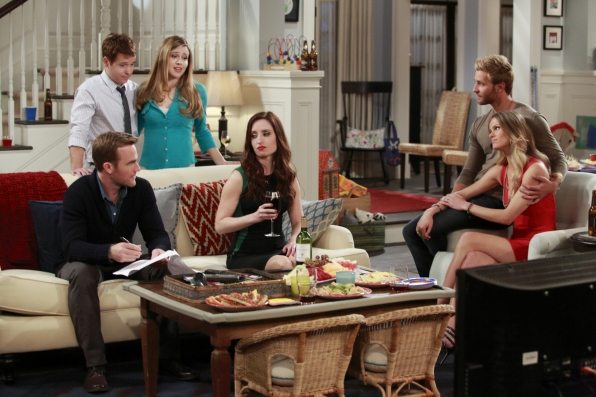
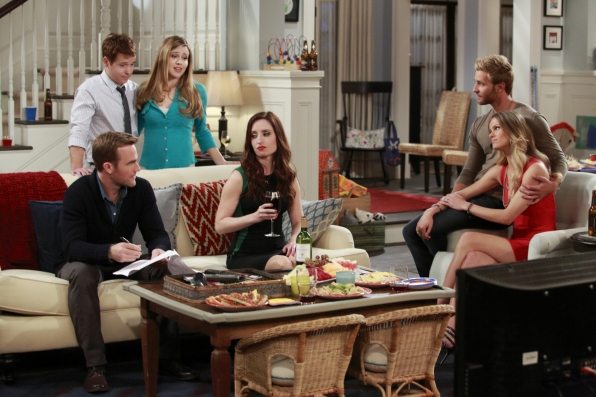
Friend with better livesFriends With Better Lives: Mondays at 8:30 on CBS

It’s amazing the degree to which companies will go to replicate something that was successful. For example, before Lebron James rise to primacy in the NBA, there was a long search for who the next Michael Jordan would be. In TV, weirdly enough, this concept is best applied to every network struggling to find the next Friends. NBC tried it with Coupling, ABC tried it with Happy Endings, You could argue that Fox’s New Girl is a reinterpretation of the concept, and now CBS is trying it with the similarly titled Friends with Better Lives.

Friends with Better Lives deals with the classic neuroses that come with thinking that someone else has it together better than you. It does this by contrasting friends in different stages of emotional maturity, from single to engaged, to married to divorced. The show has a number of familiar faces such as James Van Der Beek (as divorced Will), Brooklyn Decker (as newly engaged Jules) and Kevin Connolly as happily married Bobby.

The grand flaw with Friends with Better Lives is painfully simple: when you close your eyes and listen to the jokes for a minute, you would very easily mistake it for 2 Broke Girls. Both feel reliant on stock tropes and and both have a tendency to turn blatant setups into even more blatant punchlines. This can often be groan worthy when it goes into rapid-fire mode (often a Will specialty), relying on hacky wordplay. Making this wordplay even worse is the omnipresent laugh track, which seems to fill every silence on the show, even in some instances coming in before the actual punchline of the joke.

Friends with Better Lives doubles down on old and tired with it’s incredibly goofy plotting. In order to put all of the pegs in all of the right holes, it uses the most ham-handed of methods to get it’s engaged couple engaged and Will officially divorced. However, because we’re not really acclimated to the characters or their stories, both scenes feel incredibly empty, denying the sort of emotional resonance that these wham moments typically tend to have.

What saves Friends with Better Lives is it’s cast. James Van Der Beek in particular seems to be having a blast launching one-liners in rapid fire fashion whenever the occasion allows. Similarly, Rick Donald manages to hit the tone of Lowell, a smug-yet-progressive Australian with a rare sort of touch that tends to elude these sorts of shows, not allowing the character to completely devolve into the caricature that some of the main characters end up turning into (the show’s lone single character at the outset, Kate tends to be victim to this sort of treatment).

The Final Verdict: Friends with Better Lives is what would happen if you throw every CBS comedy into a blender and spit out a shiny new sitcom (to the extent that I’m surprised Chuck Lorre’s name isn’t attached to it). Unfortunately, where those other sitcoms have distinctive features that can at least make their pitch “CBS formula PLUS “insert X here” EQUALS “New Show”, Friends with Better Lives is “CBS formula” PLUS “Friends clone formula” EQUALS “A bunch of stuff we’ve already seen before”. Skip this one, and may one day the comedy gods find the right home for James Van Der Beek.

Filed Under: ENTERTAINMENT, TELEVISION Tagged With: CBS, Friends with Better Lives, TV reviews

On TV, The Real Crisis Is Boredom

by Michael Tyminski

2014_0210_Crisis_Show_Alternate_1920x1080_CACrisis: Sundays at 10 Eastern on NBC

It’s always amazing to see what trends the networks are going to seize next. Last year, the networks were big on serial killers, spawning The Following, Hannibal, Cult, and Bates Motel. This year, apparently, one of the flavors of the week is hostage crises with the topic already rearing it’s head on CBS’s lackluster Hostages. NBC has also decided to go down this road (with a fairly straight up clone) with it’s newest Sunday night show Crisis.

Crisis, much like Hostages revolves around the core skeleton of a powerful Washington family ripped apart by a nefarious mastermind looking to use force in order to impose his will on the country. However, while Hostages was built entirely around the idea of a surgeon killing the president while under the knife, Crisis aims to be more ambiguous by adding political and diplomatic intrigue to the proceedings.

Everything about Crisis screams lazy. The show opens on some of the laziest green screening I’ve seen in recent memory (I’m inclined to think they felt it was meant to feel disorienting, but it feels bush league). Normally, when a show is lazy on it’s visuals it’s a one time thing, but even the image of a plane shutting down in mid-air and plummeting into a nearby industrial building (as shot from an adjacent diner) feels like a non factor. The whole point of visuals is to feel a visceral punch, but nothing this show tries to pull off registers from that standpoint.

Worse than the CG, the acting feels equally listless. Even with an all-star cast including Dermot Mulroney (who I thought was amazing when I saw his stint a couple years ago on New Girl) and Gillian Anderson (The X-Files), everything feels flat, wooden, and generally the sort of teleprompterese I only expect to see from politicians. There are however, a couple of bright spots in this pilot (made even more interesting by the fact that said actors were isolated from the cast for the rest of the show, making me truly appreciate the marvels of second unit directing maybe?) in Lance Gross and Joshua Erenberg, who play Agent Marcus Finley and Anton Roth respectively.

I wish I could blame just the acting and the visual effects, but the fact of the matter is Crisis is a triple threat of suck, as even the initial writing feels truly terrible. Our FBI alternates between complete omniscience and the absolute opposite, with the show going to ridiculous lengths to ensure our characters are lost (I may come from a middle class background, but even the most affluent people I know aren’t embedded with computer chips). Even the mid-show twist, which moves Mulroney’s Mr. Gibson from hero to villain seems completely out of the blue, showing a disturbing lack of a sense of pacing from the sort of twist that typically comes in the last segment of numerous prior pilots.

The Final Verdict: I spent some ink above mentioning all of the similarities between Crisis and Hostages, but I feel like I missed one of the most obvious connections in retrospect: I am completely uncompelled to watch either of them. It’s not very often that I watch a show where it feels like all parties involved thoroughly mailed it in, but Crisis fits the bill in this regard. Skip this, if you actually want to see a hostage situation turn into dramatic entertainment, write a skit or something, because quite frankly whatever you do it will probably be more entertaining than Crisis.


Filed Under: ENTERTAINMENT, OPINION, REVIEWS, TELEVISION Tagged With: Crisis, NBC, TV reviews

Resurrection’s Inconsistency Could Prove Fatal

by Michael Tyminski

Source: ABC
Source: ABC
Source: ABC

Resurrection: Sundays at 9 Eastern on ABC

One of the real downsides of the prevalence of procedural shows on the big four is that it tends to crowd out the remainder of the drama landscape. Even our shows with a more sci-fi and fantasy bent (Hannibal, Grimm, Almost Human) have been forced into this “case of the week” mold. As a result, we see very few high concept and family dramas (Parenthood being the only real family drama I can think of of late) on the network dial. ABC, as the network least likely to run procedurals on it’s schedule (most of their dramas tend to be more soapy) is bringing out a high concept take on this sub genre with its’ newest show: Resurrection.

Resurrection tells the tale of Arcadia, a small town in Missouri where an 8 year old boy mysteriously reappears after dying over 30 years ago. This sends the Langston family into upheaval, as Jacob’s parents must confront the surprise reappearance of their son. Their extended family is dealing with untold knowledge of the circumstances that led to the drowning accident that took both Jacob and his aunt. The government, meanwhile, is trying to figure out if Jacob is actually Jacob, and if so

Any show that builds around a core mystery needs to start asking more questions than one can easily can answer and Resurrection doesn’t hesitate when it comes to this task. In addition to the questions relating to the shows central conceit, the show makes it a priority to create as many new angles as possible, whether it’s a new mysterious figure whose only hinted at until the end of the episode, the bald man whom was at the river, or the new found shaking of the local pastor’s faith.

Resurrection’s acting feels hit or miss at points. While our premiere episode doesn’t help much in this matter by virtue by building around an overwhelming sense of confusion, the performances felt very inconsistent. For every moment that feels generally moving, one can find another moment that feels a little too muted out to register.

Visually, Resurrection hits enough of the right notes, whether it’s going to a brighter and more Polaroid like filter on flashbacks of happier days, while focusing on muted tones around the river. Even the show’s slower moments, like a moment where Jacob and Mrs. Langston walk into church in the middle of the pastor’s sermon is shot with a surprisingly high attention to detail.

The Final Verdict: Resurrection is a maddening show, in that you can see it’s potential, but at the same time know there’s a reasonable sized gap to realizing it. It’s tone and cinematography are excellent, but the writing and acting feel remarkably inconsistent. This is the sort of show I’d wait and see on: tonight’s episode was a serviceable beginning point, but you’re going to want to see signs of growth before you emotionally invest in it.

Filed Under: ENTERTAINMENT, OPINION, REVIEWS, TELEVISION Tagged With: ABC, Resurrection, TV reviews

Sirens Is Alarmingly Funny

by Michael Tyminski

Source: USA Network
Source: USA Network
Source: USA Network

Sirens: Thursdays at 10 Eastern on USA

2013 was an odd year for USA. While the network had spent years building it’s brand of “characters welcome”, it had instead spent the year launching a handful of mediocre reality series (The Moment, Summer Camp) to flank it’s more established shows. Going into 2014, USA seems to be aiming for a more balanced mix of new scripted and new reality, and is trusting some proven hands in order to find the right hits to replace some of its’ aging lineup.

Sirens, from the minds of Denis Leary and Bob Fisher, is the story of three EMT’s in the Chicago area as they go on calls trying to save the lives of the people who call on them. Two of the EMT’s, Hank (Kevin Daniels) and Johnny (Michael Mosely), are long time friends, but they are also tasked with helping to show neophyte Brian (Kevin Bigley) the ropes. Further complicating matters is their constant interactions with Johnny’s ex-girlfriend Theresa (Jessica MacNamee), a hard nosed cop still holding some feelings for Johnny.

Sirens aims to be the medical equivalent of the buddy cop show, and succeeds at it perfectly. Johnny and Hank have a dynamic that’s reminiscent of Riggs and Murtaugh, with the loose cannon Johnny being tempered by the more reserved Hank. Where Sirens deviates is in the addition of Brian, who operates as a naive counterpoint to their cynicism and as the sort of hate sink that happens to keep Johnny and Hank from eating each other alive with their comedic barbs. In a lot of ways this puts Sirens in direct contrast with numerous other medical shows (including and most starkly, Scrubs), as the gravity that comes with death is a non-factor.

When it comes to it’s comedy side, Sirens is remarkably funny. Jokes are delivered with the same urgency one would expect from the more serious side of the medical profession, with the digs often coming at a machine gun clip. While the bulk of the humor tends to be thrown in the direction of new recruit Brian, the best gags are thrown at the worst patients that the crew are forced to endure, whether it’s a businessman who has a coke bottle trapped in an uncomfortable place and an indignant jerk whose spewing venom at Hank after being struck by lightning.

If there is one thing that feels extraneous, it’s a tepid romantic angle between Johnny and Theresa that’s tacked on. It feels forced because all of the plotting comes from the ridiculous maneuvers that the show takes to force the two exes into the contact. As a show that focuses entirely on it’s A plot (in the first two episodes, we see nothing that resembles a B plot), this drags the show to a screeching halt at points, clashing with the incredibly tight rapid-fire rhythms that make Sirens shine.

The Final Verdict: Sirens clicks in all of the right places, being wickedly funny while focusing on the mundane aspects of medical work. It also gets the most out of being fearlessly bawdy, while maintaining the sort of “in your face” persona that people have come to associate with Denis Leary’s brand of comedy. Check it out if you’re looking for something fun in the 10 o’clock hour (though it also faces stiff competition from Andrew Daly’s Review).


Filed Under: ENTERTAINMENT, OPINION, REVIEWS, TELEVISION Tagged With: Sirens, TV reviews, usa

Mixology Is Funny But Uses A Bad Formula

by Michael Tyminski

Source: ABC
Source: ABC
Source: ABC

Mixology: Wednesdays at 9:30 Eastern on ABC

Life is full of mysteries, and TV is no exception. These head-scratchers range from the mundane, like for example how Dads got all 17 of it’s episodes to air to the the more complex, like how MTV ran kicking and screaming from music and why the networks that tend to pride themselves on their scripted programming are predominantly launching reality TV. However, amid all these mysteries, one boggles more than most: How on earth does ABC consistently fail to find a suitable show to pair with one of the best lead-in’s on TV: Modern Family. In the last calendar year we’ve found at least two other shows in that spot, and it’s newest show Mixology also seems like a questionable fit in ABC’s Wednesday family comedy block.

Mixology, from the writers of The Hangover (I gleaned this information because it is literally the only thing ABC tells you about the show), tells the story of ten individuals over one night in a high end bar in Manhattan’s meat-packing district. These young, trendy, individuals are all out on the hunt for love (whether for the long term or just for the night), and Mixology focuses hard on this romantic angle (as opposed to building around a night out with the friends). The structure furthers this by focusing on two or three characters on the bar at a time.

As with most comedies, the first question I tend to gravitate towards is: Is it funny? Mixology is pretty successful on this level even if most of the best jokes are in our narrator’s snarky voice overs. These voice overs exist to set up fairly long expository flashback sequences. The sequences themselves are pretty funny in their own right (even if they don’t really reveal more than the one relevant character trait) often taking advantage of a more slapstick style than the bar scenes themselves.

Unfortunately, Mixology fails on it’s concept. The romance angles feel fairly empty, and while the whole show is structured and marketed on the concept of “who’s leaving the bar with who”, that is by far the least interesting part of the show. No matter how hard this show wants me to care about potential relationships, it makes the fatal mistake of leaning so hard on it’s jumbled serialization that it is going to be difficult to truly root for ships until it’s way too late.

Many of these flaws are a function of the shows jumbled format, which takes a cue from season four of Arrested Development. The show takes a jumbled cast of 10 strangers, and pairs them off, isolating its’ episodes main characters for long stretches of time. While a format of this ilk may work well for a show like Development, it’s much harder to achieve such a goal when the characters are completely new and particularly well fleshed out.

The Final Verdict: In an ideal version of Mixology I see a pretty funny sitcom about three buddies in a bar trying to get laid. Unfortunately, this series is not structurally sound (as the compression format opts to skip it’s downbeats in favor of long, but not particularly expository flashbacks), and the soapy elements are not particularly interesting. The end result is another in a long line of series that seems like a horrendous fit for the post Modern Family slot, as ABC has capped off it’s most family-friendly comedy block with what is probably the most vulgar big four show this side of Seth McFarlane. Normally, this would put a show in wait-and-see territory, but the structural issues are going to sink the entire season (or at least the first half of it), making this an easy skip, even if Wednesdays at 9:30 are not a particularly strong time slot right now.

Filed Under: ENTERTAINMENT, OPINION, REVIEWS, TELEVISION Tagged With: ABC, Mixology, TV reviews

Buy This Restaurant Fails To Sell Tension

by Michael Tyminski

Keith Simpson (Source: Food Network)

Buy This Restaurant: Wednesdays at 9 Eastern on Food Network

It’s amazing to witness at times how networks can evolve over the course of their lifespans. While it’s no secret that MTV ran kicking and screaming from it’s music oriented format over the course of the last 20 years, other networks have also experienced similar decay (and homogenization) in an attempt to score more viewers and ad revenue. An interesting variant on the network decay concept is the Food Network, whose steady diet of cooking shows has seemed to move to more style-over-substance food adjacent programming over time (the most egregious offender being Next Food Network Star that spawned Guy Fieri on to our TV screens). Tonight, however, Food Network bleeds into the sort of territory that HGTV and TLC tend to operate in with it’s newest series: Buy This Restaurant.

Buy This Restaurant follows a very simple that we’ve seen numerous times before on home-buying and remodeling shows– prospective first-time restaurant owners are taken to three lots by a restaurant broker while being given a boot camp on how to open a restaurant. Guiding our restauranteur neophytes is Keith Simpson, a former caterer to the British monarchy, restaurant owner, and current real estate broker.

Unfortunately, despite coming from well tread ground, Buy This Restaurant is incredibly non-compelling. Shows like Love It or List It are able to find their conflict in work hiccups and couples getting into Newlywed Game style disagreements. The furthest that Buy This Restaurant gets in this vein are a handful of quizzical looks from our investors when they were led into a foreclosed bakery. The remainder of the time, our buyers tended to feel like window dressing, often spouting off the same point about the need for a cozy “mom-and-pop” style atmosphere.

Simpson is very affable as a host, but unfortunately he comes off a touch wooden and the producers do not help matters by very heavily utilizing him in dry voice over spots. This is an issue since Simpson’s relentless positivity is the sort of thing that can carry a show with ease (our pilot ends with the buyers ultimately purchasing the high-risk facility that Simpson seemed to push the most aggressively).

The Final Verdict: Buy This Restaurant is a painfully paint-by-numbers affair in a genre that already tends to feel very cookie cutter to begin with. The lack of any real tension on this show is particularly glaring, since Food Network’s prime time lineup tends to built around cooking under pressure. Skip this one, there are a million other real estate shows on the dial and most of them are likely better than this one.

Filed Under: ENTERTAINMENT, OPINION, REVIEWS, TELEVISION Tagged With: Buy This Restaurant, Food Network, TV reviews

  • « Go to Previous Page
  • Page 1
  • Page 2
  • Page 3
  • Page 4
  • Interim pages omitted …
  • Page 11
  • Go to Next Page »

Primary Sidebar

Navigation

  • HOME
  • OPINION
    • REVIEWS
  • BUSINESS
  • LGBT
  • ENTERTAINMENT
    • ARTS
    • MOVIES
    • MUSIC
    • TELEVISION
    • THEATRE
  • LIFESTYLE
    • TRAVEL
    • FASHION
    • HEALTH
    • FOODIE
    • STYLE
  • POLITICS
  • SCIENCE
  • SPORTS
  • TECHNOLOGY
  • U.S.
    • NEW YORK

Footer

  • ADVERTISE
  • TERMS OF SERVICE
  • CAREERS
  • ENTERTAINMENT
  • Home
  • Contact
  • Legal

Copyright © 2026 · ManhattanDigest.com is run by Fun & Joy, LLC an Ohio company · Log in

Loading Comments...