• Skip to primary navigation
  • Skip to main content
  • Skip to primary sidebar
  • Skip to footer

Manhattan Digest

All you need to know about Manhattan culture and so much more...

  • LIFESTYLE
  • ENTERTAINMENT
  • LGBT
  • OPINION
  • TECHNOLOGY

ENTERTAINMENT

Theater Review: “The Bridges of Madison County”

by Ryan Leeds

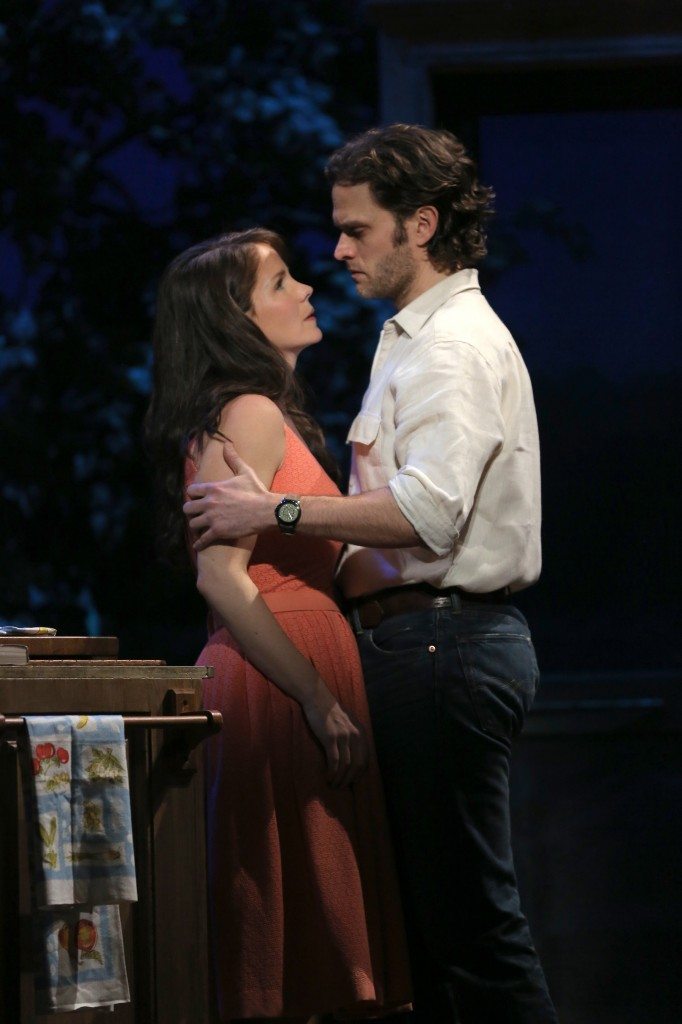
Photo courtesty of Joan Marcus

I’ll admit it.  I watched the movie when it opened in theaters in 1995. I couldn’t wait for it to end. It was over two hours long and was chock full of schmaltz and bridges—and schmaltzy talk about romance and bridges.  I was particularly unsettled by Meryl Streep and Clint Eastwood naked in a bathtub. It isn’t that I am ageist and have an aversion to geriatric sex. I just don’t care to witness it, neither in fiction nor real life. So when I heard that Bridges of Madison County was receiving a musical treatment, I winced.  Then I saw the creative team and star power behind it: Music and Lyrics by the genius behind Parade,  Jason Robert Brown? Ok. My ears are perked! Book by Pulitzer and Tony award winning author The Secret Garden and The Color Purple, Marsha Norman? You bet! Starring the dashing leading man Steven Pasquale and the first rate Kelli O’Hara? Please! Can this get any better?   All under the direction of Broadway hotshot, Bartlett Sher? Well, I was simply gob smacked with interest!

Did this creative team match the quality of their already impressive credits? Indeed. Based on Robert James Waller best-selling novel, Bridges is a morality tale which somehow, when paired with a stunningly gorgeous score by Brown, soars above all expectations.  Francesca (O’Hara) beautifully paints a picture of the native Italy she left behind for… wait for it…IOWA?!!?  Someone got a bum rap here, huh? Yet this was 1965 and her choices to be a homemaker beckoned her to the United States. Her beau turned out to be the “Aw Shucks” type, Bud (played with usual blue-collar esteem by Hunter Foster). Bud and his kids are headed to the county fair for a few days, leaving Francesca for some well-deserved quiet time. The children, Michael and Carolyn (Derek Klena and Caitlin Kinnunen), are a handful.  Within 5 minutes of meeting them, I was convinced, had it been me, that I’d have thrown myself off one of the titular wooden overpasses as a permanent avoidance tactic to such insolence. Shortly after leaving for the fair, a handsome “hippie” photographer, Robert (Pasquale) pulls into the driveway, asking directions from Francesca and soon, their paths are both headed in the direction of lovers’ lane. It all makes sense, right:   Iowa as a sacrifice for Italy?   A redneck husband?   Rambunctious children and an empty House?  I’d like to buy a vowel, Pat. OOOOhhhhh! And you’ve solved that little puzzle.

For four days, the lonely lovers spark untapped wells of emotion and lust in one another, all the while realizing that this must remain a hidden passion. It doesn’t help that they need to dodge Marge and Charlie, (Cass Morgan and Michael X. Martin) Francesca’s nebbish neighbors. While the do gooders next door provide a few opportunities for comic relief, they read like cookie cutter caricatures. Without question, O’Hara’s radiant presence carries this show. Besides capturing the nuances of a conflicted, immigrant housewife, her voice is pure heaven. Pasquale generally carries his own here, too. Yet for all of his stage chemistry with O’Hara, his macho ruggedness and powerful baritone, the magnetism does not translate to the audience.

There is much to ponder in Bridges of Madison County, most significantly the choices and consequences of our actions- the “could nots”, “should nots”, and “might have beens” that morally conscious individuals are plagued with on a continual basis. It skillfully accomplishes its’ purpose without seeping into saccharine ground. With elegant scenic and lighting design by Michael Yeargan and Donald Holder, Bridges of Madison County  creates a deeply profound tableau of love, longing, and life. While it eschews the typical Broadway extravaganza, its’ simplicity and beauty rests in the story. This will be a quality chapter in theatrical  history books for those fortunate enough to have seen it.

The Bridges of Madison County is now playing on Broadway  at  the Gerald Schoenfeld Theater, 236 West 45th Street between Broadway and 8th. For tickets, call 212-239-6200, visit www.telecharge.com or go to the box office.
Filed Under: ARTS, ENTERTAINMENT, REVIEWS, THEATRE

Home work: Filmmaker Yared Zeleke’s Origin Stories

by Jordan Mattos

Screen Shot 2014-03-10 at 5.03.38 PM

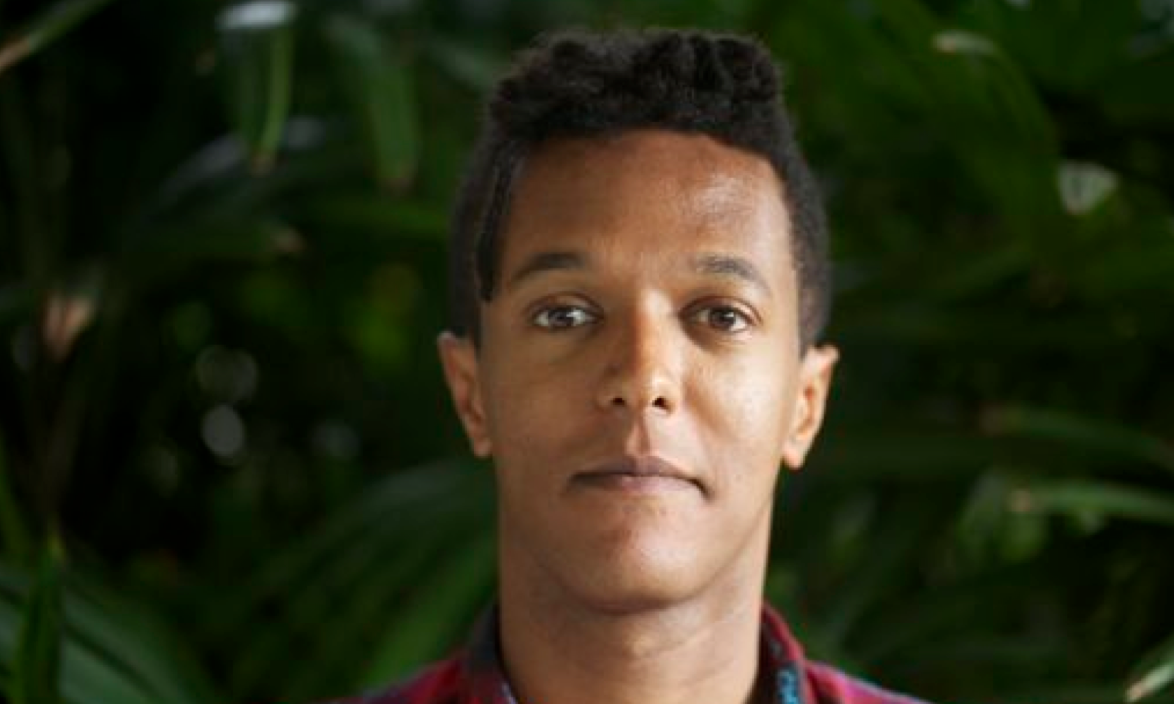
It takes a certain level of conviction to stay true to one’s roots when balancing the demands of a bustling metropolis. The filmmaker  Yared Zeleke is an Ethiopian storyteller who swims against the current, making films that detail his experiences back home and abroad. His first feature, currently in development, was selected as one of the 15 international projects for the Cannes Film Festival’s lucrative L’Atelier program in 2013. Raised in the slums of Addis Ababa, Zeleke earned his MFA in Directing from New York University’s Tisch School of the Arts, and has worked with various NGO’s in Norway, Namibia and the U.S. All the while, he has preserved his artistic integrity while redefining where he calls home. I had a conversation with Mr. Zeleke about current artistic pursuits and the conditions facing today’s artists in the Big Apple.

Can you talk about your upbringing?

I grew up in the slums of Addis Ababa during one of the darkest periods of Ethiopia’s 3,000-year history. Emperor Haile Selassie had just been deposed in a military coup and the country was consequently thrown into cycles of war and famine. The ongoing conflict and chaos in my country caused me to also lose my family and home while a young boy. Despite the disturbances, I had a happy childhood.

How has your sense of home influenced your next film?

My first feature, Lamb, is analogous to my life’s journey in that it is deeply personal and inescapably political. It is a semi-autobiographical drama about the heart, heartache, and humour of everyday life in my homeland.

You are now back in Ethiopia. How did you feel being an artist in NYC?

It’s challenging…

Your film The Quiet Garden (2009) is about people asking to escape from the city’s noise. Would you or did you ever live in Manhattan?

I once lived in the Lower East Side, right before it got out of control with rent and well-off tourists. I wouldn’t want to return there or probably any part of Manhattan even if i could. Rent, especially, continues to increase for meagre spaces even in inconvenient locations. More and more young people are moving in, who are not necessarily artists themselves.

Film financing is a complex matter, especially during times of economic difficulty. How do you manage?

Grants, grants, and more grants. My work has been funded by several major European sources.

Why do you think artists resist calling their work political?

Politics is such a dirty word.

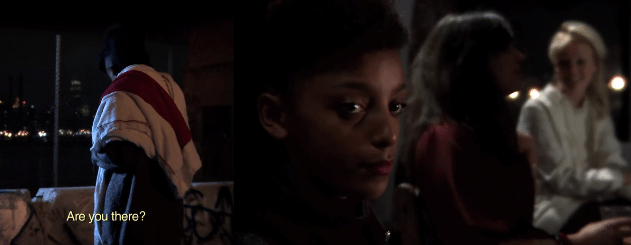
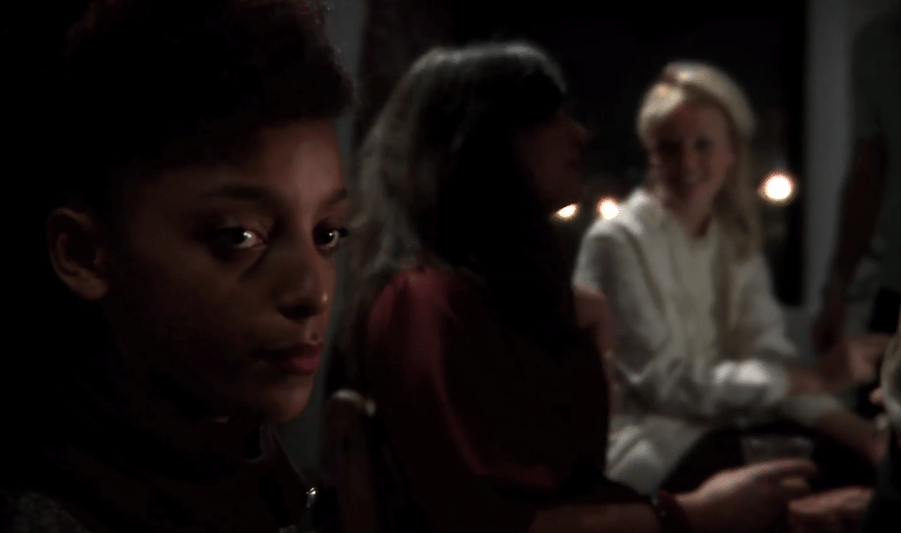
Housewarming2

Your films directly confront difficult to dramatize anxieties.  Housewarming (2009) confronts dead-on the alienation felt by an immigrant woman longing to be back home while attempting to fit in at a stylish dinner party in Brooklyn. 

Housewarming is about homesickness, particularly as an immigrant in New York. Tigist (Patience) is a short documentary about a girl from the Ethiopian country-side who dreams of being a pilot and comes to California to learn to fly.

Women play an integral role in many of your films.

Strong women raised me in Ethiopia. My primary caretaker was my grandmother who was revered for her storytelling skills as much as she was for her coffee ceremonies. She was born in Kaffa, after all, the birthplace of the coffee bean.

Many of your stories deal with being an outsider and the relationship between defending one’s individuality or being accepted into a group.

The traditional African proverb,”it takes a village to raise a child”, rings true about my upbringing. The adults in my neighbourhood collectively looked after all of us as children by keeping us distracted from the horrors of the Derg with school, church, and the movies. I remember my aunt’s spiced bread; my cross-dressing cousin’s comedy act; the forested, majestic mountains surrounding the city; and the bonfires, singing, and dancing during the holidays. I incorporated all these memories into my stories.

For more information about Yared Zeleke and Slum Kid Films, visit http://vimeo.com/user942327

Filed Under: AFRICA, ARTS, ENTERTAINMENT, MOVIES, WORLD Tagged With: Brooklyn, Cannes Film Festival, Ethiopia, Filmmaker, homesickness, immigration, politics

Theater Review: “London Wall”

by Ryan Leeds


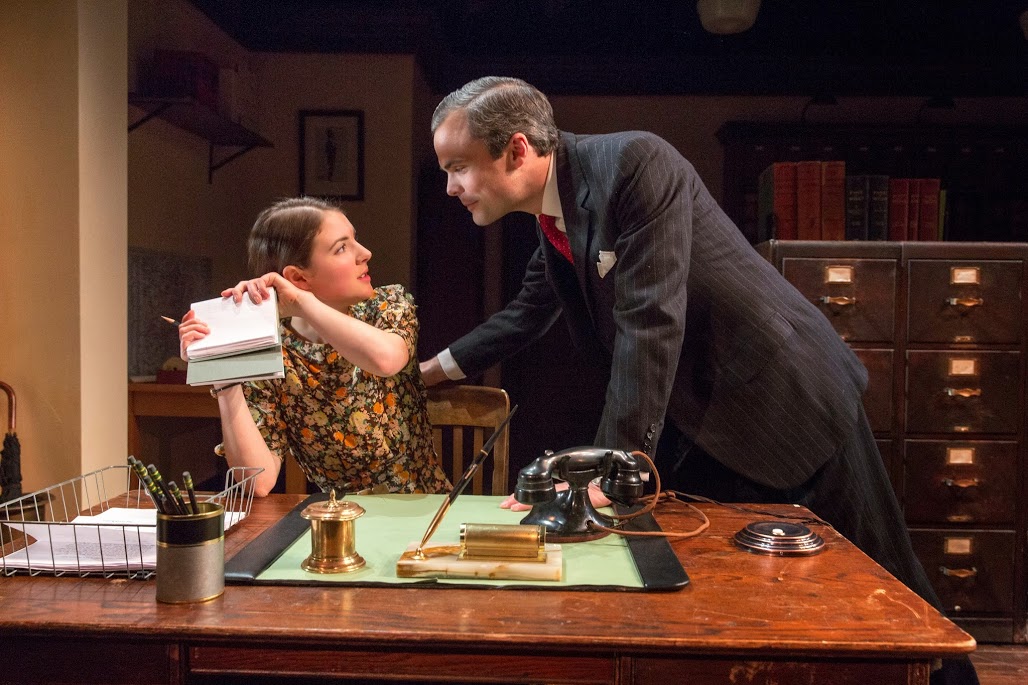
Photo courtesy of Richard Termine

Shady business is rearing its’ ugly head at the impeccably impressive law offices of Messers. Walker, Windemere, and Co.  It turns out that their boy wonder, Mr. Brewer (Stephen Plunkett) , has taken a liking to the ladies-too much in fact. The object of his affection happens to be his sweet-tempered employee, Pat Milligan (Elise Kibler), who is hesitant to accept his advances, but ultimately feels trapped. Meanwhile, the tough talkin’ “I’ve been around the block and can see through this guy like cellophane” Miss Janus (Julia Coffey) is protective of her fellow secretarial colleague. Janus has a friend in mind for Milligan, Mr. Hammond (Christopher Sears).  Hammond is much more age appropriate and not nearly as lecherous. But my oh my…is he ever shy.  Will he work up the courage to court Miss Milligan?

Such issues were at stake in the 1930s in  the Mint Theater’s charming revival of John Van Druten’s London Wall.  While a Broadway production never materialized, this law firm did open its’ practice across the pond. It opened in the West End  in May 1931, where it ran for 170 performances. Mint Theater is known for finding lesser known classic works and giving them a touch-up.  Happily, they have done a marvelous job here with capturing the essence of the period.

The first act plays out much like a more formal version of 9 to 5, but it does not move at a terribly  fast clip. Yet under Davis McCallum’s  hand, the dialogue is as frothy and light as it can be. In act two, justice does prevail and the proverbial “dog has his day.”  Along the way, there are some lighter subplots which all make for an enjoyable night at the theater.

London Wall plays  through April 13 at the Mint Theater, 311 West 43rd Street between 8th and 9th avenues. For tickets, call:  1-866-811-4111 or  visit www.minttheater.org.

Filed Under: ARTS, ENTERTAINMENT, REVIEWS, THEATRE, uncategorized

RuPaul’s Drag Race Recap: More Whine, Less Adore

by David Baxter

rupaul's drag race season 6

You know what’s a drag? Adore’s personality.

Previously on “RuPaul’s Drag Race,” we had the Big Opening. This sounds like “Big Concert,” which was the code name for Fiona’s evil plan in the movie “Josie and the Pussycats?” I’m not sure if I’d rather be watching that.

[Read more…] about RuPaul’s Drag Race Recap: More Whine, Less Adore

Filed Under: ENTERTAINMENT, TELEVISION Tagged With: adore delano, april carrion, bendelacreme, bianca del rio, courtney act, Darienne Lake, gia gunn, Joslyn Fox, Laganja estranga, logotv, milk, rupauls drag race, trinity k benet, vivacious

True Detective: Season 1 review

by Peter Foy

“The world needs bad men. We keep the other bad men from the door.”

true-detective-poster-16x9-1

We watched it, we discussed it, and most of us loved it, and now with the conclusion of season 1, True Detective has become HBO’s latest breakout success. Averaging about 10.9 million viewers across all HBO plays and platforms (and inciting a headline grabbing frustration when HBO GO crashed during the night of the finale), the show instantly found a following, and it’s easy to see why. An atmospheric southern gothic tale about unspeakable evil,  True Detective is every bit a well-worn story, just expertly crafted and delivered in a way just unheard of for American television, even on a premium channel. The show’s first season is pretty spectacular, and it’s exactly the type of gritty horror show that HBO has been trying to air for years now….and it isn’t even a traditional horror show!

True Detective’s plot, a story of two very different anti-hero cops and a murder case that will envelop their lives for 17 years, follows a very logical yet still satisfying trajectory. Being interviewed by a younger pair of police officers, the show’s two older protagonists of Rustin “Rust” Cohle  (Matthew McConaughey) and Martin “Marty” Hart (Woody Harrelson) recount their harrowing account on how they “solved” a mysterious murder back in the 1995, while also seeing the fallout the two have in their personal lives during the early 2000s. Eventually though, the narrative brings us to the show’s contemporary setting of 2012, as we see our two detectives finally reaching a conclusion over their long-gestating homicide case.

Throughout the show’s run, message boards erupted with theories as to what was coming. Many people seemed to think that their was a huge twist at the show’s end (could either Rust or Hart be the real murderer?), and some even expected that the show would take a turn into the supernatural. It’s certainly justifiable to think either of these things, as the show did have us bear witness to Cohle and Hart doing some pretty bad things, and the show had plenty of references to weird horror literature, most directly to Robert W. Chambers 1895 short story collection The King in Yellow. That said, neither of those two theories played out, with the identity of the killer hardly proving to be a shock, and the show didn’t have any overt fantastical elements to it. Throw in the fact that True Detective left many of it’s plot threads still lingering by it’s end, and one could make a case that True Detective ends on a bit of disappointing note. I admit, that I myself was a bit hesitant on giving the season finale any accolades at first, but looking back at it now, the whole series just felt so organic. Rather than being a gimmicky whodunit, True Detective played almost like an existential buddy-cop show instead, and one that really lucked out in the casting department.

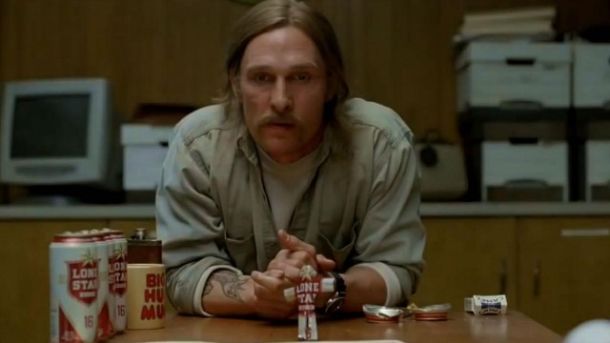
true-detective-mccauneghy-610x343

Yes, Woody Harrelson and Matthew McConaughey were mesmerizing in their roles, and their chemistry is the real binding for the show’s success. While initially it seems that Hart is the more level-headed of the two detectives as he isn’t spewing pessimism like Cohle is, we quickly discovered he is a very flawed man. He’s an adulterer and a violent hot-head, but we also get inside the character’s personal dilemmas and realize that their is real apathy in this man as well. Matthew McConaughey, an actor who is easily amidst the peak of his career right now, once again gives a fully committed portrayal of a complex lead character here, and it’s so fitting that the season’s finale aired a week after Matthew McConaughey scored his first Oscar win. It’s a decree to the man’s newly relegated position as one of Hollywood’s most elite, and here’s hoping that he’ll be placing an Emmy on his award shelf in about a year from now.

As I said in my review for the pilot, I had predicted that True Detective was going to feel like an eight-hour movie upon it’s completion, as every episode would feature Nic Pizzolatto as writer, and Cary Fukunaga as director. I can now say that the show absolutely felt like that, but I feel it was more due to Fukunaga’s contribution than for Pizzolatto. As consistent and talented a crime writer Nic Pizzolatto is, I feel that this season didn’t entirely escape the trappings of genre tropes, while Fukunaga’s film making was light-years ahead of what we’ve come to expect from the television milieu. He really did shoot the series like a horror film, and has even admitted David Lynch’s Twin Peaks as a crucial influence on the show’s development. What’s more, the show really did look like a film rather than a weekly television serial, due to it’s highly skilled camera work. Hell, the single take tracking shot in episode 4 will probably be discussed in film school classes for many generations to come. It’s understandable that Fukunaga has revealed he will not be returning to the show next season so that he may pursue other film projects, but I feel his presence shall be greatly missed.

So yes, True Detective’s debut season is really something special, and it’s the first new show since Justified to really understand noir storytelling. Pizzolatto and Fukunaga have given viewers a bleak, desolate and insidious world, that’s so rank that one can almost smell the cigarette smoke and booze. While HBO has yet to reveal whether they will order another season or not, giving the show’s fast success it seems like a sure-fire bet that they will. Pizzolatto has explained that True Detective is an anthology season, and that next season will feature an all new cast of characters, setting, and story. It is upsetting that Woodly Harrelson, Matthew McConaughey and Cary Fukunaga will not be returning, but at least they’ve left an ideal blueprint for the series model during this riveting freshman year. True Detective may very well go down as this generation’s Twin Peaks.

460824434_640

Filed Under: ENTERTAINMENT, TELEVISION Tagged With: Film Noir, hbo, HBO Go, Matthe McConaughey, Nic Pizolatto, season finale. Twin Peaks, True Detective, Woody Harrelson

HBO’s Looking Goes From Sullen to Spectacular

by Ryan Shea

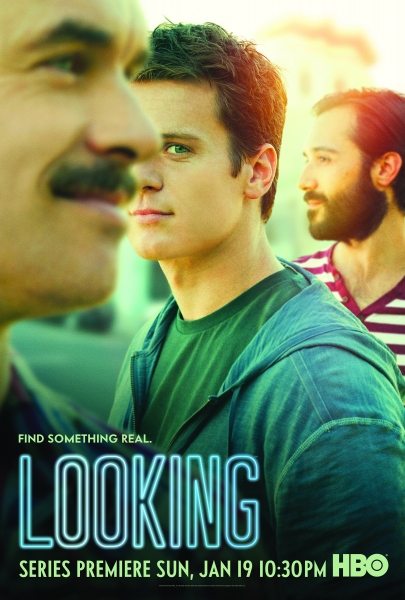
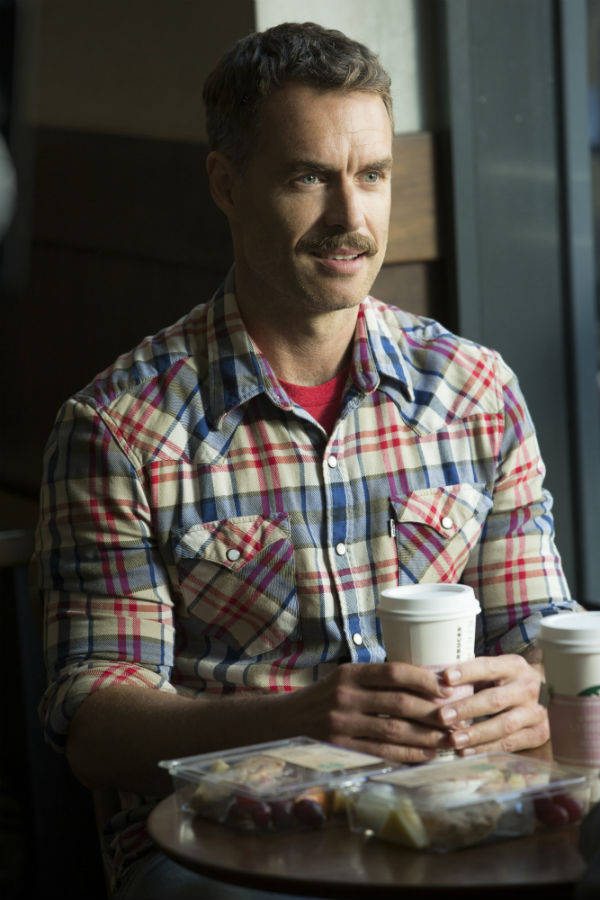
Manhattan Digest, Looking, HBO, Jonathan Groff, Murray Bartlett
Credit to- Broadway World

Looking Brings Something Real… And So Much More

Not that I am known for doing things prematurely (insert as many jokes as you want to here.  That’s why I wrote that), my first article basically loathing HBO’s “Looking” is something that I do regret in many different ways.  It was based off of a combination of the endless press the show was getting even before the show premiered, the seemingly lack of men of color on the show and the way people were treating it that really led to that write up.  Add a not so great premiere (sorry, not taking that back) and I was quite apprehensive about the show.

Well now that the first season has ended, and it already has been given the green light for season two, my opinion on the show has drastically changed since that first episode.  The characters have developed quite well over the past eight episodes, even though each of them are only half an hour long.  Whereas I do believe if they made each episode an hour long they could develop even further, I am happy to see where the show has landed and am looking forward to what happens next season.

Manhattan Digest, Murray Bartlett, HBO, Looking
Credit to: The Backlot


Strongest factors of the show-

Murray Bartlett (Dom)-  I remember Murray as Oliver Spencer, the gay man who stole Carrie away from Aiden for a short period of time on “Sex And The City”.  In the first episode of this series, he came across to me as the a-typical Chelsea/Hell’s Kitchen guy, musc/masc and nicely dressed and refusing to accept that he is getting older and turning 40.  He consistently went after younger men and got insecure if a simple cater waiter denied him.  His character over the 8 episodes did a complete 180 in my opinion, by going through somewhat of a growth in terms of opening up his own restaurant, listening to his friends advice and in the end falling for someone even older than him, Lynn (an uber-hot Scott Bakula).  I am really looking forward to seeing how his character plays out in season 2, especially with him and Lynn.

The Supporting Characters (Boyfriends, best friends, coworkers)- Great shows are designed best when the main characters intrigue you but the supporting cast members add that particular something to make the show gel.  This works with so many people like Patrick (Jonathan Groff’s) boss and now lover of sorts Kevin (my future husband Russel Tovey), Dom’s roommate and funny lady Doris (Laurel Weedman) who pretty much champions him to open the restaurant and point him in the right direction, and my favorite is Richie (my side boyfriend Raul Castillo) who challenges Patrick in his insecurities and ability to have a grown up relationship, even if Patrick doesn’t know if that what he particularly wants.  Although I am bummed with how Richie leaves him in the end, I am hoping that he comes back for Season 2 in some sorts because the show really seemed to pick up steam in the episode that was just about the two of them.

The Dialogue- I love how this is how REAL friends talk to each other, and address their concerns on such a better level than just being like “GIRLLLLLLLLLLLLLLLLLLLLLLLLL” every other sentence.  All three (Augustin will be mentioned later) really care about each other and keep it real when they have to.  No sugar coating necessary.  I think the writing for this show is one of its strongest points indeed because it is relatable no matter if you are gay or straight.  A lot of these things are what everyday people go through in friendships, relationships and life issues and “Looking” does it really well.

Jonathan Groff, HBO, Looking, Manhattan Digest
Credit to: Ace Show Biz


Factors that could be improved-

Patrick- Love Jonathan Groff and I like that he is being utilized for something outside of his singing voice (Frozen, Glee) and really his acting chops, which he does tremendously.  Here is my issue- his character doesn’t make much sense to me.  If you watch the show, a lot of the stuff he seems to get into (dealing with an “uncut” guy, awkward dating, flighty attitude towards a lot of things) would be cute if he was a fresh faced 22 year old in San Francisco, but he’s not.  He’s 29 and from the episodes have lived there for a while, so I don’t get why they wrote him like that.  At the same time, he has had some great moments this year with his growth in his relationship with Richie and his somewhat standing up to the back and forth he has going on with Kevin.  I personally hope he ends up with Richie on some level next season, but I hope his maturity continues to improve and he becomes a lot more aware of his behavior as time goes by.

Augustin- Ugh. I get it.  Every show needs one character that you can’t stand, or love to hate, etc.  Problem with him is that the evolution of his character doesn’t really make any sense.  I get how you can do the whole “this is my bottom, can’t get any worse than this” type thing but I keep thinking that each episode is his bottom.  It takes his now ex, Frank (awesomely played by O.T. Fagbenle) to tell him what we all feel- spoiled rich kid who is at best a mediocre artist.  Yup.  Granted he is a good friend to both Dom & Patrick, and I get that, but as a person on the show he really sucks.  I hope that the revelation that Frank gave him really makes him improve next season so his sucking ability goes down and he starts to act like an authentic person and not some hipster douchebag that seems to be growing in population.

Official Site


Filed Under: ENTERTAINMENT, TELEVISION Tagged With: gay, hbo, jonathan groff, Laurel Weedman, looking, manhattan digest, murray bartlett, Raul Castillo, Russel Tovey, san franciscog, scott bakula

South Park: The Stick of Truth Review

by Tim Morris

Copyright Viacom Source: South Park Studios
Copyright Viacom
Source: South Park Studios

Being the new kid never felt so good.

I was just ten years old when South Park made its debut on Comedy Central. It’s crazy to think about sitting in my fifth-grade class while all my friends talked about the show, and I couldn’t join in because I wasn’t allowed to watch it. After 17 brilliant seasons, a movie, and a myriad of merchandise, the one thing that always felt missing from the behemoth of a franchise was a truly good video game. After some ill-fated titles that came three generations ago, such as South Park Rally and Chef’s Luv Shack, demand for another game entry was understandably low. However, after creators Matt Stone and Trey Parker approached Obsidian Entertainment to develop a game for them, South Park: The Stick of Truth was born. The fact that this game even made it to release is nothing short of remarkable, what with nearly two years of delays and a publisher change that occurred when THQ went bankrupt. However, unlike many cases of a game being delayed, The Stick of Truth was very much worth the wait.

The simplest way to explain this game is that it’s Paper Mario with a South Park coat of paint and more bells and whistles. You start by creating your own character, including hairstyle, facial features, and clothes. The customization really has some depth to it, so it’s worth playing around for a while to capture the perfect look that you want. You also get to choose from one of four character classes: Fighter, Mage, Thief, and Jew. The classes have different special abilities that you can upgrade in multiple ways, but it seemed like any class could equip any weapon and armor, so you aren’t getting useless drops during gameplay. The combat is surprisingly deep, complete with quick time events to either improve your damage or lower that of your enemies. You can bring one of six “buddies” into combat with you: Stan, Kyle, Kenny, Cartman, Butters, or Jimmy, and each are complete with their own abilities and weapons.

One of the things that you don’t truly realize just from watching the show is that the quiet mountain town of South Park isn’t really that small. There are many shops to visit that have all made appearances on the show, and in addition you can visit many of the kids’ houses and interact with their families too. Visiting all the places around town is imperative for building your quest log, and you’ll find that many of the citizens in-game need your help. Examples of quests include finding Jesus, recovering a lost iPad, and even placing ManBearPig sensors around town for Al Gore. While many of these are side quests and don’t progress the main story, the references and humor involved are more than reason enough to get them done. In addition, the game continues the tradition of the show by pushing the envelope as far as it can go. There are scenes depicting your character’s parents doing the nasty, large amounts of uncensored profanity, and even a battle with a gigantic Nazi zombie aborted fetus.

However, at its heart this game is an RPG and I shall judge it as such. To that end, South Park: The Stick of Truth has done very well for itself as a turn-based game in a world of real-time RPGs. It borrows elements from various games and yet still manages to create its own identity with the combination of the upgrade (through leveling) and perk (through gaining Facebook friends) systems. Menus are user-friendly and most situations where players get stumped are answered by your buddy if you wait long enough. I have only two complaints with the game, one major and one minor. The more serious gripe that I have is that the main storyline is far too short. I completed that part of the game in under nine hours. While there’s plenty to do on the side and postgame, I would’ve liked to see some more time invested in the overarching plot. The other, smallish complaint is that the game is very easy on the “Normal” difficulty setting. I was never really in danger of losing a fight from beginning to end.

Overall, South Park: The Stick of Truth is one of those games that you might not fully appreciate if you don’t love the source material, but if you do, prepare yourself for the most fun experience so far in 2014.

Final Grade: A-

Platform: Playstation 3, Xbox 360
Genre: RPG
Players: 1
Price: $59.99

Filed Under: ENTERTAINMENT, OPINION, REVIEWS, TECHNOLOGY, TELEVISION

Resurrection’s Inconsistency Could Prove Fatal

by Michael Tyminski

Source: ABC
Source: ABC
Source: ABC

Resurrection: Sundays at 9 Eastern on ABC

One of the real downsides of the prevalence of procedural shows on the big four is that it tends to crowd out the remainder of the drama landscape. Even our shows with a more sci-fi and fantasy bent (Hannibal, Grimm, Almost Human) have been forced into this “case of the week” mold. As a result, we see very few high concept and family dramas (Parenthood being the only real family drama I can think of of late) on the network dial. ABC, as the network least likely to run procedurals on it’s schedule (most of their dramas tend to be more soapy) is bringing out a high concept take on this sub genre with its’ newest show: Resurrection.

Resurrection tells the tale of Arcadia, a small town in Missouri where an 8 year old boy mysteriously reappears after dying over 30 years ago. This sends the Langston family into upheaval, as Jacob’s parents must confront the surprise reappearance of their son. Their extended family is dealing with untold knowledge of the circumstances that led to the drowning accident that took both Jacob and his aunt. The government, meanwhile, is trying to figure out if Jacob is actually Jacob, and if so

Any show that builds around a core mystery needs to start asking more questions than one can easily can answer and Resurrection doesn’t hesitate when it comes to this task. In addition to the questions relating to the shows central conceit, the show makes it a priority to create as many new angles as possible, whether it’s a new mysterious figure whose only hinted at until the end of the episode, the bald man whom was at the river, or the new found shaking of the local pastor’s faith.

Resurrection’s acting feels hit or miss at points. While our premiere episode doesn’t help much in this matter by virtue by building around an overwhelming sense of confusion, the performances felt very inconsistent. For every moment that feels generally moving, one can find another moment that feels a little too muted out to register.

Visually, Resurrection hits enough of the right notes, whether it’s going to a brighter and more Polaroid like filter on flashbacks of happier days, while focusing on muted tones around the river. Even the show’s slower moments, like a moment where Jacob and Mrs. Langston walk into church in the middle of the pastor’s sermon is shot with a surprisingly high attention to detail.

The Final Verdict: Resurrection is a maddening show, in that you can see it’s potential, but at the same time know there’s a reasonable sized gap to realizing it. It’s tone and cinematography are excellent, but the writing and acting feel remarkably inconsistent. This is the sort of show I’d wait and see on: tonight’s episode was a serviceable beginning point, but you’re going to want to see signs of growth before you emotionally invest in it.

Filed Under: ENTERTAINMENT, OPINION, REVIEWS, TELEVISION Tagged With: ABC, Resurrection, TV reviews

Sirens Is Alarmingly Funny

by Michael Tyminski

Source: USA Network
Source: USA Network
Source: USA Network

Sirens: Thursdays at 10 Eastern on USA

2013 was an odd year for USA. While the network had spent years building it’s brand of “characters welcome”, it had instead spent the year launching a handful of mediocre reality series (The Moment, Summer Camp) to flank it’s more established shows. Going into 2014, USA seems to be aiming for a more balanced mix of new scripted and new reality, and is trusting some proven hands in order to find the right hits to replace some of its’ aging lineup.

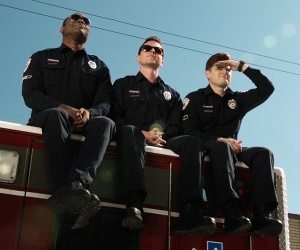
Sirens, from the minds of Denis Leary and Bob Fisher, is the story of three EMT’s in the Chicago area as they go on calls trying to save the lives of the people who call on them. Two of the EMT’s, Hank (Kevin Daniels) and Johnny (Michael Mosely), are long time friends, but they are also tasked with helping to show neophyte Brian (Kevin Bigley) the ropes. Further complicating matters is their constant interactions with Johnny’s ex-girlfriend Theresa (Jessica MacNamee), a hard nosed cop still holding some feelings for Johnny.

Sirens aims to be the medical equivalent of the buddy cop show, and succeeds at it perfectly. Johnny and Hank have a dynamic that’s reminiscent of Riggs and Murtaugh, with the loose cannon Johnny being tempered by the more reserved Hank. Where Sirens deviates is in the addition of Brian, who operates as a naive counterpoint to their cynicism and as the sort of hate sink that happens to keep Johnny and Hank from eating each other alive with their comedic barbs. In a lot of ways this puts Sirens in direct contrast with numerous other medical shows (including and most starkly, Scrubs), as the gravity that comes with death is a non-factor.

When it comes to it’s comedy side, Sirens is remarkably funny. Jokes are delivered with the same urgency one would expect from the more serious side of the medical profession, with the digs often coming at a machine gun clip. While the bulk of the humor tends to be thrown in the direction of new recruit Brian, the best gags are thrown at the worst patients that the crew are forced to endure, whether it’s a businessman who has a coke bottle trapped in an uncomfortable place and an indignant jerk whose spewing venom at Hank after being struck by lightning.

If there is one thing that feels extraneous, it’s a tepid romantic angle between Johnny and Theresa that’s tacked on. It feels forced because all of the plotting comes from the ridiculous maneuvers that the show takes to force the two exes into the contact. As a show that focuses entirely on it’s A plot (in the first two episodes, we see nothing that resembles a B plot), this drags the show to a screeching halt at points, clashing with the incredibly tight rapid-fire rhythms that make Sirens shine.

The Final Verdict: Sirens clicks in all of the right places, being wickedly funny while focusing on the mundane aspects of medical work. It also gets the most out of being fearlessly bawdy, while maintaining the sort of “in your face” persona that people have come to associate with Denis Leary’s brand of comedy. Check it out if you’re looking for something fun in the 10 o’clock hour (though it also faces stiff competition from Andrew Daly’s Review).


Filed Under: ENTERTAINMENT, OPINION, REVIEWS, TELEVISION Tagged With: Sirens, TV reviews, usa

Netflix’d: Bad Lieutenant

by Peter Foy

Just when I thought that I might be a long while before I returned to my Netflix’d column (I thought about reviewing the second season of House of Cards, but decided that it would more-or-less be a repeat of my season 1 review), it seems the streaming gods decided to present to me a challenge when they placed Abel Ferrara’s original Bad Lieutenant on the Netflix queue. A challenge I accepted!

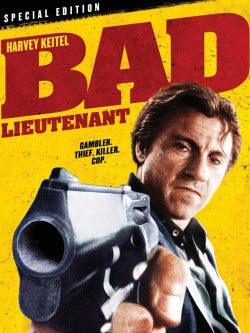
2000075_z_badlkcau

Title:  Bad Lieutenant

Director: Abel Ferrara

Writer: Abel Ferrara, Zoe Lund, Paul Calderon

Year: 1992

Running Time: 96 minutes

Starring: Harvey Keitel

Genre: Cop drama

Similar To: American Psycho, Dirty Harry, Killer Joe

As a man who prides himself on making cinema recommendations to people, I also have to keep in mind that there are essentially two different kinds of films that I recommend: Films that are great, and film’s that should be seen for other factors. I feel that Bad Lieutenant fits into the latter category, as it is a flawed film that’s also really ugly and forced. Still, it remains an anomaly to this day for a whole host of factors, and its pedigree has certainly risen since the 2009 release of Werner Herzog’s slight remake, Bad Lieutenant: Port of Call New Orleans. Why is this black sheep of a dirty-cop movie so special? Well, we can start with looking at the plot.

The film stars Harvey Keitel as an unnamed NYPD police lieutenant, and maybe that’s for the better. Keitel’s character is simply abhorrent in a way that makes a Clockwork Orange’s Alex look like Tiny Tim. A heroin using, whoring, and potentially insane man, there really isn’t a redeemable thing about the man…but apparently he does believe in god. This spiritual affliction starts to have an uncanny effect on our bad lieutenant when he takes on a case involving a raped nun, that sends him on some strange sort of redemption spiel.

Director-writer Abel Ferrara has had a particularly strange career, starting out directing pornographic films and grindhouse features soon after he graduated from college. He garnered more of a cult following in the 80s though, when he directed Ms. 45, a schlocky revenge film that some critics called “feminist”, and would actually go on to work with Michael Mann and direct two episodes of Miami Vice. His popularity possibly peaked in 1990 when his directorial effort  King of New York came out, a social-conscious shoot em’ up starring Christopher Walken, that actually lent the late rapper The Notorious B.I.G. his alias of Frank White. Still, after this success Ferrara chose not to pursue a more mainstream path, and instead put out an NC-17 rated film with potentially zero wide-spread appeal. So…can’t call him a sell-out right?

With a budget that was only $1 million, Bad Lieutenant avoids having elaborate set pieces, and almost entirely puts its weight on Harvey Keitel. It’s a brave role for Keitel to have taken the same year that he appeared in Reservoir Dogs and Sister Act, as not only do we see this venerable actor playing an exaggerated low-life, but he actually did full-frontal nudity for the first time here (yes his penis is small and grotesque-looking, and I’m grateful memes didn’t exist when this film came out). Yet once your mind gets off of such things, one can make a case that Keitel’s performance isn’t very good. He’s essentially a cartoon, and his mannerisms get to a point of being repetitive, yet still he entices us. Despite being such a lurid film, Bad Lieutenant manages to come across as humorous too, perhaps suggesting that the only sane reaction to seeing such a film is to laugh. Is it because we know who this actor is and just have never seen him play such a character before, or is it because of Abel Ferrara’s strange direction, and even stranger screenplay? Maybe it’s all of the above?

One intriguing factor is that this would be an entirely different film if now for the religious symbolism. The film’s references to religion and Christian re-birth are about as subtle as a jackhammer to the face (Ferrara isn’t exactly Martin Scorsese), but the Catholic guilt in the film definitely gives the film an oddity factor. One particular scene that involves Keitel raving and ranting to an image (hallucination?) of Jesus Christ probably remains the most memorable mark of Abel Ferrara’s film making career and it isn’t necessarily well done. Keitel’s acting is over-the-top, and the judeo-christian imagery of it all just feels like Ferrara is taking the easy way out for telling a story about redemption. Still, it’s an endlessly watchable scene, that acts as something of a surreal and exaggerated reminder of what people have come to expect from these gritty, cop-based films.

It’s rather difficult to tell whether Bad Lieutenant is an art house film that thinks it’s a exploitation piece or rather the other way around, but it remains a curio of the American 90s indie-boom, and it hasn’t been affected by age. It still gives off the same reactions of disgust, puzzlement, intrigue, and hilarity that it did when it was released 22 years ago, and it’s likely to go down as Abel Ferrara’s most remembered film. I can’t promise that you’ll like it, but I can promise you that it must be seen to be believed.

images-2

Filed Under: ENTERTAINMENT, MOVIES Tagged With: 90s indie cinema, Abel Ferrara, Bad Lieutenant, Explotation, Harvey Keitel

  • « Go to Previous Page
  • Page 1
  • Interim pages omitted …
  • Page 117
  • Page 118
  • Page 119
  • Page 120
  • Page 121
  • Interim pages omitted …
  • Page 177
  • Go to Next Page »

Primary Sidebar

Navigation

  • HOME
  • OPINION
    • REVIEWS
  • BUSINESS
  • LGBT
  • ENTERTAINMENT
    • ARTS
    • MOVIES
    • MUSIC
    • TELEVISION
    • THEATRE
  • LIFESTYLE
    • TRAVEL
    • FASHION
    • HEALTH
    • FOODIE
    • STYLE
  • POLITICS
  • SCIENCE
  • SPORTS
  • TECHNOLOGY
  • U.S.
    • NEW YORK

Footer

  • ADVERTISE
  • TERMS OF SERVICE
  • CAREERS
  • ENTERTAINMENT
  • Home
  • Contact
  • Legal

Copyright © 2026 · ManhattanDigest.com is run by Fun & Joy, LLC an Ohio company · Log in

Loading Comments...