• Skip to primary navigation
  • Skip to main content
  • Skip to primary sidebar
  • Skip to footer

Manhattan Digest

All you need to know about Manhattan culture and so much more...

  • LIFESTYLE
  • ENTERTAINMENT
  • LGBT
  • OPINION
  • TECHNOLOGY

ENTERTAINMENT

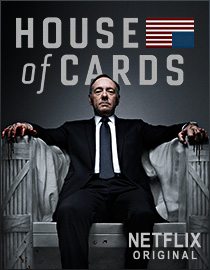
Many Happy Returns: House of Cards

by Michael Tyminski

Source: Netflix
Source: Netflix

House of Cards Season 2 releases on Netflix this Friday, February 14th.

I’ll be the first to admit that I loathe Valentine’s Day with a burning passion (probably as an effect of being perpetually single). This year, however, doesn’t seem as bad for me: two of my friends ended up in horrible relationship situations, it’s a Friday so I can always hit the bar, and most important of all it marks the return of Netflix’s hit series House of Cards.

Since we last left off: Storyline wise, season one of House of Cards left a ton of loose ends on the table. Frank Underwood had just accepted the position of Vice President with his plan for revenge just completed. His fixer, Doug Stamper, has a major mess on his hands, as young journalist (and former Underwood paramour) Zoe Barnes is looking to the last days of late congressman Peter Russo. Underwood’s wife Claire meanwhile, is facing a lawsuit from a disgruntled former employee who is not afraid to lie under oath in order to maintain her ideals. Based on Netflix’s official trailer, we should see follow through on all of these.

Many of the main principals remain on the cast, but the show also picks up some fresh blood (which will be necessary since we move from congress to the executive branches). The most notable addition is Molly Parker as congresswoman Jacqueline Sharp, a California representative whom Underwood taps for his old seat as House Majority Whip.

More importantly than what is going on inside the universe of House of Cards is the macro-level effect that it, along with season four of Arrested Development and surprise hit Orange is the New Black had for Netflix and the future of the TV industry as a whole. I’ve touched numerous times on how critical those three series were to establishing the expansion and credibility of web-based distribution (and how they are the future of television as we know it), but House of Cards in particular has brought the bulk of prestige with Kevin Spacey being nominated multiple times for Best Actor in a Drama Series (for his portrayal of Frank Underwood) while Robin Wright scored a Golden Globe for Best Actress in a Drama Series for her work as Claire. Netflix in turn showed the series a vote of confidence by green lighting not only this second season, but a third to debut in 2015.

What I’m Looking Forward To: Having gotten a chance to watch the first season recently, I’m looking forward to seeing what curve balls the vice-presidency throws Underwood. The tension between President Walker and Vice President Matthews is pretty common for the executive branch (one can argue that if there’s a VP whose gotten sidelined more than Matthews it’s probably Joe Biden). One can only imagine that a Walker-Underwood administration may end up looking more like the Kennedy-Johnson ticket (as Underwood is built very much on Johnson’s mannerisms).

Additionally, House of Cards is the sort of show where the whole tends to be greater than sum of all parts and works best when all of the plots intersect. It should be interesting to see if Barnes, Sikorsky, and Lucas are capable of mowing through a maze that Underwood and Stamp keep adding walls to second-by-second, while Claire works to trap those suing her (a suit that ultimately finds it root in Frank’s machinations that affect Claire’s nonprofit) in their own lies.

What I’m a little worried about: One of the things I truly liked about House of Cards was how subtle it could be. The tail end of season one started to get a little loopier and more drastic, starting with Russo’s murder and getting even more so as the investigation wore on. I’m a little worried that the second season could double down on the craziness, particularly with the journalists, who seem to be the ones often thrown into ridiculous story lines involving fake prostitution stings, trysts with colleagues and barging into offices.

Next Week: There’s still another week of the Olympics in Sochi before TV premieres pick back up again, so my series looking in at the major networks at mid-season will continue.

Filed Under: ENTERTAINMENT Tagged With: house of cards, Many Happy Returns, netflix

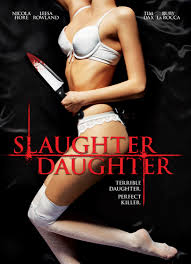
Slaughter Daughter releases its inner demons onto DVD

by Dane Benko

Slaughter Daughter poster
My first question is how such a great title was still available.


This week finds the final cut of Slaughter Daughter newly out on Brain Damage films. Slaughter Daughter comes courtesy of director Travis Campbell, the writer of Troma’s Return to Nuke ‘Em High, taking up the camera with original Nuke ‘Em High alumnus Leesa Rowland.

Those who know Troma need no further introduction, but for the uninitiated, Troma is the demon child of Lloyd Kaufman, conceived of a tradition of a low budget horror production grandfathered by the likes of Roger Corman and Herschell Gordon Lewis, but bastardized into something beyond B-Grade (or even F-Grade). It found its ultimate recognition in the form of a famous cult figure known as Toxie, from a series known as Toxic Avenger. If films are meals with Hollywood being fast food and a good European art film a type of fine dining, Troma is discarded balut found outside a leaking radioactive waste facility.

Those in the know are aware that none of the above is negative criticism of what Troma is or represents. Kaufman is keeping to a method of branded and consistent cult no-budget filmmaking that has maintained a culture of its own. Those whose knowledge of cult cinema terminates at Sam Raimi’s Evil Dead films may find themselves horrified and sickened by the production value alone, but for those who love to bathe in abject excess from the fringes of festering film, Troma is iconic. Though Slaughter Daughter is not a Troma release, it and distributor Brain Damage fit firmly within this genealogy, and the production talent keeps it in the nuclear family. Slaughter Daughter is everything hysterical, madcap, and shrill, all of which lends itself an abject, magnetic energy. For fans, this energy is exciting, though some audiences may be forgiven for finding it exhausting.

Slaughter Daughter still
My second question is how this luscious beauty is still available.

Vamp actress Nicola Fiore plays Farrah, the titular daughter of Rowland’s Phyllis. After being stood up at her wedding, Farrah suffers a breakdown and goes into self-imposed isolation. She becomes fascinated by a serial killer named Jackson Miles, and she follows his movements with literally orgasmic passion until Phyllis’ engagement with the snobbish Willard Neff awakens Farrah’s inner monster.

Tim Dax plays Jackson Miles, one part machismo-drenched prison brat and two parts hallucinogenic fairy tale godmother. Dax (whose tattoos such as a luchadore mask-like helmet design are part of his personal style and not makeup from the production) does actually pull off a strange guiding warmth to Fiore’s intensity, counterpointing Rowland’s performance as the self-involved and disingenuous Phyllis. Within the insanity of the movie contains an actual underlying logic of the relationships, as the abandoned and dismissed Farrah seeks a lover, a father, and a friend, all of which only she can consummate on her own terms after she’s failed to find it from her family (father is dead, brother is impotent, step-father’s a douche, you get the drill). She weasels her way into meeting Miles in person and the two, ah, execute a plan focused on Phyllis’ rooftop wedding.

And from there… well the movie is called Slaughter Daughter. You know what this is. The rest is the falling action as a roller coaster ride complete with a cameo by Lloyd Kaufman emceeing as the minister of the wedding.

The final cut of Slaughter Daughter was recently shown at The Producer’s Club, hosted by Campbell and Rowland in person. The movie has taken a long journey from its production. Shot in 2012, it won best feature film at Orlando’s 7th Annual Freak Show Film Festival that year, but various sound issues compelled Campbell to clean it up before Brain Damage’s release.

As far as the quality of the final cut is concerned, it looks and sounds great considering the context. Campbell has managed to keep a look of washed-out color of cheap film bathed in sickening pale light cast through green, red, and yellow gels, while updating it to digital by adding a bit of glitch art to fragment the frames. Whereas it ain’t Luis Bunuel, it still achieves more psycho-seductive charge on a lower budget than something like Black Swan. You just have to let the glurge wash over you and accept it for what it is.

Filed Under: ENTERTAINMENT, MOVIES Tagged With: Brain Damage films, Cult, cult film, Herschell Gordon Lewis, Leesa Rowland, Lloyd Kaufman, movie premiere, Nicola Fiore, Orlando Freak Show Film Festival, Roger Corman, Slaughter Daughter, The Producers Club, The Toxic Avenger, Tim Dax, Toxie, Travis Campbell, Troma

Preacher – An Awesome Comic; A Potentially Awesome TV Series

by Peter Foy

preacher2_prev2
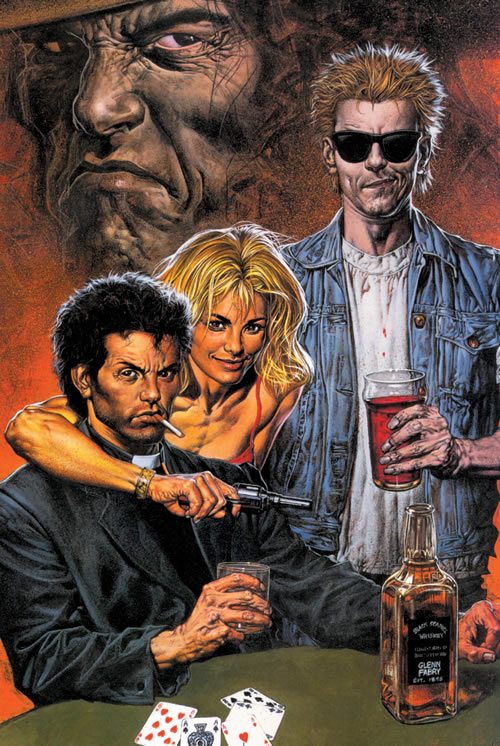
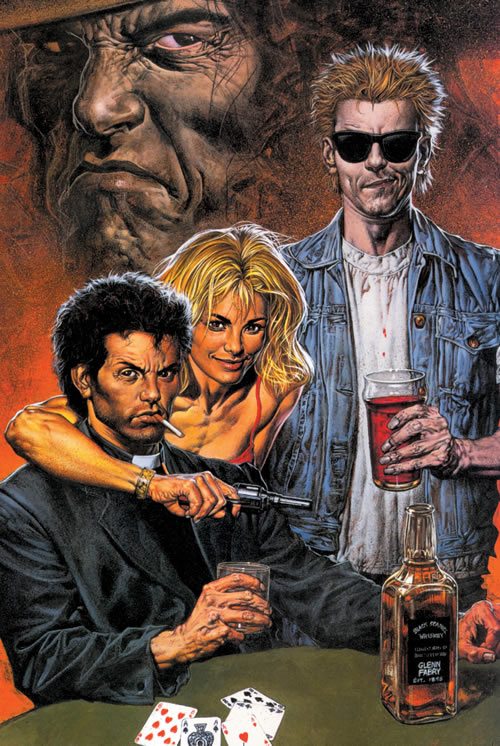
Well, there was one big pop-culture announcement for me this week: AMC is adapting Garth Ennis’ Preacher comic book series into a TV series, and it’s being executive produced by Seth Rogen and Evan Goldberg, along with former Breaking Bad producer Sam Catlin. I’m a huge fan of the title and often blame it for making me a comic book enthusiast, so it immediately gestated a massive brain storm for me that went a little something like this: Is this what I really want? While I’ve often found it an intriguing process to ponder as to what would need to be done to adapt Preacher properly, I also have usually come to the conclusion that the series works far better on the printed page than it would on the small or large screen. Still, it’s hard to pass up how awesome this series could be if it lives up to it’s full potential! Therefore, allow me to enlighten those both new and faithful to Garth Ennis’ magnum opus, as to what we may possibly see when Preacher comes to AMC in the not-to-distant future.

What is Preacher?

file_163321_6_preacher

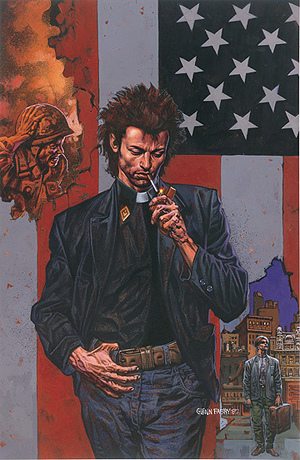
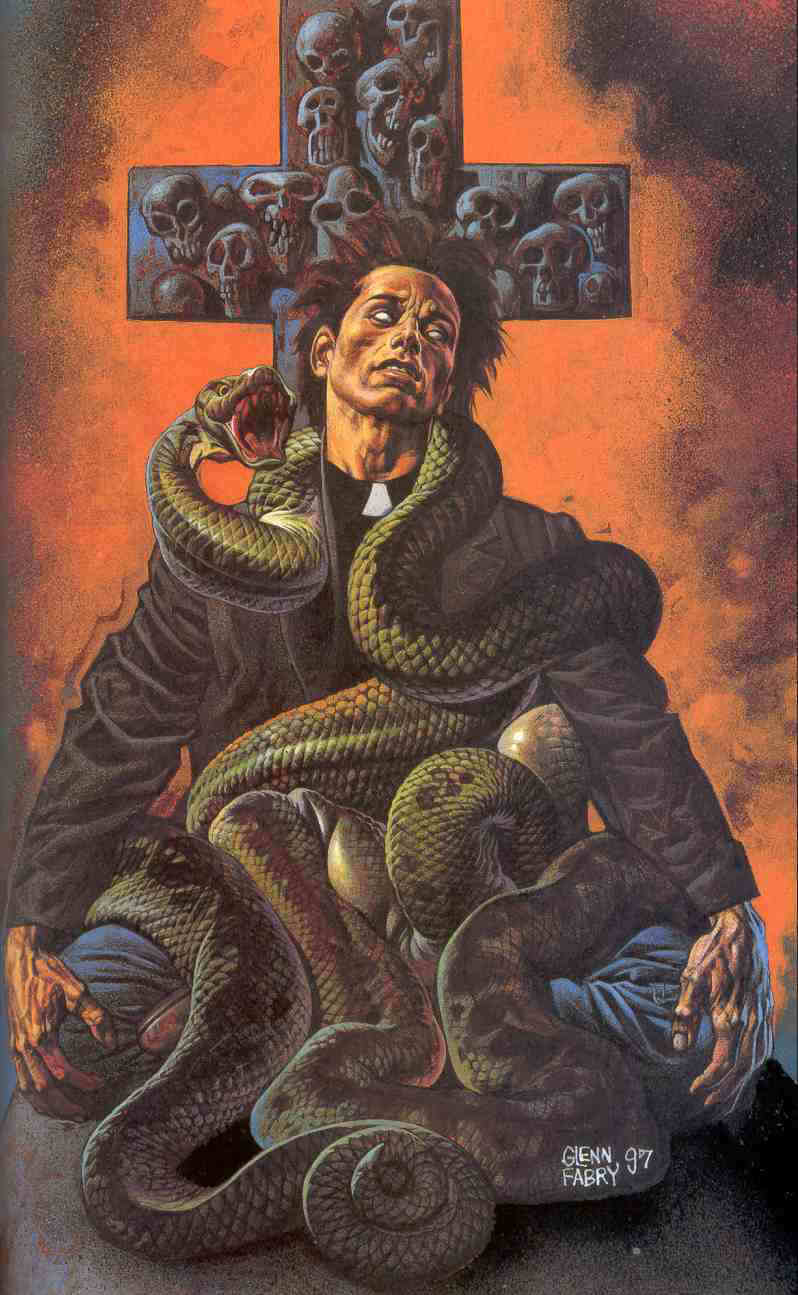
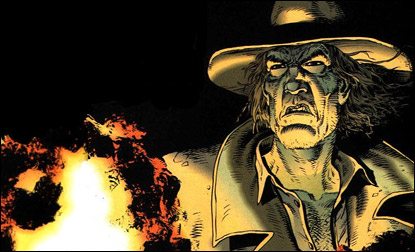
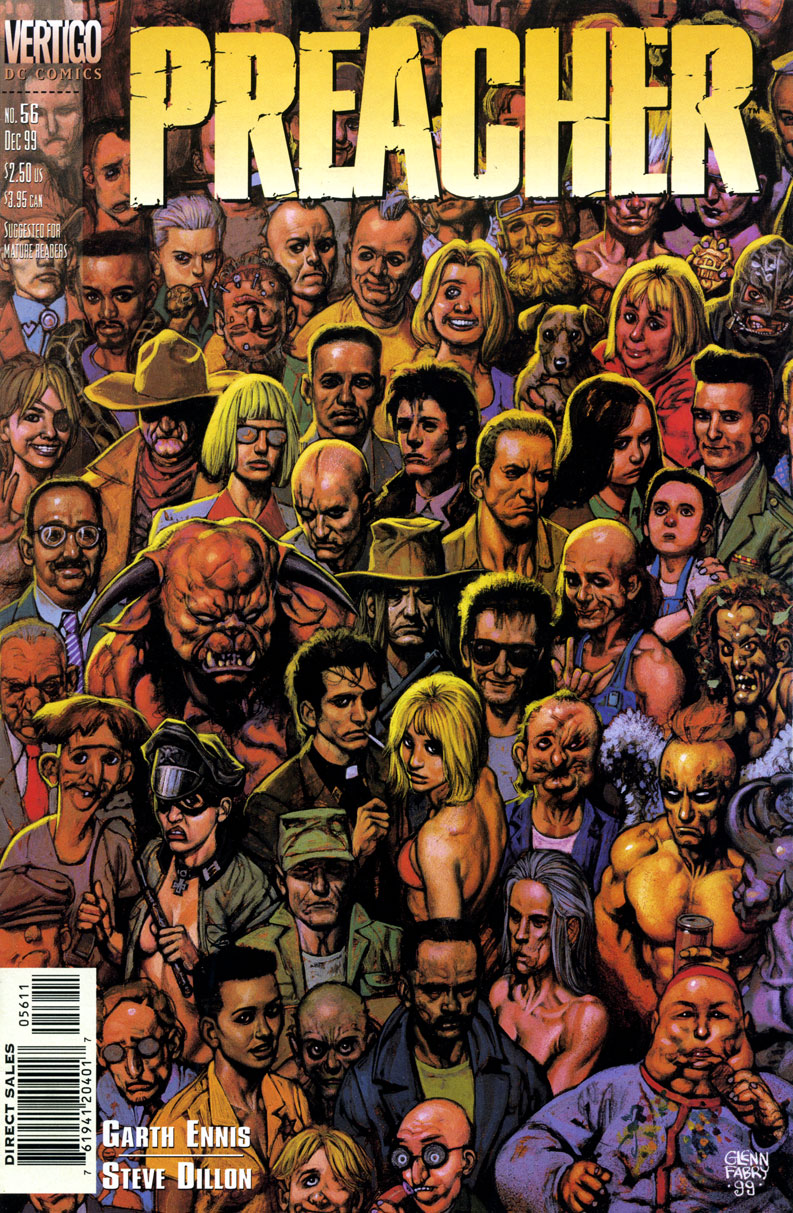
Preacher is a comic book series published by DC Comics imprint Vertigo, that ran for 75 issues from 1995-2000.  Written by Garth Ennis and drawn by Steve Dillon, the series tells the story of a Texan priest, Jesse Custer, who becomes possessed by the unholy love child of a demon and angel, which gives him the power to make any mortal being follow his command when spoken too. Upon achieving this god-like ability, the man decides to head out on a journey to literally find God, as it turns out that the big guy in the sky is a real jerk, who has abandoned his post in Heaven, yet still wants humanity to worship him despite his negligence. Accompanied by his gun-toting girlfriend Tulip, a wise-cracking Irish vampire named Cassidy, Jesse goes on a wild and unpredictable pulp adventure, that includes gore, dick jokes, western-esque action sequences, gore, the occult, sex, biting satire, gore, hidden government conspiracies, profanity, Bill Hicks, and did I mention it’s fucking gory!

Preacher proved to be an instant success upon it’s release, both critically and through fan word-of-mouth. Since then the comic has proven to be very influential, as so many adult mainstream titles carry a similar tone and story structure to Preacher, which is saying a lot as it came out after a very fruitful period for comics. While the late 80s and early 90s debuted many adult comic book titles that brought up consideration on the medium’s artistic and story-telling capabilities, Preacher still received attention for how it was both accessible yet highly intelligent, and just a whole lot of unfiltered fun! To put it in Layman’s terms, Preacher was a comic book series that seemingly had everything in it, and it all worked too!

The Long Road to Adaptation:

jessesnakes

There have been numerous attempts to turn Preacher into a movie or TV series. Kevin Smith (a regular cited fan of the series) at one point was going to have his View Askew Productions banner make a film adaptation starring James Marsden as Jesse. The project ultimately didn’t happen though, due to budget concerns. Around 2007, however, rumors started to circulate that there were plans to turn Preacher into a TV series for HBO, which were actually accurate, as Daredevil writer Mark Steven Johnson revealed that he was talking to HBO about adapting the series, and even intended to turn every issue of Preacher into an hour-long episode. Unfortunately, HBO’s new executives found the content of the comic books to be too violent and controversial for the new direction that they were heading in, and they scrapped the project. Most recently, Columbia Pictures bought film rights to the property, and were going to have Sam Mendes direct it, but he turned it down to direct Skyfall instead.

There’s a number of reasons that all these past attempts ultimately fizzled. They can be attributed to the series long running length, graphic content, ostensibly blasphemous and offensive nature, and not to mention budget concerns as the comics’ most fantastic scenarios would certainly prove rather expensive to shoot. Still, it looks like this attempt is actually a go, as AMC has green-lit the pilot, and Garth Ennis has already talked to the parties behind the series and says he’s firmly satisfied with the way it’s looking. Of course, anything could happen in the interim between now and whenever, but for right now it appears that Preacher shall be airing in American households sometime within the next year or so.

Why the Show Could be Great:

preacher

Preacher is very humorous in nature, and Goldberg and Rogen have already shown that they can succeed at combining humor with supernatural elements to good effect. Last summer they gave us This is the End, a clever and affable comedy about the apocalypse, and it was one of the better genre films of 2013. Therefore, the two of them probably know exactly what it is that makes Preacher work, as even though it’s a grimy, gritty and disgusting story, it also has a lot of heart to it, and a playful mentality. Also, they certainly have enough friends in Hollywood at this point to make intelligent casting (James Franco as Jesse Custer?), and they’re working alongside a producer for Breaking Bad, a show that certainly does have plenty of similarly shaped sensibilities with Preacher.

Furthermore, AMC is a powerhouse station at the moment, that is known for allowing show-runners to handle their work in the way they’d like to. While sure, the station had had it’s fare share of disappointing programs (Rubicon, The Killing, Low Winter Sun), this hardly dismisses the fact that Breaking Bad and Mad Men are two of the greatest dramas ever put on TV, and the comic-book-derived The Walking Dead is the highest rated drama series in basic cable history. With Breaking Bad gone, viewers are looking for a successor, and AMC may have found it’s answer in this.

Why the Show Might be a Massive Disappointment:

cassidy

Well, the first thing that comes to mind is this: AMC isn’t a premium channel like HBO or Showtime. So that means this: all the boobies and F-bombs from the comics are going out the window! I hate to say that the lack of such things could effect the quality of a series, but it’s just Preacher revels in how filthy it is. Whether it be the disturbingly hilarious images that come up after Jesse finds himself at an upper-class orgy, or the increasingly grotesque forms of dismemberment that villain Herr Starr finds himself in, it’s hard to imagine a lot of this stuff making it past the FCC, even on a station that airs boundary pushing titles like Breaking Bad and The Walking Dead. I feel that Rogen and Goldberg are going to have to be a little creative about how they present Preacher’s ugly world on television, and they may even have to decide if the series should have an identity that is distinct from the comic books.

Also, it should be noted that Preacher is a series that is very much a product of it’s era: the 90s. Even though it’s two creators are European (Ennis being Irish, and Dillon being British), the comic worked as a great satire for America at the time, with it’s occasionally grunge-y aesthetic. Now, 20 years after the comic came out, it’s perplexing to think how they will handle the material for a modern audience. Will the series still be set in the 90s? Will it be updated for modern times, but carry a semi-retro aesthetic? Whatever the case, I feel this is a primary case that the show’s creators should solve, and solve fast!

Also, the past has shown us that long gestating attempts at bringing a comic book property adaptation to life don’t always work out so well (remember when we were all so excited that Watchmen was finally being turned into a movie after countless failed attempts to do so?), so we shouldn’t exactly start counting unhatched chickens yet. Preacher worked wonders as a comic-book as it gave Ennis and Dillion free-reign to tackle an epic story that contained all their interests and fascinations in it. Television is generally a more confining medium, and it may prove far more limiting for the creators than they initially intended it to be.

Final Thoughts

015 - Preacher

Ultimately, I’m very excited about this project though, as there seem to be so many valuable parties involved with it. I ultimately do think that Preacher the TV show should be fairly different from Preacher the comic book, whether that includes changing story lines or characters, or even modernizing things a bit. What should be kept in tact, however, is the series sense of tone and humor, as these are what ultimately define the series as what it is. Regardless of how the show turns out, I feel now is the perfect time to read the series in light of this news, whether for the first time or otherwise. I for one am happy to say I’ve been the proud owner of the entire trade paper back collection since freshman year of college…do I have any borrowers!

Filed Under: ENTERTAINMENT, MOVIES Tagged With: AMC, Comics, Evan Goldberg, horror, Preacher, Seth Rogen, Vertigo

Album Reflection: Xiu Xiu – Angel Guts: Red Classroom

by Rio Toro

Xiu-Xiu-Angel-Guts-Red-Classroom-Packshot-1022x1024

Xiu Xiu: Angel Guts: Red Classroom

Similar Artists: Suicide, Throbbing Gristle, Joy Division, Einstürzende Neubauten

Genre: Post-Punk, Industrial, Synth Pop

Label: Polyvinyl


If you hadn’t noticed upon clicking this page, I’ve changed the name of my posts from “Album Review” to “Album Reflection”, and in case you’re wondering, the reason is because I don’t believe I’ve written what one would call a “review” in quite some time. I haven’t really even been talking much about music in general (at least in its concrete form). Upon this realization, I’ve decided this space is from now on going to be dedicated towards my personal experience with a piece of music. Questions such as “what is the color of this music” and “what does the music look like” are ones I will be looking to address. Still, it will all be taken from my personal perception of the music at hand, as well as the social and cultural environment I happen to hear it in. My goal is to see what intensive listening sessions to particular brands of music will inspire me to write, and interpret whether anything artful comes out of the other end.

This movement has spurred from my inability to explain why music sounds the way it does, or even what it sounds like in the first place. I want to learn how to paint the picture of my experience with an album as vividly as possible; and seeing how everyone hears music in different ways, I believe this is a step in the right direction. I will warn you that there may be some pretentiousness here, so if you’re not into that kind of thing then I suggest you spend your time elsewhere. While under some circumstances I may go back on my word to write an honest to god “album review”, pretty much, you’ll just see a mix of short stories, personal anecdotes, and narrative driven imagery from me from now on. Thanks to anyone who’s followed my writing up to this point.

————––—————————————————————————————————————-

A Confession/ A Love Letter:

Xiu Xiu were the band that saved my life, or rather, they were the one that brought me into my truest form. There were acts that preceded them and acts that followed them that all lie somewhere in the ranks of my personal importance, but right now, Xiu Xiu — along with Antony & the Johnsons — lie pretty high up on that list, and I’m not sure where I would be today without them.

Before 2008 — the year I graduated high school — I would say I was (and still am to some degree) an abnormally quiet person. Of course, this was because I was a closeted homosexual; something I would find out was also true about many of my similarly quiet peers years down the road. I remember freshman and sophomore year, walking the halls beneath a veil, screeching alarms firing off in my head to tell me what I should and should not do to assure I would blend inconspicuously into the environment. I was terrified of humiliation, afraid it would rip me apart limb from limb and throw me into exile, causing me to lose the few close friends I had. Like many other struggling gay teens, I first thought it would be a certain substance that would relieve me from my internal pressures, which led me to experimenting with an assortment of uppers, downers and hallucinogens. This process went on for years until I realized the escape it provided wasn’t for me. In fact, It wasn’t until college when I discovered Xiu Xiu — a band who embraced a startlingly bleak and confrontational blend of confessional singer-songwriter and manic post-punk — when I started to realize that maybe it was okay to be as fucked up as I was.

And that’s the thing; as much as mine was a generation more accepting of gays in many ways, I still felt I couldn’t fit into any of the archetypes society had carved out for me. I doubted that any sane person could find my personality to be commendable no matter how tolerant they were, because no matter how hard they seem to be trying, the media still isn’t doing a very good job of showing how tortured the soul of a gay person is. It’s why such a large percentage of gays hate gay themed television shows (Looking) and why almost all of them hate Macklemore. With Xiu Xiu by my side though, it seemed okay, and at times even cool, to have an ugly and disturbing side that I had yet to unleash. The more I thought about it, maybe it was okay to be lustful over one of your closest male friends and think about them erotically every night before falling asleep. Maybe it was okay to want something so bad you were willing to bleed for it. Maybe it was okay to have gender dysmorphia issues, and to have twisted thoughts pop into your head, and to fantasize about who would be at your own funeral. Most of all, maybe it was okay to hate yourself, and to hate everyone around you, including your own family.

I’m dramatizing a bit, to be fair, but in essence it’s all true. Xiu Xiu were a group that took the self loathing elements I always loved from acts like Radiohead and took it to a visceral and painfully honest extreme, somehow helping me realize that maybe being myself wasn’t so bad after all. When many people talk about Xiu Xiu, they talk about how comical certain songs of theirs are; the song “Fabulous Muscles” being the clearest example. When it comes down to it though, I don’t think I’ve ever related to a song as much as I have to that one, as it perfectly encapsulates our tendencies to worship guys we know will never love us back. Jamie Stewart is a lyricist who is capable of so much, and although his words are initially penetrable for their inherent shockingness, repeated listens reveal deep insights, even for non-homosexual listeners.

While it didn’t hit me all at once like that explanation may have seemed, I do attribute the group to have provided me with one big push towards helping me be okay with the outcasted individual I was, and eventually, one that would be proud of it. In celebration of their new album, this is my dedication and love letter towards a group that I consider, quite inarguably, to be groundbreaking. No matter how many more albums Xiu Xiu ends up releasing, I will always listen to them, because as far as I’m concerned, they own my soul.


Track Listing:

1.) Angel Guts:

2.) Archie’s Fades

3.) Stupid In The Dark*

4.) Lawrence Liquors

5.) Black Dick*

6.) New Life Immigration

7.) El Naco*

8.) Adult Friends*

9.) The Silver Platter

10.) Bitter Melon

11.) A Knife In The Sun

12.) Cinthya’s Unisex*

13.) Botanica de Los Angeles

14.) : Red Classroom

Album Highlight – *

Filed Under: ENTERTAINMENT, MUSIC, OPINION, REVIEWS Tagged With: album, angel guts, jamie stewart, music, red classroom, reflection, xiu xiu

Manhattan Digest’s The Lego Movie Review – Rectangular!

by Peter Foy

The_Lego_Movie_poster

So I’m writing about a kids’s film…how fucking weird is that?! Those that know me realize that unless it’s Pixar or Hayao Miyazaki, I don’t tend to get excited about new releases from the “PG” catalog, and I regularly flee from the likes of Disney and Nickelodeon (I.E. I have no interest in watching Avatar: The Last Airbender, and I actively call Spongebob Squarepants an overrated piece of garbage). You can call me shallow, but I honestly think that most other people that read novels by William S. Burroughs tend to have similar feelings. That said, my editor insisted that I write a review for this season’s first big animated film/toy-advertisement, The Lego Movie, and after a few seconds of hesitation I finally gave in…and it was worth it! This is a kids movie that actually gets it right!

The plot…I won’t get into. Come on, it’s not like you’re expecting this to be Charlie Kaufman!

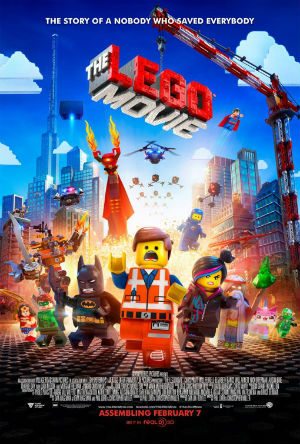
But yes, on a technical level the film is all aces! The animation style in The LEGO Movie really does earn the mark of the age-old adage of “looking like nothing else out there”, and it holds some of the most consistently impressive CGI work to date. It’s a film that simply will not, and cannot stop with animation that’s constantly on the go, and comprised of just about every action-set-piece that a movie about talking toys should have. Chase sequences, gun fights, martial-arts battles and the obligatory stakes-raising-epic-final-battle climax are all present and accounted for, certain to delight the bejeezus out of kids, but also remind their parents about what fun really means toward being a child too. The film really does look like it was built by hand and animated through stop-motion tactics, rather than being computer generated, and yes the movie does actually look like the most expensive, elaborate and official brickfilm (term used for film made with Lego bricks) ever made!

It could of all easily amounted to just being one big, noisy, feature length toy commercial (which is still kind of is), but it’s just the pedigree assembled to mount this movie was way better than anyone could of expected. The writing/directing duo of Phil Lord and Chris Miller has demonstrated in the past that they can do wonders with licensed material (who would of thought 21 Jump Street would be a best-ever film update of an 80s television series?), and here they show once again that they have a genuine knack for a unique blend of controlled lunacy, and also know exactly who to cast. Parks and Recreation’s Chris Pratt really is the perfect choice for the film’s main character of Emmett, as face it, nobody else in Hollywood plays lovable dorks like this guy does, and Elizabeth Banks also does an admiral job as playing his love interest Lucy. Really clever casting for the villains too, as it’s great to see Will Ferrell voicing the film’s antagonist, who’s both a stereotypical super-villain yet so much more, and dare I say that all those bad action films Liam Neeson starred in may have done him some good? The veteran actor really does prove to be a sublime vocal fit for the movie’s literal Bad Cop, and really makes one wish the actor would do more comedies.  Also enlisting the talents of several other great comic actors and actresses (Nick Offerman, Alison Brie, Charlie Day, etc.) only adds to the film’s merits, and will obviously appeal to people that watch good prime-time sit-coms. We should also all be grateful for the vast amount of copyright deals Lego has made over the years, as it allows such a wide host of characters from licensed titles (I.E. Star Wars, Teenage Mutant Ninja Turtles, DC Comics, and even The Simpsons) the film just leads it’s predominantly fanboy audience from one great nerd-gasm to the next!
Still, even with the outstanding production values, the witty script, and the highly appealing voice over work, it’s hard to see this film have working if not for the heart. The LEGO Movie has a bit of a surprise twist to it in it’s later third, that addresses the film’s theme of the power of imagination, that would of come off as sappy and heavy-handed in a lesser movie. Fortunately though, Lord and Miller work it in a way that feels intrinsic to the film’s unique sense of humor, yet also comes off as touching. I’m sure many viewers will be divisive about what this “twist” adds-or-subtracts from the The Lego Movie’s storyline or established universe, but it’s equally difficult to envision a path the film could of taking for it to really express it’s love and admiration for this long running, and venerable toy line.
So yes, it actually was nice for me to review a film that didn’t contain f-bombs or cunninglingus for a change. The LEGO Movie is a breezy romp through the colorful mind of the young (or young at heart), that is simply described as being pure, unadulterated fun! I feel it’s the first great American film of the year, and also probably the best animated film to come out since Toy Story 3.

Filed Under: ENTERTAINMENT, MOVIES Tagged With: Alison Brie, Batman, Christ Pratt, Emmett, lego, manhattan digest, Nick Offerman, Star Wars, Teenage Mutant Ninja Turtles, toys

Interview With Sheldon Harnick: A “Fiddler” at the York

by Ryan Leeds

Legendary Lyricist Sheldon Harnick. Photo courtesy of Matthew Harnick

It’s not every day that I am presented with the opportunity to connect to Broadway royalty, so when I had the chance to speak  with legendary lyricist Sheldon Harnick, I  did somersaults and skipped  through Times Square singing the well known song “Miracle of Miracles” from his Tony award winning musical Fiddler On the Roof.  It confused and confounded tourists and residents alike.

Ok. I’m being slightly hyperbolic. However, this three time Tony award winning master was gracious  enough to take time out of his busy schedule to talk to me about his ongoing series at the York  Theatre  Company, which is celebrating five of his works as part of their Musicals in Mufti line-up. “Mufti” shows  are performed  minimally in street clothes without being fully staged. Recently, the York  produced a world premiere of the revue Sheldon Harnick’s A World to Win and Dragons.  This weekend , they will stage Malpractice Makes Perfect (February 14-16th),

followed by his  off-Broadway  piece Smiling, the Boy Fell Dead (February 21-23rd) and will close the series with a revival of his 1960’s Tenderloin. (March 7-9).

Harnick spoke with me about the series, his experiences with other stage legends, his early days as an aspiring writer, and what  advice he could offer to  blossoming theater professionals.

RL: How did this Mufti series come into play specifically for your works? 

SH: You’d probably have to ask Jim Morgan, who runs the York. All I know is that months and months ago he called me and told me he wanted to do it. What prompted him to do that? I don’t know.

RL: It could be that you are on the heels on your 90th birthday, which is quite exciting. 

SH: That’s more than likely. I hadn’t thought of that, but that is more than likely.

RL: Speaking of, you’ll be 90 years old in April and have no signs of slowing down. In fact, from what I understand, you are very hands-on in the process of this mufti series. 

SH: That’s right. I’ll be attending as many rehearsals as I can.

RL: So what is your secret to longevity? 

SH: I have no secret. I can say that my father looked very young up until the end of his life, so maybe it is something I inherited from him.

RL: Good genes are always key, I suppose 

SH: True. Otherwise, I have no secret. When people ask me that, I usually say that I like to walk a lot.

RL: Do you have any brand new projects that you are working on right now? 

SH: What I’ve been contemplating lately is a musical about Hawaii. I was reading a book called “Overthrow”, which is about all the countries that our government has helped to overthrow their government. I was impressed by the fact that when we overthrew the Hawaiian government, that our congress apologized to them in the 1920s. I thought that was remarkable. At any rate, I saw a moving film about the subject where the princess at the time was suddenly a princess no longer. So she devoted a large part of her life to trying to get a vote for the Hawaiians.  So that material is a possibility because I find the story fascinating.

RL: Would you you write the book, music, and lyrics to this? 

SH: I always start out thinking I’ll just do lyrics and sometimes I drift into more than that.

RL: And the upcoming show at the York theatre, Malpractice Makes Perfect, is entirely your show–meaning you did book, music, and lyrics.

SH: True. Although when it started, I had approached several friends with the idea of other people doing book and music and I couldn’t get anybody else interested in it. Since it continued to fascinate me, I thought I’d just take a crack at it myself.

RL: Is this a debut for Malpractice Makes Perfect or has it been done before? 

SH: I’ve had several readings. This is another reading. What saddens me is that I was supposed to have a production by the Classic Stage Company last year. They had never done a musical before last year, when they produced Stephen Sondheim’s Passion-which was a beautiful production. But the board of directors at Classic Stage Company discovered how expensive musicals are to produce, and they decided to stick to straight plays. So they ended up canceling my show. Then Jim offered me another reading at the York, and I figured, “Well, let’s do that.”  So this will be not a full production with sets or costumes, but rather a regular mufti production.


RL: I understand in the recent production you did in this Mufti Series, Dragons, that you actually went on for a sick actor at the last minute? 

SH: Yes. That was a  week ago Saturday. Bill Youmans, who was playing the role of the mayor, was running a high fever, so they set up a chair and  music stand for me at which I sat and I read his lines and sang the songs.  The audience seemed to love  it.

RL: That must have been quite a treat for them, I’m sure! 

SH: It was a treat for me too!  I enjoyed it.

RL: The final show that you’ll be doing in this series, Tenderloin, was written by your long time collaborator, Jerry Bock, with whom you had written Fiorello, Fiddler On the Roof, She Loves Me, and others. Talk to me a bit about the collaboration you had with him. 

SH: Well, it was a wonderful collaboration from the time I met Jerry. We got along very well in every way. The last project we did together was The Rothschilds but then  Jerry decided after that project that he wanted to do his own lyrics because he had started as a songwriter and lyricist. He had worked with many other collaborators but had  always wanted to get back to his own lyrics–so that’s what he did the last couple years of his life. And in fact, it paid off for him. The year he died, he was part of a collaboration that wrote a song for television that got him an emmy award. It was for a children’s show and I think the title of the song was “A Fiddler Crab Am I” It had the word “fiddler” in it which I found amusing.

RL: It all comes full circle I guess. So you got your start in the industry in the  late fifties, is that correct? 

SH: Well, I came to New York from Chicago in 1950 and it took me awhile…until 1957 I think, before Fiorello hit and that is what made me solvent, but up until then it was touch and go,

RL: I ran across something called Songs to Ford-ify Your Future that you had done early on. 

SH: (Laughs) That was an industrial show that  Jerry Bock and I did for the Ford tractor company.

RL: How did that project materialize? 

SH: I had done a number of industrials for an advertising firm and when I started doing them, I didn’t know that I was breaking the law. They told me to just pick whatever songs you like and whatever melodies you like and just write lyrics for them. So that’s what I was doing . That is what most of the industrials were doing. And then, there was an industrial show, where one of the performers in it had been in The Music Man and he knew Meredith Wilson (the composer of the show). In that particular industrial show, they had used one of the songs from The Music Man, so this performer wrote to Wilson and he said, “You’ll be amused, I’m sure, to find that we have used one of your melodies  in this industrial show and they have  written new lyrics for it.”  Well, Meredith Wilson was not amused. In fact, he sued. Since then, most industrials have had to write new music. At any rate, I had been doing just anybody’s music, but when the Ford tractor show came along, they decided they wanted an original score, so Jerry and I were hired to do that . It was the only industrial show I had done that was recorded. The Ford tractor company made a recording of it for their sales people and I received a copy of it as well.


RL: That is such a unique thing. We don’t really see Industrial shows any more, which is kind of sad. 

SH: Yes. There was a big article about it in the New York Times last Sunday by William Grimes. And there’s a new book out about the topic of industrial musicals.   I was on Terry Gross’ program on NPR recently to discuss it.

RL: What a cool experience to have done  those prior to the days of- as you say- your “solvency.”

SH: Right. the industrials allowed me to pay a lot of bills and they were wonderful because they used so many professionals in terms of performers and orchestrators and conductors. I met a lot of people that way.

RL: You have most certainly rubbed elbows with some luminaries in the theater world, specifically Zero Mostel and Bea Arthur on Fiddler on the Roof. Can you talk a little bit about what your experience was like with each  of them? 

SH: Well, Bea was a friend. For some reason, Zero never became a friend. I had tried to buy one of his paintings because I liked his work and he kept putting me off and making snide remarks. So I didn’t really rub elbows with him and I’m not sure why but there was definitely a distance between us.

RL: With Bea Arthur….how do you go about writing songs for someone who isn’t exactly a trained singer but able to make them sing  lyrics which are accessible to the general public? 

SH: Jerry and I never did that. We wrote for the character and we wrote whatever we thought was musically necessary and then, when we cast we’d get somebody who was able to sing the song–whatever the demands of the song were-we got a performer who could handle it. As it happens, Bea Arthur was quite a capable singer, so we really didn’t have to worry about that. When she auditioned for Fiddler, she must have auditioned about six times because every time we (Jerry Bock, Joe Stein, Jerry Robbins and myself) saw her we’d say, “My God! She is such a strong performer, but there’s nothing old country about her. She seems like contemporary New York and doesn’t seem right for the show.” After the fifth or sixth audition, Jerry Robbins said, “Look. We haven’t seen anybody who is stronger than Bea Arthur. Whether she is right or wrong for the role, she is wonderful. Let’s hire her.” And so we did. And I must  say, she was an extraordinarily strong performer.


RL: What about your collaboration with George Abbott and Jerome Weidman on Tenderloin?

SH: Jerome Weidman was an adorable man…very good natured, high-spirited, had endless anecdotes and was great fun to talk to. He was such a great  storyteller, which is why I think he was such a good novelist. George Abbott on the other hand, was kind of aristocratic, but an extremely decent man and wonderful to work with. He was so professional and had such knowledge of the theater. I remember for Fiorello, there was one song we had written, which Abbott  didn’t think would work so he didn’t want to use it. Jerry Bock and I were very disappointed that he wasn’t going to use the song. It was called “The Bum Won”. What surprised me is that we got to New Haven and after we had opened, George Abbott said to Jerry Bock and me, “We are going to try your song, but I don’t think it will work, so I’m not going to spend Hal Prince’s money by having it orchestrated. But we will rehearse it and put it on stage just accompanied by piano, bass, and drums and we’ll see what happens.” So I stood next to Abbott at the back of the theatre in New Haven, and I thought to myself, “Oh dear! He’s right! It doesn’t work.”   But to my surprise, Abbott turned to me and he said, “Sheldon, this song is going to work. The reason it doesn’t work now is…and he gave me the reasons and then  instructions on how to re-write the song, so that it would work.”  And he was right. Jerry and I re-wrote the song and it became part of the show. His knowledge was just astonishing.


RL: You talked about New Haven. A lot of times, Broadway shows used to get worked that way, both there  and in Boston. How has that process changed over the years when today’s shows are just mounted immediately on Broadway. Do you think it has compromised the integrity? 

SH: I don’t know about that , but it has made it a lot more dangerous. When we used to go to Boston or New Haven, you could improve the show. Now, it more of a gamble if you open directly in NewYork, no matter how long the preview period is,  People see it and word of mouth can be bad. That will have to be overcome. I remember that’s what happened with A Funny Thing Happened On the Way to the Forum. I’m not sure that they had an out of town tryout and when they were previewing in New York, they hadn’t fixed the show yet. Word got out that the show was not good. But thank God by the time the show opened they had fixed it. At any rate, without an out of town tryout, it is more of a gamble. Personally, I loved going out of town where you had the opportunity to look at the show every night  and see what wasn’t working and then try to fix it.

RL: Years later, when you look at your own works and projects, do you ever sit back and look at lyrics you have written and say, “I should have used a different word or phrase there or changed this or that” or are you completely satisfied with the finished product?

SH: Two of the shows in this mufti series, Dragons and Smiling, the Boy Fell Dead were both shows that I have constantly gone back to and said, “This can be improved”,  and I’ve kept working on them. With Dragons, it all paid off on the reading we had which was very successful. When we get to Smiling the Boy Fell Dead, we’ll see whether all the work I’ve done on that, subsequent to its’ run Off Broadway in 1960 has paid off. With shows like Fiddler, Fiorello, and She Loves Me I think that I finally got it right and there is nothing I’d want to change about those.

RL: Are there shows that you’ve seen that have made you wish you had written them yourself? 

SH: Yes. Most of the Sondheim shows!  I look at them and I marvel at his talent- especially Sweeney Todd. I think that is just a masterpiece and in fact, I wrote him a fan letter about it.  

RL: Is there anyone working in the industry now that you’d like to work  or collaborate with? 

SH: I often thought it would be fun to work with Alan Menken, who is extremely talented. And there is a younger composer, Tom Kitt, who I think is just wonderful. He  has a new show coming  Those are two names that come to mind

RL: When you look at the landscape of Broadway today, what is your opinion of the “Movies turned musicals” phenomenon that has been dominant over the last few years? 

SH: I have no problem with that. Musical theater has always looked for things to adapt whether they are plays or books or movies, so I have no problem with it.  If it is a good story and the adaptation is done well then that is a plus. In fact, I turn to movies myself to see what can be adapted

RL: Do you have any advice for lyricists or people working in the field today?

SH: The advice I usually give to young writers is to read widely and be aware of what’s happening in the world around you. You never know what the demands are going to be   on  the musical for which you’re writing. To have the widest flow of information to you is extremely useful. Every young writer should have as broad an education as possible

________________________________________________________________________________________________

For tickets and information on Musicals in Mufti: Celebrating Sheldon Harnick visit http://www.yorktheatre.org/current-series.html, visit the box office at 619 Lexington Avenue (on the corner of 54th street), or call: (212) 935-5820

Filed Under: ENTERTAINMENT, THEATRE

Checking In On The Networks At Mid-season: ABC And CBS

by Michael Tyminski

Source: Wikipedia

With the Olympic break gutting away many premieres for the next two weeks (the one notable return I’ll discuss later this week), let’s take the opportunity to see how exactly the major networks (and cable) have been faring midway through the season.

ABC: It has to have been a fairly disappointing year overall for ABC after the wholesale changes they made over the summer (especially on Tuesday nights) only to see no real advancement in positioning relative to the other networks in addition to an alarmingly high number of new shows tanking with incredible speed.

What’s working: On the positive side, ABC’s Tuesday revamp seems to have taken some hold, with Agents of S.H.I.E.L.D being the strongest non-NCIS show on Tuesdays. Similarly it’s lead outs The Goldbergs and (especially) Trophy Wife have attracted some critical acclaim, even if Trophy Wife is struggling in the ratings. Fridays, with their mix of Shark Tank and family comedies also seem to be a strong point for the network, seeing how reruns of Shark Tank have become the network’s go to emergency fill over the past year.

What’s not working: Outside of Tuesdays from 8-10, ABC’s newer shows have been an unmitigated disaster. Once Upon A Time In Wonderland was not only painfully cheesy but stuck in the Thursday at 8 death slot from the get go. The Assets tanked so horribly it got eaten by the Shark Tank in two episodes. Super Fun Night ended up being not only a bad fit despite having a bankable star and a Modern Family lead in, but also evident from minute one why CBS didn’t even bother to pick up the pilot.

The biggest hole for ABC, however has been that third hour on Tuesdays. If Thursday at 8 is known as the alphabet’s death slot, then Tuesdays at 10 have to be it’s stillborn slot, as not one but two new premieres (Lucky 7 and Killer Women) have died incredibly swift, painful deaths. A good chunk of this is likely related to the fact that the network continually insists on putting understated shows immediately behind two of the most cartoonish hours on television (I don’t see how anyone could buy Trophy Wife as a viable lead in for a grim slice-of-life drama like Lucky 7).

Overall Prognosis: It feels like ABC is swiftly becoming the new NBC, only without all the amusing backstage drama that makes mocking the peacock so much fun, with it’s often bizarre scheduling decisions and inability to use it’s anchors to promote it’s other shows. There are a lot of new shows being rolled out after the Olympics, so there is still one last chance to salvage what would otherwise be a rough year.


CBS: The realities of network TV have slowly been applying to CBS after a few years of ultimately ending up in their own orbit. For the first time in a decade, CBS actually seems fairly vulnerable, as it’s numbers are much more in line with the other major networks.

What’s working: Despite all the doom and gloom I mentioned in the opening paragraph, it’s important to remember that CBS still has two of the most venerable juggernauts on broadcast airwaves in NCIS and The Big Bang Theory. The network still has a fairly deep bench all around whether it’s on the comedy side (Mike and Molly), or the drama end (in a most dire scenario, the network could easily spackle with most of it’s Friday or Sunday dramas). The best move CBS has made actually hits next year: it’s acquisition of half of the Thursday Night Football package. This move gives the network eight weeks of fairly steady ratings and allows it to debut it’s comedy lineup right in the heart of November sweeps, where high ratings matter most.

What’s not working: Mondays at 10 have become have a gaping hole in the schedule for CBS. Much like ABC’s Tuesday anchors, it’s pretty clear that the network can’t find a good fit for the slot and is using it as a dumping ground for mediocre-to-poor shows like Hostages and Intelligence. This is a huge problem as Mondays are quickly becoming a bright spot for other networks (particularly NBC and Fox), so with the removal of Monday anchor How I Met Your Mother in march, CBS’s viewership could erode most drastically on that night.

Speaking of erosion, it’s a real problem CBS has to start worrying about in the future. I’ve mentioned numerous times how CBS’s line up is starting to really show it’s age (think about its’ core shows and most of them date back to the Bush administration with half of them being in his first term and Survivor actually launching while Clinton was still president). Unfortunately, the network cannot seem to find new anchors to replace it’s existing ones: The Crazy Ones is not pulling it’s weight and neither is Mom. With the likely removal of Two and A Half Men to go with the end of How I Met Your Mother, CBS will only have Big Bang to prop up it’s newer comedies and will have to rely on shows like 2 Broke Girls , Mike and Molly, and the still fairly untested The Millers to carry the ratings load.

Overall Prognosis: CBS still rules the roost, but it also still needs to find some shows to carry it through the future, as even its’ juggernauts slowly become fossils (Big Bang Theory is in season seven, NCIS in season twelve, CSI in season fourteen.). That being said, the network is still making the right moves to continue to buy more time, hoping the network can strike gold (particularly on the comedy side of the ledger) at least once more.

Next Time: Part two of this series comes next week. Later this week, I take some time to look forward to season two of Netflix’s House of Cards. 

Filed Under: ENTERTAINMENT, OPINION, TELEVISION Tagged With: ABC, CBS, Mid-Season, TV

An “Interactive” Conversation with the “Goldstar” Visionaries Behind TEDxBroadway

by Ryan Leeds

Few people would associate the biological term “ecosystem” with the theater community–unless, of course,  one taps  into the  passionately innovative minds of on-line media gurus Jim McCarthy, CEO of the popular  ticket site, Goldstar (https://www.goldstar.com)  and Damian Bazadona, founder and CEO of digital marketing advertising agency Situation Interactive Media (http://www.situationinteractive.com.) The two of them, along with Broadway producer Ken Davenport (http://www.davenporttheatrical.com)  are joining forces for the third annual TEDxBroadway Conference, which will be held  on Monday February 24th, 2014 at New World Stages.

I  sat down with McCarthy and Bazadona to discuss how the conference is taking form, the importance of technology within the live entertainment community,  and what we can expect from an event that aims to make Broadway brighter, better, and more relevant.

RL: This is the 3rd annual TEDxBroadway Conference. Tell me a bit about the  origin. 

JM:  For a couple of years, there were unaffiliated loose conversations over dinner and drinks with Damian and Ken where we would discuss the need to make sure that the Broadway ecosystem was having conversations that were bigger picture conversations. And this was just by our mutual interest in that sort of thing. At some point, we developed a vague idea that we might do one of these ourselves. I had been involved in the TEDx program early in its inception and after being around that, I decided to do something within that format.  The three of us talked and agreed that this was consistent with what we thought the conference should be: bigger picture, longer term, less nuts and bolts and  more aspirational. TEDx provided us with some framework for how to do it. So TED gave us a license for TEDx Broadway and we set a date and started working for it.  This gives us a chance to think big and think broad and I think we can have a good time with that.

RL: How will this year be different in terms of scope and content? Can you tell me about some of the speakers? 

JM: In some ways the same and in others, quite different. The basic structure is quite similar in that we’ll have three sessions again. There are no panelists but just a single presenter for each topic.

DB: The reason I got involved in this from the beginning is because we’ve nailed down the question: “What is the best Broadway can be?”   One of things that drove me to get involved with this conference  with Jim and Ken is that we all  look at the aspirational side of where the industry could go. Too many conferences focus on a) too many “nuts and bolts” and b) less about the longer term- So  when you structure the question “What is the best broadway can be”, it makes each speaker look at it in that framework.  The key difference this year is that we’ve become much better at the structure. Since this is our 3rd  year, we’ve just become sizeably better and the speakers have a better understanding of what we’re trying to accomplish. The speakers we have lined up are just excited to involved in the process. All of them  come to the stage with a certain level of passion and they have a context from speakers over the last two years. If you look at our sponsors which include Google, Jujamcyn Theaters, and Broadway.com,  you realize that everyone wants to get involved in this.  I mean, who doesn’t want to answer the question “What is the best Broadway can be?”

JM: Plus, we have people who may not be household names, but they’re just gonna go up there and knock people out. I try to encourage the speakers to discuss what people are  not likely to hear from them. Having worked with Robert Lopez on his talk, I know that what  he’ll talk about will be interesting to the audience, but there are other people in the line-up who are less familiar names,  but who I think will be pretty dazzling. Even people outside the Broadway ecosystem will contribute. This year we have Annisa Ramirez, who is a tremendous science educator and  one the best people in the world to break down science for the layperson. She’s going to discuss the science that we’re going to live with over the next five to ten years and the emerging aspects of science that are going to  impact our daily lives. Certainly Ramirez is prolific in her field, but not as well known among the Broadway community, so we’re really happy to have her on board as well. We also have the amazing singer and actor  Lea Delaria, who is now recognized for the series “Orange Is the New Black”.

RL: Can you each give me a brief elevator pitch on the contributions your companies are making to the Broadway community? 

JM: Goldstar is basically  a seller of tickets to all kinds of  live entertainment. We call ourselves “the world’s largest ticket booth.”  We have approx.. 5 million registered members, we’re in 30 of the biggest markets in the U.S.  and we sell tickets on behalf of any kind of live entertainment and arts you can imagine. Our goal is to connect people who want to go out more to the venues who would love to have them. We become the starting point for matching the two, they buy the tickets from us, and we take very good care of them. NY is our second largest market after LA (where we are based)  and the health of Broadway, both here and on the road is extremely important to us. When Broadway is healthy, we benefit. We talk about the Broadway “ecosystem”, which is not just the theater  but the tourists ,restaurants, hotels, academic institutions, and residents.  One of the beliefs we all share is that this ecosystem rises and falls together, so we want to help make it healthier now and into the future.

DB: Situation Interactive media operates under the basic principle that the world is a better place when people are doing things rather than having things.  Therefore, we power the brands that do. We started in arts and culture and worked on over 100 Broadway productions since 2000 and now we have expanded by working with Brooklyn Academy of Music, Metropolitan Opera, the Super Bowl, One World Trade Center, Madison Square Garden  and other experiential outlets. Our roots started in Broadway but have expanded. I’m in this primarily because I hope to be here for many  years and Broadway is a tremendous part of our business and is where my roots are from.

JM: I think Damian is being a bit modest because Situation Interactive was really the on-ramp for Broadway in terms of internet marketing. Prior to him, it wasn’t even a given that you should be marketing on the internet.

DB: (Humbly) Well, thank you. I think it was just a matter of being at the right place at the right time, but I’ll take it!

RL:  How have Broadway marketing strategies changed from the days of relying solely on print to the newer techniques of digital advertising and is one more important than the other? 

DB: Digital marketing is the best trend that has happened to Broadway and live events  because they benefit from digital a lot more than other folks and industries. Primarily, it is all about content.  The product we offer is literally our market. A majority of my brands are in the story telling business and they sell stories that people get to connect with. Digital is the greatest way to connect people. I wouldn’t say that there is no need for traditional media because it  all fits into the puzzle, but the new channel into the mix is obviously all of the digital pieces. You can connect all the people in the world this way.

JM: If you only had traditional means of marketing the product, those means are slow, static, and expensive. It takes a long time to launch them, you can’t change them, and they  cost a lot of money, so you had better get it right on the first try. The thing about digital is that we have a product (those of us in the live entertainment business) that is like bread. So the notion of slow, static, and expensive are the last things you want for a product  that is  here today gone tomorrow.

DB: Another thing is that great ideas come from everywhere.  I know everyone says that but in a world where content is becoming king, we work differently. Now you can ask the cast for ideas of marketing the show, which wasn’t previously thought of  in the theater.  Now they say, “We want to promote  the show like this” and we respond with, “Great! Here’s a channel by which we can do that.”  It’s the most fun time to be in the industry on the marketing side since I’ve been doing this.

RL: With regards to the productions themselves  how has technology changed the face of theater? What trends are currently implemented and is there anything new that theater goers can expect ?  

JM: We actually have two speakers talking on that topic this year.

DB: It depends on how you’re defining it. We think of Broadway as the place, not just the industry so the growth I’ve seen over the past 5 years is in alternative models.  The business models which are starting to pop up is that live theater and the experiential piece  are playing out in all different ways.   I feel like you’re going to see more  shows along the lines of  Sleep No More and  Fuerza Bruta. From a pure technology perspective, I’m working on a show right now that is primarily all projections. So we’re starting to get to a place where projections are working themselves into productions, which changes the whole game for scenic design and set design-not necessarily as replacements but as enhancements.  The business side really is going to dictate some of the creative decisions over time. What are the cost structures  to put these shows on? Because they are going up and to make money on Broadway is not easy, so you must have cost controls put in. Where does theater live beyond the four walls?

JM: Exactly. And that is another area we’ll hit in this incarnation of TEDxBroadway. How do you take the thing that is happening in the theater and leverage it elsewhere?

DB: Right.  Right now, that conversation is being led by marketers and it needs to be led by creatives since  creatives can  take the content and apply it specifically to each  platform. That is why places like National Theater (who was at TEDx last year) are fantastic because they create for the platform. When they shot Curious Incident of the Dog in Nightime , they shot one version for National Theater Live, so when you watched  it in the movie theater,  it looks like it was shot exclusively for the movie screen. We’re just at the beginning of that. You have to believe that there is a lot more value in the content. We have an amazing talent pool of people who create for the stage every night

RL: Who is your target audience, both for advertising and show attendance.

DB: If you’re looking  NY theater ticket buyers today, the average demographic is 40+ women. I would argue that the bigger issue is cultivating talent over time. One of the reasons I’m involved in the  TEDx conference is because we’re looking at the question, “What are we doing today to build the audience of 20 years from now?” the topic of target audience, I think. is a huge conversation for the industry. The easy, short  term answer is definable: 40, wealthy, in-bound tourists but it is clearly not aligned with the longer term demographics of this country, which is why I  like conferences like this- so we can discuss that.

JM: Now that you’ve taken us down this path, there are 3 programs I’d like to mention which we’ll also be discussing at the conference.  One that Damian has driven with kids in the Bronx at a high performing middle school who have been sort of the toehold  for a program that has broadened out since then. A) It gives  them some exposure so they know that there is a thing called Broadway and theater and B)  it helps to build the connection in the other direction too.  Damian was instrumental in getting the cast of Spider Man to go to their school in the Bronx. The result is that these kids from a high achieving, low-income area are now  thinking  “Maybe I can have a career in the area of the arts.”   Our perspective is that Broadway needs those kids as much or more as those kids need Broadway.  Think about the talent you can  find in areas like this and that is where the future is often built. If this program has the result of just one brilliant writer or director emerging in twenty years, then this  will have made everything worth it.  On another level, we’ve subsidized some college students  to attend, so they’ve made this part of the curriculum of the class. These students are able to go to the conference without costs being so prohibitive.  We also had an open call for anyone 30 and under affiliated with the Broadway ecosystem to apply for free admission to the event by writing  a brief description about why they wanted to attend.  So a nice chunk of our audience this year will consist of those decision makers of  the future. We’ve talked about that in the past, but this year we made a commitment to making sure they are there.

 RL: What are some of the  take-away you want to give attendees to the TEDx Conference or do you see this more as forum for open thought and creativity? 

JM: I’d say more the latter than the former.

DB: The sign of success for me every year when I get emails and messages back from people telling me that it was a great day and they left feeling inspired. That is all I care about. I think if we go into the territory of “what is the take-away”, it’s dangerous because you’re trying to script something and the idea is that we’re trying to bring open ideas to the table from other people. I see myself as much a participant as an organizer.

JM: The idea of the TED format is to spread ideas. So our job is less to have a pointed view than it is to ask, “Who are some people who have interesting ideas that are relevant to this community”,  and then give those people the opportunity to say interesting things in this setting.  Often times, maybe a side point that you’ll hear from a speaker  or a conversation you had in the lobby during a break will take you down a trail and open something up in your head as a huge idea and then can be an amazing thing we’ll all benefit from in some way.

DB:   We didn’t want to take a bunch of speakers, put them up there, and then talk about all the things you can’t do. That is probably one of the biggest traps  in conferences I attend in any industry. But when you frame the question:  “What is the best Broadway can be?”, You can isolate a problem and that aligns with the question of “Is this something that inspires you?” and then it gives you a runway to make that possible.

JM:  Look- every industry has deficiencies. But we’re not asking , “How do we fix a broken thing?”  Instead,  with an active imagination  we are asking, “What is the best possible thing- and then let’s re-set the trajectory towards that. In the course of doing that, maybe we  fix a broken thing or two along the way.”  And ultimately,  it’s  supposed to be a fun! If it’s not fun, we’re not doing it.

RL: You’ve talked an awful lot about this “Broadway ecosystem.”  What do you think is the greatest challenge, economics aside, facing this ecosystem? 

JM: What is the audience  years from now and more to the point, will this be a vital place in 10 or 20 years? The answer to that is going to come from whether or not there’s a connection made to the people who will need to be the ones showing up in order for it to work. The audience of today will have sort of moved on in its’ relevance. The demographics are kind of set. So if we know who is going to be here and who is going to have dollars to spend, then the question is ‘Will they be interested in this neighborhood  as theater goers and as restaurant goers.’?  We don’t need to go back that far in history to a time when they weren’t interested. The biggest macro question is that the neighborhood has gotten much much healthier in the last couple of decades, but what if it doesn’t sustain? What if, as a whole, that ecosystem doesn’t hit the mark in quite the way of where it was in the 80s until now?  It’s not a guarantee, so there’s an audience question in there, there’s a relevance question in there and there are even bigger financial questions there as well. Those are all threats.

DB:  A lot of people I’ve talked to from restaurants and hotels and  are of  the “now”  thinking. They are wondering,  “Is the show across the street from my restaurant  going to stay open  because when that show is open, my restaurant is full.”  So they are hoping that Broadway remains strong.  Everyone I talk to in this ecosystem has a different angle, but it all connects back to the same thing, which is the overall health of the region. Even though they live on a block to block basis, they are all connected by the idea of Broadway and Times Square. This week, for example, the blizzard and the super bowl changed the entire eco-system of that neighborhood dramatically. So you have these extraordinarily different businesses that are  completely inter-dependent on each other

JM: We use this word “ecosystem”, which is borrowed from nature. The animals and plants in a certain part of the natural world don’t live there in isolation. The deer and grass and squirrels and grass, etc. do depend on each on each other. At a certain point, when the ecosystem degrades, everyone suffers. So this  is very real and very complex, and we’re looking forward to having the conversation.

What: 3rd annual TEDxBroadway Conference

When: Monday February 24th 2014, 11am -6pm

Where: New World Stages, 340 W. 50th Street between 8th and 9th ave.

Tickets and more information: http://www.tedxbroadway.com


Damian Bazadona, Founder and CEO, Situation Interactive Media (Left)  and Jim McCarthy, founder and CEO  of Goldstar (Right).   Photo courtesy of O&M.
Damian Bazadona, Founder and CEO, Situation Interactive Media (Left) and Jim McCarthy, founder and CEO of Goldstar (Right).
Photo courtesy of O&M.


Filed Under: ARTS, ENTERTAINMENT, NEW YORK, TECHNOLOGY, THEATRE, uncategorized

Flappy Bird’s Farewell- Manhattan Digest

by Tim Morris

We barely new ye, Flappy Bird.

Source - Gamespot
Source – Gamespot

Have you played Flappy Bird yet? If not, your chance is already gone unless you have a friend with it on their mobile device. The iOS and Google Play game, developed independently by Dong Nguyen of Vietnam, has been pulled from stores just as it was becoming huge. According to Gamespot, the game was pulling in over $50,000 worth in ad-revenue per day. The kicker? The game was completely free to play. Unlike other hugely popular mobile games like Angry Birds and Plants vs. Zombies, you pay nothing out of pocket to play it.

Flappy Bird gained notoriety for being an especially difficult game. It sort of plays like Robot Unicorn Attack in that it requires precision, but the controls of Flappy Bird are considered to be what makes the game the most difficult. Its “tap to flap” interface is exactly what it sounds like; tap the screen to flap your tiny wings and move upward, and do nothing to descend. The goal is to make it between as many gaps as you can before you hit a pipe. It’s a delightfully addictive design that made players push to improve their score, however it definitely took some getting used to.

There was some speculation that the game was taken down for copyright reasons. The pipes bear a striking resemblance to those that you’d find in old school Super Mario Bros. games, and the bird sprite used in the game does look somewhat similar to Piou Piou. However, Nguyen stated on his Twitter that this is not the case. If I’m a betting man, I’d say that he didn’t expect the game to get so big so soon, and can’t handle the workload. Thankfully, he has also stated that he will continue to make games and if he can take a simple design like this and turn it into big bucks, he’s a true credit to this industry. Nguyen clearly has struck gold with Flappy Bird and I look forward to playing what he comes out with next.

Filed Under: ENTERTAINMENT Tagged With: flappy bird, manhattan digest

Manhattan Digest Theater Review: “Bronx Bombers”

by Ryan Leeds


Bronx Bombers, Manhattan Digest

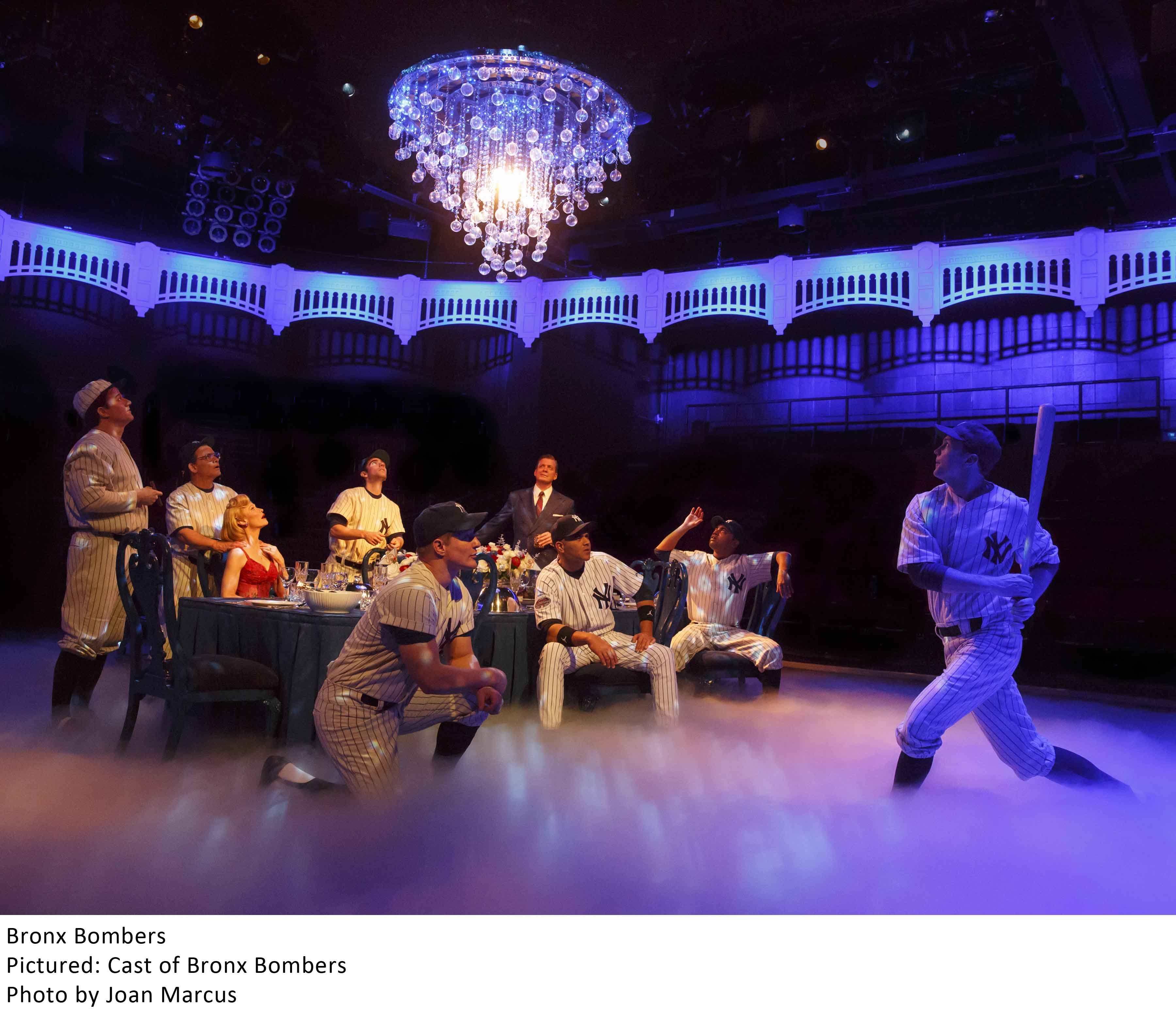
“The first year I played, says Lou Gehrig (John Wernke), I was sent a contract for three thousand dollars. Me, my ma and dad, were poor our whole lives. We were grateful.”  “We’re never not grateful. In this house at least,” replies Carmen Berra (Tracy Shayne) , wife of the legendary New York Yankees icon Yogi Berra (Peter Scolari). This meaningful exchange plays out during an imagined dinner party near the top of Act 2 in playwright Eric Simonson’s Bronx Bombers.  It is one of the many reflective moments in this nostalgic trip which celebrates Major League Baseball’s most successful team in history: the New York Yankees.

Simonson is best known for his prior sports related works, Lombardi and Magic/Bird  both of which idolized their subjects for their greatness and inspiration. Bronx Bombers continues in this vein by spotlighting players from the past and present-athletes whose immense statures made them household names. And while he manages to maintain their “larger than life” heroic personas, he humanely crafts them as men of depth, integrity, and gratitude—characteristics which are  foreign concepts to contemporary players more intent on breaking records for their demands and contracts rather than playing for the love of the game.

Act 1 opens in a hotel room in Boston where Coach Yogi Berra and catcher Thurman Munson (Bill Dawes) are trying to mediate a contentious argument between right fielder Reggie Jackson (Francois Battiste)  and manager Billy Martin (Keith Nobbs). On June 18th 1977, Martin replaced Jackson after a confrontation in the dugout of  Fenway park. Their interaction plods along and, aside from Battiste’s wonderfully cocksure portrayal of Jackson, there is very little dramatic tension. Actually, the dramatic tension is lacking throughout Bronx Bombers.  Yet the second act provides a fun and thoughtful glimpse into the men who “lived” in “the house that Babe Ruth built”. Here, they are all gathered for a fantasy reunion at Yogi and Carmen’s home where memories and reflections dominate the conversation. C.J. Wilson is marvelous as the gruff, but charming Ruth.  Wernke brings sincerity and heart to Lou Gehrig,  Chris Henry Coffey serves a confidently cool Joe DiMaggio, and Christopher Jackson is serviceable and  as shortstop Derek Jeter. Real life newlyweds Scolari and Shayne round out the cast with sweet, mid-western warmth as Mr. and Mrs. Berra (both of whom were from St. Louis, MO). Like  like any successful team, Bronx Bombers  is an ensemble piece that is sure to please die-hard fans and casual spectators alike.  Although it is considered America’s pastime, baseball has never resonated with me. Yet Bronx Bombers reaches past the sports lingo and taps into the heart of what truly matters: teamwork, humility, respect, and love. It is more than a love letter to baseball-It is a testament to the incredible city of New York.

Bronx Bombers  is now playing on Broadway  at Circle in the Square (W. 50th between Broadway and Eighth Avenue). For tickets, visit www.telecharge.com, call 212.239.6200 or visit the box office.

Filed Under: ENTERTAINMENT, THEATRE Tagged With: bronx bombers, manhattan digest

  • « Go to Previous Page
  • Page 1
  • Interim pages omitted …
  • Page 120
  • Page 121
  • Page 122
  • Page 123
  • Page 124
  • Interim pages omitted …
  • Page 177
  • Go to Next Page »

Primary Sidebar

Navigation

  • HOME
  • OPINION
    • REVIEWS
  • BUSINESS
  • LGBT
  • ENTERTAINMENT
    • ARTS
    • MOVIES
    • MUSIC
    • TELEVISION
    • THEATRE
  • LIFESTYLE
    • TRAVEL
    • FASHION
    • HEALTH
    • FOODIE
    • STYLE
  • POLITICS
  • SCIENCE
  • SPORTS
  • TECHNOLOGY
  • U.S.
    • NEW YORK

Footer

  • ADVERTISE
  • TERMS OF SERVICE
  • CAREERS
  • ENTERTAINMENT
  • Home
  • Contact
  • Legal

Copyright © 2026 · ManhattanDigest.com is run by Fun & Joy, LLC an Ohio company · Log in

Loading Comments...