• Skip to primary navigation
  • Skip to main content
  • Skip to primary sidebar
  • Skip to footer

Manhattan Digest

All you need to know about Manhattan culture and so much more...

  • LIFESTYLE
  • ENTERTAINMENT
  • LGBT
  • OPINION
  • TECHNOLOGY

Peter Foy

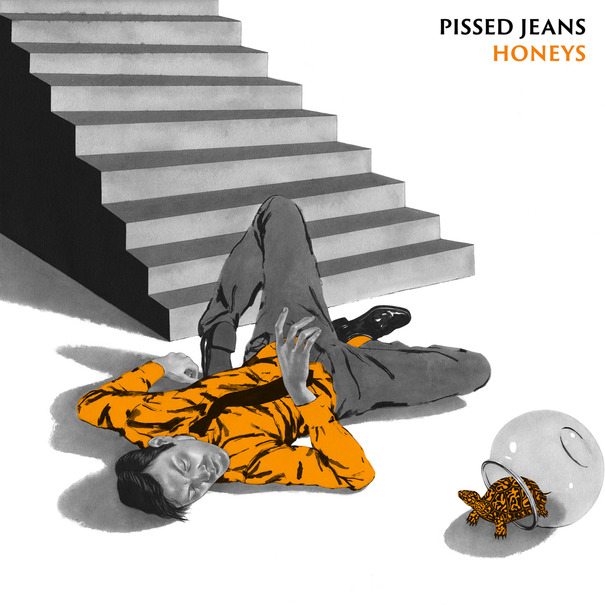
Album Review: Pissed Jeans – Honeys

by Peter Foy

pissed jeans

Similar Artists: Fucked Up, Black Flag, The Melvins

Genre:   Hardcore Punk/ Noise Rock

Label: Sub Pop

One of the things I really like about today’s hardcore punk scene is that it’s relatively easy to classify the best acts. For example: Titus Andronicus is the most ambitious, Cloud Nothings are the catchiest, and The Men are the most evolving. So, what title should I bestow on the Allentown, Pennsylvania quartet Pissed Jeans? Hmmmmm, the kookiest?

Well, when your band’s name is Pissed Jeans you aren’t exactly asking people to take yourself too seriously, and these guys are certainly more affably silly than any of their contemporaries, even Japandroids. Completely a punk band musically, as their sounds can be as droning as the Melvins, or as in-your-face as Black Flag, but their subject matter comes off as completely oddball. They mostly stay away from discussing left wing politics, or even too much about sex, drugs and violence. Instead the band is more interested with…mundane life. With songs about seeing movies (R-Rated Movie), envisioning imaginary worlds (Fantasy World), or middle-aged hair loss (Goodbye (Hair)), it might not even be accurate to call them kooky. Pissed Jeans are possibly the nerdiest, funniest and most relatable punk band to come out since The Descendents.

For the band’s third release through label sub-pop, Honeys, the band certainly isn’t going in a drastically different direction. The album tracks alternate between being kinetic and sludgy, and frontman Matt Korvette is still talking about the daily woes of working-class America, with subjects that range from health care to prolonged adolescence. They don’t have any tracks north of five minutes here though, and avoid epic mind fucks like The Jogger or Scrapbooking, but more importantly the band sounds tighter than ever. There’s a more evident layer of polish, but it’s still the same brand of hardcore we’ve heard from these guys before.

Honeys gets off to a rousing start with Bathroom Laughter, a really shredding track with an overt sense of fun, despite lyrics like “You’re in the kitchen crying”. The next track though, Chain Worker, is in direct contrast to Bathroom Laughter, momentum wise though, which makes use of droning guitar effects as Korvette recites a tale of an office worker who is about to lose it. The album continues in this pattern over the next 10 tracks (one an interlude), perhaps climaxing with the wonderful song called Cafeteria Food.  Anyone who has been forced to eat shitty food at their workplace/education will get a real kick out of this one, as the lyrics are honest, funny and scathing all at once. It’s also possibly the most varied song the group has made to date, as the track seamlessly blends the band’s slow-and-fast sensibilites, which perfectly contemplate Korvette’s altered vocals. I honestly could see them putting out a whole album of tracks like Cafeteria Food in a year or two.

Honeys is a more than solid release, from a energetic punk band that shows no signs of slowing down. Pissed Jeans is a band that forgoes cries of revolution not because they aren’t as intellectual as other punk bands, but rather because they’re mature enough to realize that saying “fuck you” to the man isn’t gonna keep you from paying taxes. This is great music to listen to at a particularly hard day at the office, as it will remind you that plenty of people understand your everyday struggle…and make awesome music about it.

Track Listing

  1. “Bathroom Laughter”*
  2. “Chain Worker”*
  3. “Romanticize Me”
  4. “Vain in Costume”
  5. “You’re Different (In Person)”
  6. “Cafeteria Food”*
  7. “Something About Mrs. Johnson”
  8. “Male Gaze”
  9. “Cathouse”
  10. “Loubs”
  11. “Health Plan”
  12. “Teenage Adult”*

*-Album Highlight
 

Filed Under: ENTERTAINMENT, MUSIC

Netflix’d: Film Noir Edition

by Peter Foy

Decided to do something a bit different for this latest entry of Netflix’d. As those of you that know me (all two of you), you know I’m a fond appreciator of film noir, to the point that I’d even call it my favorite style/genre/era of movie-dom. Seeing that Netflix has such a good batch of quality noir titles, I was thinking about finding a particularly great one and then writing about it. Then a better idea struck me: Why not just review em’ all in one fell swoop? They’re all pretty much the same film anyway! Therefore, welcome to the Film Noir Edition of Netflix’d where I’ll be discussing my 7 favorite Film Noirs that are currently streaming on Netflix. I’ve listed them in chronological order, so feel free to interpret this as a timeline for the film style’s.

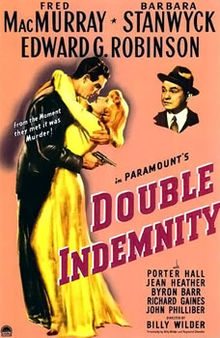
Double Indemnity

220px-Double_indemnity

Date: 1944
Running Length: 107 minutes
Director: Billy Wilder
Writer: Billy Wilder and Raymond Chandler
Cast: Fred MacMurray, Barbara Stanwyck, Edward G. Robinson

Synopsis: A insurance sales man (Fred MacMurray) starts an affair with a femme fatale (Barbara Stanwyck), and then the two start to ruse a plot to murder her husband in order to amass his immense wealth.

Review: One of the most influential film noirs, in terms of setting character archetypes and visual motifs. Many of the plot elements have become common place for the genre, such as a murder plot that goes wrong, and first-person narration that lets the viewer know the main character is doomed from the start. Adapted from his own novel, Chandler gives the screenplay sparkling dialogue and plenty of seedy twists to make this possibly the most realized film based on one of his novels. Billy Wilder also gave the film a look that can now be called paradigmatic for film noir, with it’s great use of shadows, eerie lighting, and L.A. setting. If there’s anything that appears to be dated about the film, it’s only because it was a massive trend setter.

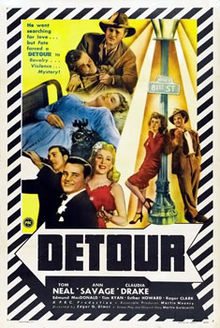
Detour

220px-Detour_(poster)

Date: 1945
Running Length: 67 minutes
Director: Edgar G. Ulmer
Writer: Martin Goldsmith and Martin Mooney
Cast: Tom Neal, Ann Savage, Claudia Drake, Edmund MacDonald, Esther Howard

Movie Synopsis

A New York City piano player decides to travel cross country to reunite with his girlfriend in Los Angelas. With a limited amount of money he decides to hitch hike across the country where he’ll meet two seedy characters (Edmund MacDonald and Ann Savage) that will make the trek really not work it

Movie Review

Pretty much a classic, despite it’s low-budget, brief running time, and conventional camera work. There’s a bit of suspension of disbelief needed for the film, as the story relies heavily on coincidences, but there’s no denying how dark it all is. Ann Savage makes for a particularly nasty femme fatale also who is almost masculine in her delivery. At just over an hour in length, Detour is a breezy and satisfying ride through the classic style.

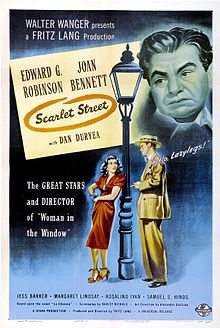
Scarlet Street

220px-Scarlet_Street_p

Date: 1945
Running Length: 103 minutes
Director: Fritz Lang
Writer: Dudley Nichols
Cast: Edward G. Robinson, Joan Bennet, Dan Duryea

Movie Synopsis

A lonely man (Edward G. Robinson) becomes infatuated with a femme-fatale (Joan Bennet), and eventually gets wrapped into the con-artist ways of her boyfriend (Dan Duryea).

Movie Review

German Expressionism is often referred to as the clearest starting point for film noir, so it makes sense that Metropolis director Fritz Lang would be able to construct such an essential entry to the canon. Reuniting the same trio of principal actors that he filmed in The Woman in the Window (also available on Netflix), Scarlet Street is definitely a more mature and fulfilling film than it’s predecessor. While occaisonally meandering during it’s first two acts, the final third is one of the most intense in all of film noir. It’s an ending so bleak and haunting, that Scarlet Street was actually banned by the censor boards in New York, Milwaukee and Atlanta around the time of it’s release, despite it’s “crime does not pay” message. Possibly Fritz Lang’s best Hollywood film.

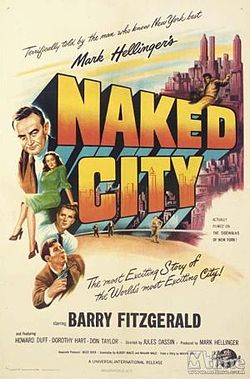
The Naked City

250px-NakedCityPoster

Date: 1948
Running Time: 96 minutes
Director: Jules Dassan
Writer: Albert Waltz and Malvin Wald
Cast: Barry Fitzgerald, Howard Duff, Dorothy Hart

Movie Synopsis

A crime scene investigation into the murder of a woman unfolds into a case involving a diamond heist

Movie Review

While Los Angelas is frequently considered the pre-eminent location for film noir, the “concrete jungle” of New York is undoubtedly an effective location as well. Narrated by Mark Hellinger, the film has a quasi-documentary feel to it, as he explains plot points and New York traits for the viewer. Filmed on location, The Naked City probably remains the single film noir to take such valuable use from Manhattan, filming great scenes in the Whitehall Building, and on the Williamsburg Bridge. Also, if you like this then I strongly recommend that you check out Dassan’s later film Rififi, which I feel is the best French-language noir.

The Big Combo

220px-The_Big_Combo_poster

Date: 1955
Running Time: 86 Minutes
Director: Joseph H. Lewis
Writer: Philip Yordan
Cast: Cornel Wilde, Richard Conte, Brian Donlevy, Jean Wallace

Movie Synopsis

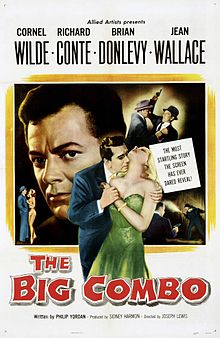
A police lieutenant (Cornel Wilde) looks to bring down a vicious gangster (Richard Conte) by uncovering his past.

Movie Review

Closer to a traditional gangster film than the other movies I’ve listed, yet Dark Combo is undoubtedly one of the last true film noirs (the classical era is often considered to have ended in 1958). While it contains solid acting and storytelling all around, the real reason to see this film is for it’s iconic climax. It makes brilliant use of single-source lighting for a story element, and the final image remains one of the most memorable in the noir lexicon.

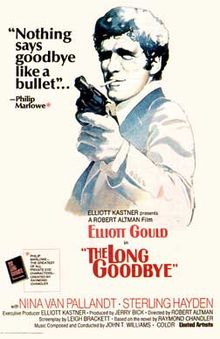
The Long Goodbye

220px-Longposter

Date: 1973
Running Time: 112 minutes
Director: Robert Altman
Writer: Leigh Brackett
Cast: Elliot Gould, Nina Van Pallandt, Sterling Hayden

Movie Synopsis

Raymond Chandler’s iconic detective Philip Marlowe (Elliot Gould), is out to prove the innocence of his friend Lennox (Jim Bouton), who has been accused of murdering his wife. Parallel to that, Marlowe also is hired by a blonde (Nina van Pallandt) to locate her lost husband (Sterling Hayden).

Moive Review

While Roman Polanski’s Chinatown is often considered the most important neo-noir, it also must be said that The Long Goodbye did a commendable job of introducing the grit and swagger of the 70s to the pulp elements of the classical film noir era. Playing as a more laid-back version of the character than previous actors, Gould gives Philip Marlowe the right amount of appeal and zest to really strike more of a cord with more modern audiences. Most impressive about The Long Goodbye, however, is that Robert Altman and Leigh Brackett managed to make a film that both adapted Chandler’s novel, as well as updated it. Half a satire, the film pokes fun at a lot of facets about Los Angelas at the time, including hippie culture. A very weird, and very fun genre send-up.

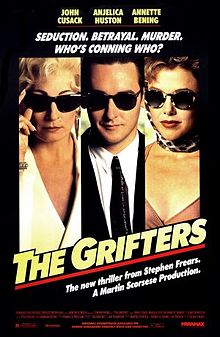
The Grifters

220px-TheGrifters

Date: 1990
Running Time: 119 Minutes
Director: Stephen Frears
Writer: Donald E. Westlake
Cast: John Cusack, Anjelica Huston, Annette Bening

Synopsis: A female con-artist (Anjelica Huston) decides she wants to get out of  the game. Unfortunately, her sadistic boss won’t have it, and her son (John Cusack) is farther into this dangerous lifestyle then she cares for. They make an ultimatum to pull off one last gig, but of course it all goes horribly wrong.

Review: It’s shot in color, R-rated, and has a relatively modern setting, but The Grifters certainly feel like a film noir from the classical era, rather than a glossy neo-noir. Written by crime novelist extraordinaire Donald E. Westlake, adapted from a novel by similarly renowned author Jim Thompson, and produced by Martin Scorsese, the film obviously had plenty of talent backing it up and it shows. Never letting up on the fact that film noir should focus on flawed characters doing terrible things to each other, The Grifters is intense, gritty, yet also pure movie magic. Up there with L.A. Confidential as one of the very best neo-noirs.

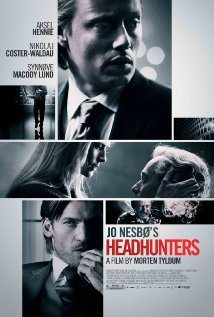
Headhunters

headhunters

Date: 2011

Running Time: 100 Minutes

Director: Morten Tyldum

Writer: Lars Gudmestad and Ulf Ryberg

Cast: Aksel Hennie, Nikolaj Coster-Waldau, Synnøve Macody Lund

Synopsis: A successful businessman (Aksel Hennie) who also moonlights as an art thief gets in way over his head when a mercenary (Nikolaj Coster-Waldau) and his wife (Synnøve Macody Lund) catch onto his occupation

Review: The Norweigan Headhunters is a potent commentary on the cutthroat nature of the business world, but the real reason to see it is that it’s such a sinful pleasure. Viciously violent, perversely sexual, but never lacking a sly sense of humor either, Headhunters is the type of neo-noir that’s all too rare: one that’s hardcore yet tongue in cheek at the same time. With an American remake in the works, I recommend seeing the original now, before the likely inferior remake makes its arrival.

Filed Under: ENTERTAINMENT, MOVIES

The Master Movie Review – 2012’s Most Under-appreciated Yet Best Film

by Peter Foy

themaster2

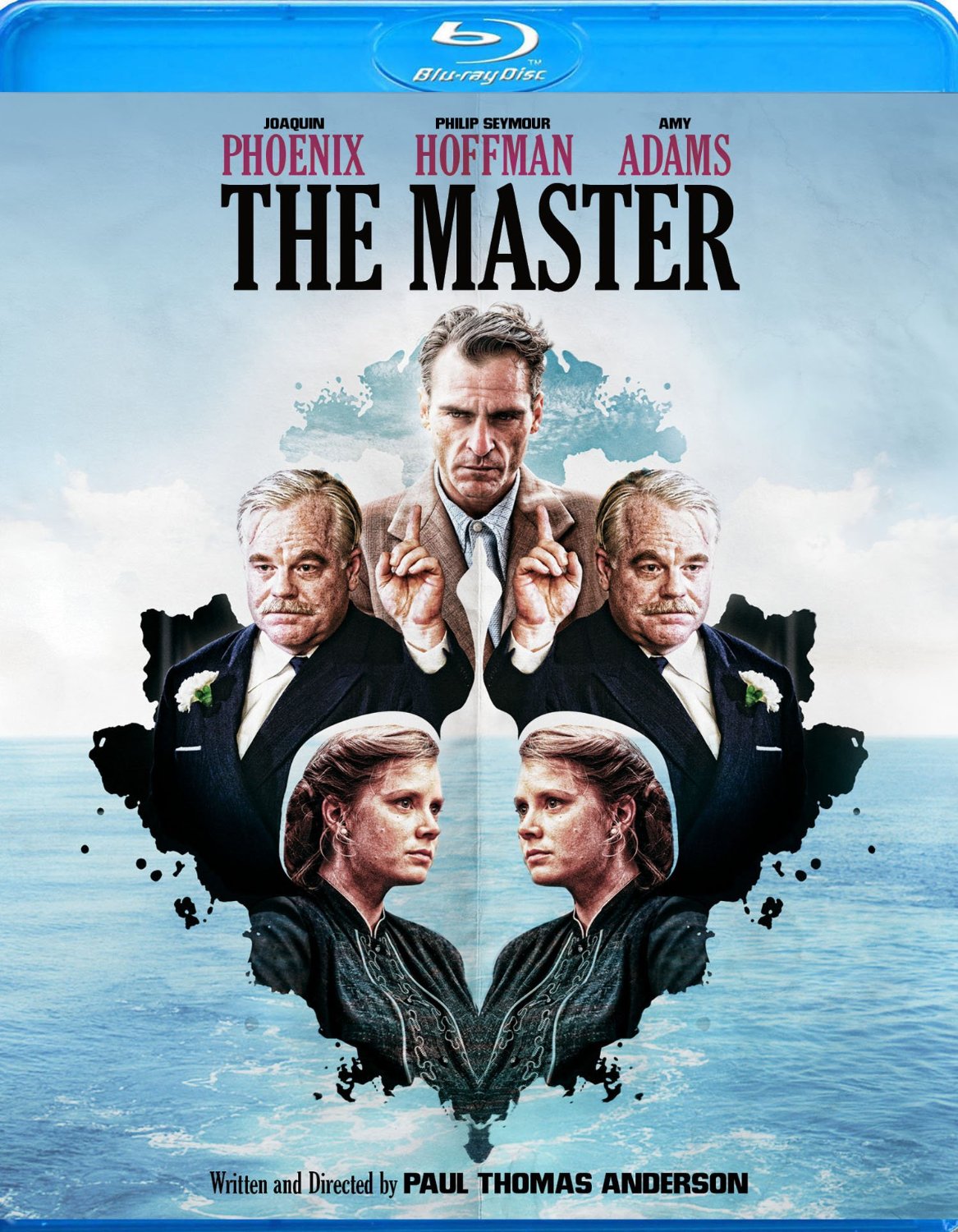
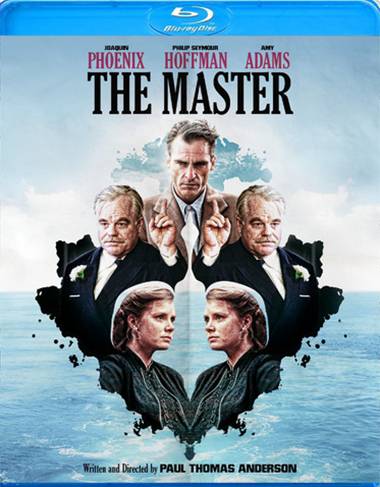
The Master Movie Review: Given the massive amount of discussion surrounding The Master at least a year prior to its release, it isn’t a stretch to say that many people had already decided what kind of movie they wanted it to be. When word got out that Paul Thomas Anderson’s follow up to There Will Be Blood would have allusions to L. Ron Hubbard and the Church of Scientology, speculators were expecting the film to be a controversial stab at the Hollywood-centric religion. When the trailers finally started coming out for the film last summer, there was much Oscar talk surrounding the film, with people expecting it to be a shoe-in for best picture. The Master, after seemingly an eternity of waiting, was finally released in theaters last September and the response toward it wasn’t what anyone was expecting, Anderson included. While certainly relative to Scientology in some areas as it’s a film about blind faith, many people seemed shocked that the film focused more on a damaged war veteran rather than a cult leader, and many audience members found the arty narrative to be confounding. It received high honors at the Vienna Film Festival and from professional critics, but it had a fairly divisive reaction to it from audiences and was ultimately denied Oscar nominations for best picture or best director. Now,  a good six months after the film had it’s theatrical premiere, The Master has come to DVD, and now perhaps the final verdict on Anderson’s surreal opus will come to light.

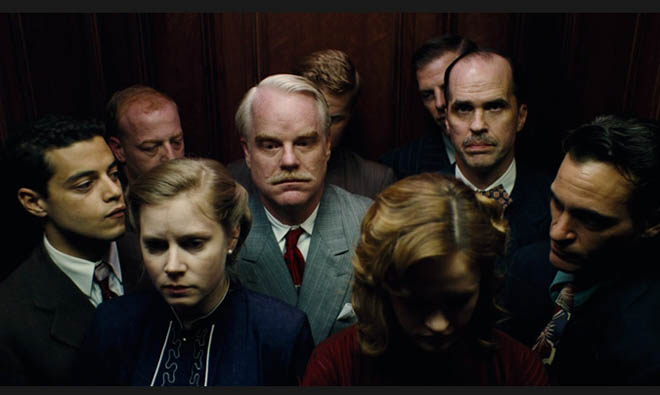
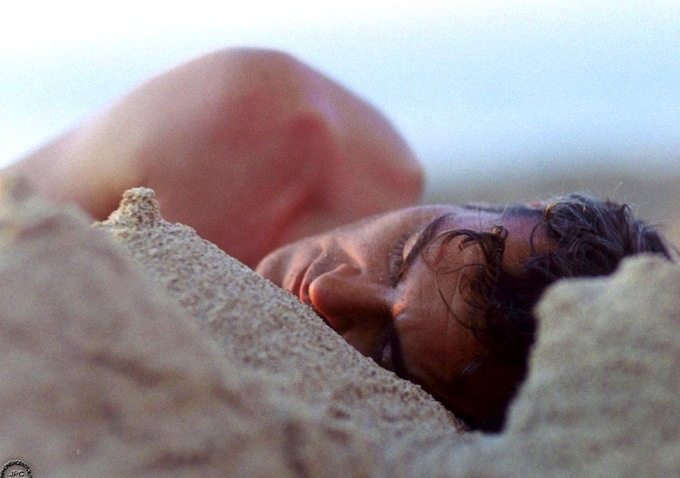
The Master is a film set in the 1950s that centers around the indelible character of Freddie Quell, a World War II vet struggling to adapt to post-war society, as he’s most likely suffering from some form of PTSD. Primal towards sex, frequently drunk and easily prone to violence, our protagonist only finds failure in every job he tries his hands in past his duties as a soldier, until he becomes a stowaway on a boat that shines a particularly inviting and brilliant light. Here Freddie meets the ship’s owner and titular character, Lancaster Dodd (Philip Seymour Hoffman), a renowned author who has started his own following known as The Cause. Dodd believes that he has unlocked deep secrets to mankind’s understanding of time and the universe, and it’s also clear that he sees something integral to this system in Freddie. From here on out, we see how these two men (both so different, yet so alike) interact, amidst the back drop of this strange time in U.S. History.

The two facets of The Master that seemed to have received unanimous praise were the film making and the acting, both of which are justifiable.  The film is an utter beauty of modern film making, and the decision to shoot in  70 MM adds such a layer to the cinematography. The film’s sweeping imagery and descriptive close-ups recall epics from the time period like Lawrence of Arabia, and the artistic depiction of America harken back to Terrence Malick’s two early masterpieces, Badlands and Days of Heaven. The soundtrack is wonderful in a similar sense too, with composer Johnny Greenwood contributing moving music pieces that evoke dread, fascination and ultimately hope. It’s hard for the small screen to entirely recapture the experience of seeing The Master on the big screen, but the blu-ray dvd does have a mighty video quality to it that captures the lushness of the viscera, although I should warn those that haven’t upgraded from standard definition that the video quality is rather murky for the digital release.

Still, the acting is possibly even more integral for this tapestry than Anderson’s craft. The only Oscar nominations The Master received were for the performances of it’s three leads, one of which is certainly the most impressive performance of the year. Joaquin Phoenix truly is a marvel to behold as Freddie, making the character as much his own creation as the screenplay’s. While there is a repetition to his performance as the character alternates between being violent and calm throughout the film, it’s in the subtle nuances that really make him mesmerize. From a menacing grin, to his stilted appearance that’s only made more visible by the fact that he’s frequently seen holding his sides, viewers can find plenty of cues to understand that this is a man in pain. Philip Seymour Hoffman, while not as unusual in his delivery as Phoenix, is at his able best here as well, given Dodd the voice of charisma,  yet a prevailing sense of uncertainty as well.  Some have said that there’s a bit of homo-eroticism in the character interactions between Dodd and Freddie, but maybe that’s just because Hoffman and Phoenix act with such fiery passion. Amy Adams gives a very vital performance too as Dodd’s wife Peggy, whose actions and dialogue might suggest that she believes in Dodd’s theories more that he does. Admittedly, the film’s most glaring problem might be that her character can be seen as being underused.

master_ensemble_660

What is The Master about though? So many people seem to be dumb founded by this question, to the point that they even say that the film simply has no plot or meaning to it. Roger Ebert even agreed with this, as his review said the film was “fabulously well-acted and crafted, but when I reach for it, my hand closes on air.” This couldn’t be farther from the case though, as the film does have a traditional arc to it, and its themes are all but blatant. For one, The Master should be taking far more literally than people have been seeing it as. It’s not so much an allegory, but a surreal character study, and period piece. One should pay attention to the allusions the film makes to phenomena of post-war America, such as the desire to feel enlightenment, or the feeling that we were all sexually repressed as a culture. Just take it as it is, don’t try too hard to look into inner meaning or motif. The film is trying to communicate on the fever dream that seemingly gripped an entire nation after the close of a brutal war, and the start of an uncertain future. A theme that resonates especially when you consider that it’s not dissimilar from America’s current predicament.

While the film is certainly chilly as many critics have said, I also feel that many of those same reviewers have been disregarding that there is a real warmth to The Master as well. The disorienting aesthetics definitely match Freddie’s paranoid and aimless state, but all of this subsides in the moments when the character is truly happy. The inklings we see of his past are majestic to say the least, as the flashback sequence of that character’s romance with a young girl is tender and sweet, and really shows a human side to the animalistic Freddie. In interviews Anderson has said he was interested in this time period as many stories at the time involved people trying to reclaim their past(possibly a page taking from The Great Gatsby), something that Freddie has been literally and metaphorically running from for the whole film. Also, the film is very funny too, and I feel that if you miss on the film’s humor than you are doing it a great disservice. Funny faces, ironic gestures, slapstick and even fart jokes are present in The Master, and helps one to find sympathy in these flawed characters. As Lancaster Dodd says while addressing a crowd of believers, “the secret  is laughter,” and I feel this is more than just a nudge on Paul Thomas Anderson’s part as a provocateur. Anderson has often been referred to as this generation’s Kubrick as he has always made studio-budgeted films while retaining his auteurship, and I feel The Master is even more supportive of this claim than any of his previous pictures. Like Kubrick before him, he’s made a film that at first glance may appear to be pessimistic, while in reality it’s far more accurate to see the film as being cautiously optimistic. In fact, this might be the first American film since Eyes Wide Shut to make such startling use of dream logic.

The extras included on the DVD prove interesting, although they’re certainly not as insightful as some would hope. Those who noticed that there were numerous scenes in the trailers that were not included in the film will be glad to find that Anderson has found another use for them here. The 20-minute-long outtake and deleted scene montage Back Beyond meshes some highlights that were cut from the film, and edited in a fashion that’s similar to the film’s pace. Also included are the various trailers that were made for the film, as well as a brief look at some behind the scenes footage. All nice touches, but the DVD also sorely lacks a commentary track which I think just about everybody would want for a film like this.  Probably the best extra for the DVD (and reserved only for the Blu-ray edition) is the inclusion of the 1946 documentary Let There Be Light. John Huston’s documentary about WWII veterans is cited as an immense influence for The Master by Paul Thomas Anderson, and grants viewers more familiarity with the period that is depicted in the film.

Only time will tell as to what The Master will be looked on in Anderson’s filmography, but in this reviewer’s opinion I feel it will only only grow more reputable with age. In the years ahead where we can remove The Master from it’s expectation as a Scientology parallel, I feel that people will find a far more rewarding experience. Even now The Master shows that Anderson is one of the few working filmmakers to have such an evolving career, starting out with accessible (albeit extremely well crafted) genre films like Boogie Nights, coming to a more subdued transition with his romantic comedy Punch Drunk Love, and now becoming a true arthouse staple who makes dense films that read like the prose of Samuel Beckett.  I just find it so maddening that so many people refused to look at The Master as anything other than a messy film with an unclear path, despite admitting it had breathtaking cinematography and performances. Anderson’s film is a masterpiece, a sensation, and a love story for the ages, one just has to have their mind and soul in exactly the right place to see that.

the-master-joaquin-phoenix-sand

Filed Under: ENTERTAINMENT, MOVIES, OPINION, REVIEWS, uncategorized Tagged With: Criticism Of Scientology, Lancaster Dodd, Oscar Nominations, Paul Thomas Anderson, The Master, The Master Movie

Netflix’d: Thief Movie Reviews

by Peter Foy

I’m of the opinion that anything is worth doing if you accumulate knowledge. I am therefore of the opinion that if nothing else comes from my Netflix’d column (money, career prospects, writing experience, etc.) then it will have all been worth it just to have had a better grasp on this fact: Netflix takes down movies and shows eventually. I had originally intended to have this article be a review of the brilliant British sitcom Peep Show, but unfortunately it would appear that it has been removed from instant streaming. In that case, I will be doing another movie review for this week, so make sure you catch Thief before it goes the way of Peep Show.

Netflix Thief Movie Reviews

Title:  Thief
Director: Michael Mann
Writer: Michael Mann
Year: 1981
Running Time: 122 minutes
Starring: James Caan, Tuesday Weld, Robert Prosky, Willie Nelson
Genre: Crime Drama, Neo-Noir, Heist flick
Similar To: Rififi, The Long Good Friday, Heat

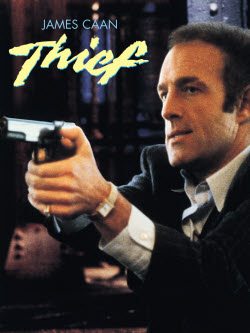
Film maker Michael Mann has been going through a bit of a rough phase as of late. His last two films (Miami Vice, Public Enemies) received negative reviews, and his HBO series Luck was cancelled after one season not for it’s low ratings, but because of PETA concerns surrounding the fact that three horses had been killed during the show’s production. From his recent work, it can be hard to recall that at one point the director was seen as a very consistent and appealing director. Known for his strong visuals and keen ear for selecting memorable soundtracks, Michael Mann has had a really interesting film career, especially when you consider he was the first director to bring Hannibal Lecter to the big screen (Manhunter), as well as have Robert DeNiro and Al Pacino share a scene (Heat). The 70-year old filmmaker is actually rather under-appreciated when one thinks about how often his name is brought up compared to peers like Martin Scorsese, and I actually feel his first film, 1981’s Thief, may actually stack up as his very best picture

The film is a Chicago-set crime drama that is indeed about a thief. This time it happens to be a guy named Frank (James Caan), who runs a bar and car dealership, but It’s all a front for his real career as a professional jewel thief, Lately though, he’s been wondering about giving the game up, and he wants to start a family with his girlfriend (Tuesday Weld), and is trying to get the right amount of money to support it. His exploits eventually bring him to Leo (Robert Prosky), a Chicago mob leader who is looking to pull off a very lucrative heist in Los Angelas, and he enlists Frank to help him.
Certainly not the most original plot in the world, but like several other great crime thrillers, Thief is all about the presentation and execution. Mann has nearly every shot of this film bursting in splendor, particularly in the action heavy scenes. One scene early on where Frank pulls a gun out in a office makes particular use of clever camera work, using plenty of close ups that give us a claustrophobic sense. Of course, the heist scenes are even more impressive, and they’re 100% believable in terms of the technology and methodology we see on screen, and are filmed in a really effective manner. Completely free of the trappings of CGI, Mann has his actors use real blowtorches and safe crackers in the film. Lengthy, carefully paced, and light on dialogue, the heist scenes in Thief recall the legendary robbery sequence in Jules Dassin’s noir classic Rififi,  which is saying a lot for a mainstream Hollywood film that was released in the 80s.
Thief is certainly a grade-A technical merit on Mann’s part, but James Caan also makes this his film as well. One would of thought that James Caan’s career would have really taking off after the Godfather, but he actually has been involved in plenty of lousy pictures throughout his decade spanning career. His performance in Thief remains a highlight for him, as he makes Frank quite an affable anti-hero. He’s a rugged and take-no-shit kind of guy, but there’s a real longing in him to go on to a life that actually means something. Some of the best scenes in the film involve Frank’s time with his love interest, such as scene when he’s yelling at her about how obvious it is that he’s a thief, while also asking her for sympathy. It’s probably the single funniest and sweetest scene that Mann has ever directed.
Flaws are few and far between, but there are some notables. A few of the scenes that take place in LA look absolutely nothing like the city (they weren’t shot there), and there could of been more storyline involving the film’s corrupt cop characters (especially considering how good an actor Dennis Farina is). As I said before the story is familiar too, but Mann finds ways to capitalize on the film’s necessary cliches. It’s all tightly wound, and ideally sets up the film’s heightened intensity and grit in the final act.
Thief is a must see film for crime fans, and arguably one of the best American pictures of the 1980s. Michael Mann really was at the top of his game here, as the film’s simplicity in plot allowed him to concentrate on conjuring some really complex visual cues. While it’s understandable when people say that all great directors burn out eventually, watching Thief gives me confidence that Mann still has that sort of mentality inside him. Even though this film came out over 30 years ago, I really do feel Mann has it in him to make another great film like Thief.

Filed Under: ENTERTAINMENT, MOVIES Tagged With: James Caan, movie reviews, Netflix Movies

Netflix’d: Naked

by Peter Foy

Hope you guys have been keeping warm this past week, as that damn groundhog appears to have been way off this year. Regardless, it’s the perfect time to catch up on some great cinema that’s available right through your Netflix account. Today I’ll be looking at Naked, a challenging British art-film from the 90s that’s even more chilly than New York’s February climate. I’ll try and keep this review extra warm though.

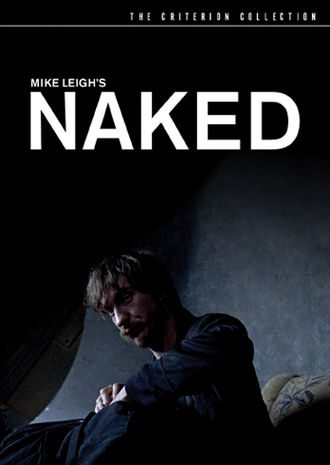
Mike Leigh's Naked | Netflix Movies

Title:  Naked
Director: Mike Leigh
Writer: Mike Leigh
Year: 1993
Running Time: 131 minutes
Starring: David Thewlis, Lesley Sharp, Katrin Cartlidge
Genre: Drama, Art-house, experimental film (horror?)
Similar To: The Cook, The Thief, His Wife and Her Lover; Happiness; The Master

As I get older, the more I realize that I no longer want clear-cut answers from films. I no longer want to be spoon-fed stories about absolute good vs. absolute evil, as I just don’t see that as pertaining to real life anymore. I want morally ambigous character, and a world view that sees life as being grey, rather than black or white. Also, I want open-ended stories that don’t overfeed us with too much information. I want film’s that I can mold into my own entity. With that said, it’s easy to see why I feel Mike Leigh’s 1993 film Naked is one of the richest films I’ve come across in terms of moral density, as well as an uncomfortable piece of art.

It’s a bit of a challenge for me to describe the film in a synopsis, as the film is skeletal in terms of having a traditional plot. Right from the start, this is a film that shows that it’s not throwing any punches, as we witness the film’s main character Johnny (David Thewlis) rape a woman and then steal a car. He rides to the Dalston neighborhood of London (which he describes as unpretentious) where he hooks up with his old girlfriend Mancunian (Lesley Sharp), and from there any idiom of a plot pretty much disintegrates. For the next two hours we see this character wander around the disheveled neighborhood interacting with people and usually subjecting them to his domineering claims. Manic, sexually hungry, self-destructive and clearly intelligent, Johnny is a strange beast to watch no doubt, and perhaps a figurehead of sorts too.

Why is this film so starkly dark? Well, the simple answer is that the truth isn’t always pretty. Naked is a very direct social commentary, and like Peter Greenaway’s The Cook, the Thief, His Wife & Her Lover it’s a scathing critique on Thatcherism. Unlike that earlier film, however, Mike Leigh has more of an interest in “kitchen-sink: realism, and mostly avoids allegories in relating tales of those that became downtrodden under the wrath of the Iron Lady. It becomes readily apparent that Johnny is a victim of circumstances, as his sloppy way of walking and musings with intellectualism hint that he likely has a social disorder. He’s a rather ugly looking man for sure, but the world around him isn’t any less wretched. Filmed in a grey-palette and occasionally using wobbly camera techniques, Naked is one of the few films to really understand the sickly and disorienting  nature of urban life, but is it a reflection of Johnny’s frame of mind or vice-versa?

Netflix Movies

Naked proved to be quite a success for Mike Leigh as it won him the best director awards at Cannes, and has continued to be seen as a highlight in his filmography. Today though, it’s easy to forget that the film was quite a departure for British director Mike Leigh at the time of it’s release. While the filmmaker had been known for making film’s that were both political and modest, there were overt comedic elements to films like Life is Sweet and High Hopes that seem to have all been wiped out for this one. Still, Leigh’s experience with comedy actually does contribute to the film’s craft, as Naked actually does have a lot of improv in it. David Thewlis made up much of his character’s dialogue while doing rehearsals, and they were incorporated into the final script. It resulted in giving the film a very organic feel in terms of character interaction, and the scenes involving Johnny discussing his world views are fascinating. Johnny does show a human side to him as the film goes on, and it’s hard not to admire his philosophies, even if they can come off as naive. Even those that have no interest on England’s Thatcher years should be able to unearth some telling information about the paranoia and fear that  social outsiders hold in contemporary society. It wouldn’t be right to call Naked a dark comedy, but it’s not without it’s moments of levity.

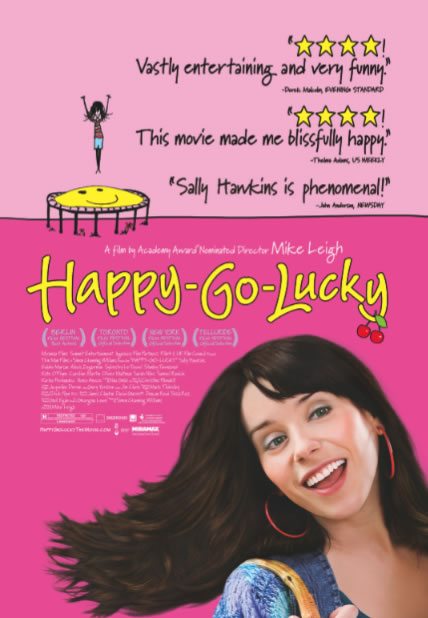
Naked is certainly aptly titled, as it’s the justification for the brutality we see on screen. Stripped of morals, honor, class and hope, we witness these characters at their most bare, yet also question how far away our own lifestyles might be from there’s. It’s as harsh and unpleasant a film as it ever was, even twenty years later when graphic content has become more common in mainstream films. Still it’s undeniably potent, and a film that all appreciators of arthouse cinema should see. After viewing this, however, you might need to settle down with something a lot lighter. Fortunately, Mike Leigh’s more recent film Happy-Go-Lucky, a complete 180 from Naked, is a joy to watch and also readily available for streaming on Netflix.

Netflix Movies

Filed Under: ENTERTAINMENT, MOVIES Tagged With: cinema, movie, movie reviews, netflix

Side Effects: Half Empty or Half Full?

by Peter Foy

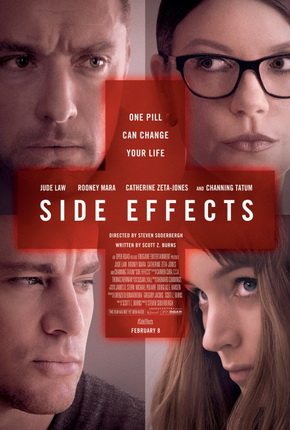
SideEffects2013Poster

Who is Steven Soderbergh? Well, the short version is that he is a prolific and acclaimed American film director, but if we’re talking about his work as a whole than it’s harder to pin-point. Few directors have helmed such an eclectic volume of films with differing styles and genres throughout their career, but Soderbergh has done just that. From Oscar-nominated mainstream fare like Traffic and Erin Brockovich, to small indie films like his debut picture Sex, Lies and Videotape, Soderbergh has proven himself one of the hardest American film makers to describe. Hell, the three movies he released in the last 15 months (Contagion, Haywire, Magic Mike) are enough to show his wide range, as well as how rapid-fire a talent he is. However, in recent years Soderberg has said that he has grown disinterested in directing feature-length films and has said he is more interested in directing for television now. “I think that the audience for the kinds of movies I grew up liking has migrated to television,” Soderbergh says. “The format really allows for the narrow and deep approach that I like.” So his latest film, Side Effects, he claims will mark his departure from directing big-screen releases, and it actually proves to be a fairly adequate send-off for this reputable director.

The film is indeed a thriller, but I’ll digress from calling it “Hitchcokian” as some critics have. Rooney Mara stars as Emily Taylor, a woman who appears to be both grieving and suicidal. Her husband (Channing Tatum) has just been released from prison after a four year sentence, and she finds herself struggling to pick their marriage back from where they left off. After purposely smashing her car into a wall, psychiatrist Jonathan Banks (Jude Law) is assigned to care for her, and recommends her trying some anti-depressant medication. The results aren’t too efficient, and Jonathan then meets with Emily’s former psychiatrist, Victoria (Catherine Zeta-Jones). Victoria then recommends putting Emily on a new drug called ablixa, which actually works out great at first. Of course, this film’s needs a source of conflict so there are some…side effects involved.

To say too much more about the plot would actually prove detrimental to the viewing experience. The film is indeed “twisty” with an unexpected turn coming just before the end of the first act. The film almost becomes a completely different entity for the remainder of it’s running time, which will undoubtedly prove frustrating towards some viewers. I honestly was hoping the film would be more of a commentary on the flaws in contemporary health-care and prescription drugs, but it isn’t really. Instead, it’s just a thriller with a far-fetched plot, and more than a few cliches in it. It’s a shaky movie for sure.

That said, Soderbergh has managed to make good films off of mediocre scripts before, and that remains the case with Side Effects. Soderbergh gives the film plenty of ambiance through lighting set up, and assured camera work, that makes the film feel grounded and cerebral. Also, the performances are potent enough to keep the movie engrossing throughout. Rooney Mara is easily the highlight of the film, as the young actress continues to prove she is one of the most electrifying of today’s young screen talents. Completely convincing in her emotions, and unpredictable in her actions, her performance alone justifies the price of admission. Jude Law (an actor that has flirted with both obscurity and stardom) is very watchable as the amiable Jonathan Banks, even if it’s possibly because he’s the only cast member with a British accent. Channing Tatum fans might be upset to find that the actor’s screentime is limited here.

In the end, Side Effects is certainly worth seeing, especially given that the January and February months are both usually so dry in terms of quality cinema releases. It’s not a great movie, but it’s most certainly a good one, and one that could potentially be classified as a “medical noir”. Not a bad movie at all for Soderbergh to close his film career out on, and also one that showcases what could come from him becoming a television director.

Filed Under: ENTERTAINMENT, MOVIES

Netflix’d: House of Cards Season 1

by Peter Foy

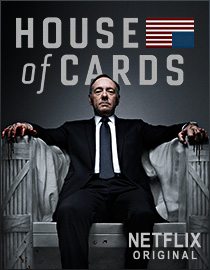
house of cards

Format: Hour-long Drama

Genre: Political Thriller, Drama

Cast: Kevin Spacey, Kate Mara, Robin Wright, Corey Stoll, Michael Kelly, Sakina Jaffrey, Sandrine Holt, Kristen Connolly, Constance Zimmer

Length: 13 Episodes

Similar Too: The West Wing, Homeland, Breaking Bad (or maybe it’s better called a combination of those shows?)

Well, here it is. We’ve been talking about it for years, and now the time has finally come for web-based television. Analysts have been predicting that the state of the internet would eventually combine with that of television, allowing for TV shows to premiere, air, and be viewed entirely online. Netflix, perhaps America’s foremost distributor for on-demand streaming media, has certainly been an indication of how close we were coming to that day, but all their shows had aired on other channels previously. Now, however, Netflix has finally bridged the gap, with House of Cards, a new political drama that had it’s entire first season put on Netflix on February 1rst. House of Cards Season 1 has already become Netflix’s most watched program, and has been met with high critical acclaim. So in regards to popularity and it’s reported potential to change the television landscape, the only question is if the show really lives up to all the hype.

A remake of a British mini-series from the 90s, House of Cards Season 1 is set in contemporary America and focuses on main character Frank Underwood (Kevin Spacey), a South Carolinia congressman who can’t really be called a protagonist. The character is so ruthless and unquestionable in his methods that he can’t really be seen as an anti-hero either, he’s closer to being a straight up villain. The closest thing we have to a protagonist in this show is a young journalist (Kate Mara) who gets tied up with Frank after he’s denied a promotion to secretary of state. We then see how Frank has composed an elaborate plan to get what he wants in office, and needless to say plenty of bad shit goes down, from his involvement with a drug-abusing Pennsylvania congressman (Corey Stoll), to the tilting relationship he has with his wife (Robin Wright).

I have to admit, it’s funny that I was watching this show intermittently while viewing The West Wing. I couldn’t help but compare the two, as they’re both political dramas set amidst a fictional presidential administration, but the two shows don’t really have very much in common at all. If anything, House of  Cards is a more serialized version of The West Wing, that’s also R-rated, and happened to have really brushed up on it’s Shakespeare. Right from the start the show has really noticeable tension, from the music to the camera work. As the story goes on, and the twists become more regular, you start to realize that none of these characters are safe, and the show certainly doesn’t disappoint in regards to closure. For this reason the show really benefits from having it’s entire season released at once, as viewers can go through the show at a brisk pace without it ever losing any of its intended momentum.

The show certainly has quite a group of talented backers, with Beau Willimon (The Ides of March) as showrunner, and Eric Roth and David Fincher as producers. Fincher (The Social Network) definitely appears to be a driving force for the show, as he directed the first two episodes. Having an A-list director for the first two episodes could have actually hurt the show stylistically, similar to how people were complaining that Martin Scorsese’s direction of the pilot of Boardwalk Empire made the work of that series’ other directors seem inconsistent. Instead though, the show never outdoes itself, and it actually retains its unique style throughout. One of the most distinguishing features of this show is that they allow Frank Underwood to break-the-fourth-wall from time-to-time. Such a tactic could have proved gimmicky, especially for a show as serious as this, but instead it acts as a fascinating feature for us to get inside the mind of this cunning character, and eventually we realize that we the viewer are the only person that Frank tells the truth too.

With all it’s double-dealings and smoky room politics, the show sometimes feels like a 70s political thriller, but it’s undeniably ultra-modern. There’s a lot of usage of technology on the show, including internet usage (the show makes a reference to how satirical youtube videos can really harm a politician’s career), but most notably cell phones. Introducing another cool technique that plays with Fincher’s visual sensibilities, occasionally you will see character texting. Rather than have the camera zone in on the cell phone, the view will instead stay on the character and then a dialog box will pop up that shows what they are reading/saying. It’s used quite effectively in the start of the season, although it becomes less common in the second half. I really hope that the next season will find even more clever ways to use this technique.

So how’s the acting? Well, it excels here too. Kevin Spacey has always been one of our generation’s best screen actors, and he certainly indulges in this character. Speaking in a southern accent and using colorfully flamboyant language, Frank Underwood holds every scene he’s in, even if we’re aware of how evil he is. The supporting cast is all great too, with Kate Mara proving that acting ability runs in her family, as yes I will admit that I was under the impression that she was her sister Rooney for most of the series (I misread the credits I guess). Corey Stoll also gives a rather excellent performance as the womanizing and drug-addicted Peter Russo, as he gives the character the right amount of affability and cowardice that makes you really wish that he achieves redemption.

House of Cards is certainly a great show, but it isn’t perfect. The plot is spread too thin at times, and there is a sense of filler every now-and-then that does give me the feeling that I’m watching a TV Show. I feel that the best television dramas (The Wire, Breaking Bad, The Sopranos) have a more organic feel, and really give you the sense that you’re viewing a great movie, or reading some sort of excellent novel. House of Cards Season 1 does feel a bit televised at time, but that shouldn’t distract that this is possibly the best freshman season of a show to come out in a fairly long time. Already you can feel the writers and film makers have found a voice for the show, and it results in a sublime series that really unravels the seedy side of politics. With a second season already in the works, as well as the much discussed revival season for Arrested Development nearly here, Netflix might very well become the best television breakout since AMC, and it’s not even on TV.

Filed Under: ENTERTAINMENT, TELEVISION Tagged With: house of cards, house of cards season 1, netflix, netflix series, season 1

Netflix’d: Days of Heaven

by Peter Foy

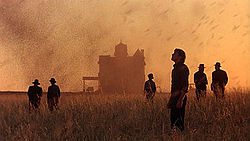
Well hello there, all those that be faithful towards internet news feed. Welcome to the first edition of my new column for Manhattan Digest that I will be calling Netflix’d. Those that have been following my reviews will notice that I’ve mainly been focusing on recent theatrical releases. Thing is, we currently live in a day and age where so many people are getting their entertainment fix from the internet thanks to legitimate sites like Netflix and Hulu. Seeing that people are always asking me for Netflix recommendations (and that I certainly watch Netflix enough to get more than just my money’s worth), I decided I might as well write about some of the more hidden gems that the site carries. For my first entry, I’ll be tackling Terrence Malick’s Days of Heaven, which is one of my favorite films, and a must see for any self-respecting fan of American cinema

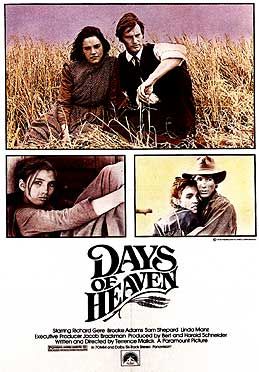
Daysofheavenposter

Title:  Days of Heaven

Director: Terrence Malick

Writer: Terrence Malick

Year: 1978

Running Time: 94 minutes

Starring: Richard Gere, Brooke Adams, Sam Shepard, Linda Manz

Genre: Drama, Period Piece, Surrrealism

Similar To: There Will Be Blood, Citizen Kane, great movies in general

What is the quintessential American movie? It’s a question that has plagued scholars for decades, with vital considerations coming up time and time again. Many would go with Citizen Kane, as it’s not just a powerful spectacle about the power our nation carries, but it’s one of the most important films ever made in terms of cinematic technique. Or, many could also suggest The Godfather as it’s a film so epic and ageless, that it’s subtext about capitalism is so relevant even today. You could even look at recent cinema like Paul Thomas Anderson’s There Will Be Blood and say that current film makers have a better understanding of America’s roots than ever before. I, however, feel that Terrence Malick’s 1978 masterpiece, Days of Heaven, is more transcendent and visually striking than any of those aforementioned films.

Set in 1916, the film takes place primarily in the panhandle area of Texas. It follows a trio of drifters, Bill (Gere), his girlfriend Abby (Adams), and his little sister Linda (Manz), who are on the run after Bill accidentally kills his steel mill boss. The protagonists join a large caravan, with Bill and Abby deciding to tell people they are siblings rather than lovers. Eventually they come across a large farm, where they take up jobs from the owner (Shepard) who is only referred to as “the farmer” throughout the film’s running time. We soon discover that the farmer is both dying from illness, as well as infatuated with Abby. Bill and Abby then hatch a plan to have her pose as the farmer’s lover, only so that she may inherit his fortune after he dies.

Of all the great new Hollywood directors, Terrence Malick was the most enigmatic. Keeping much of his personal life private, and rarely responding to interviews, the director almost immediately became seen as a recluse. Also, Malick’s films didn’t adhere to popular American genre conventions (i.e. film noir, westerns) as much as his contemporaries, didn’t have snappy dialogue to them, and featured characters that tended to be social outcasts.  These might be the reasons his films aren’t as ingrained into the public conscious as much as films like Taxi Driver and Dog Day Afternoon are, but there’s no doubt that his work is just as influential.  Days of Heaven was most certainly an ambitious project, especially considering that this was only Malick’s second feature, after having shot his debut feature, Bad Lands just a few years earlier. The film could of easily been a mess (like Michael Cimino’s disastrous Heaven’s Gate), but fortunately the script, cinematography, directing and editing all came together in a truly sublime fashion to form a film that remains an unqualified masterpiece.

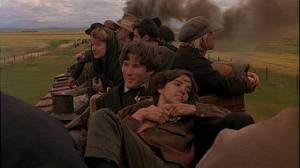
days of heaven train

Right from the film’s start, it’s clear that this is a film about America’s progression during the early part of the 20th century, even if  the tone is so different than what we are used to. The film’s opening credits sequence showcases black-and-white photographs of workers, children and architecture from the era, with a rendition of The Aquarium by Saint Sans playing. It’s a haunting start for sure, and the film doesn’t become any less chilly. Regardless of the tension, the film is a perpetual beauty with Malick and his cinematographer Nestor Almendos illuminating the screen with lasting imagery. Malick said the film’s look took influence from the artwork of early 20th century painters like Edward Hopper, and it definitely shows. The film’s look is restrained yet expansive, asking us to view America during a shifting and perplexing period of time.

Still, as evoking the imagery is, it would fall on deaf ears if the story didn’t match. It certainly does though, despite it’s lack of dialogue. The film had a very arduous editing process, with Malick spending three years of his life to make sense of the massive amount of footage that he had shot. Eventually it was decided that much of the film’s shot dialogue scenes would be cut, and instead replaced with narration monologues from Linda Manz’ character. The effect is subtly eerie, as there’s just something so strong in hearing this story told from the point of view of a teenage girl, speaking in a very distinct Chicagoan accent. The film’s last spoken monologue from her is one of the most powerful closing lines I can think of.

Despite it’s surrealism and breaks away from convention, Days of Heaven is also a fairly accessible film too. It has a standard beginning, middle and end, a love story, and it does indeed climax with an exciting action scene that would not be uncommon in most other Hollywood films. Still, the more cinematically-savy people will get the most out of this film, and certainly find much to ponder about in terms of subtext, especially regarding it’s biblical content. Featuring an impeccably shot scene involving locust,  a story that mimics Genesis 20, and lighting that often suggest illumination, Days of Heaven certainly seems to be tying godliness to the American dream. While many people have been discussing the religious implications in Tree of Life, I honestly think this earlier Terrance Malick film gives it a run for it’s money.

After Days of Heaven, Terrence Malick would not return to film making for another 20 years. I’ve heard conflicting reasons for why this is the case, with some sources telling me Malick was simply exhausted after the massive editing process, while others have told me that he was unhappy with the way the film was edited. Whatever the case, I feel that this film is likely to stay as his final masterpiece. While films like Tree of Life  and The New World are certainly the work of a true visionary, they are ultimately bogged down by his insistence on using experimental and confusing narratives. Days of Heaven, however, is both a spectacle and a truly human work of art that will stay with you for a very long time. This and Bad Lands are enough to give Malick the distinction of being one of the best American film makers, and a most singular artist for the later half of the 20th century.

250px-Days_of_heaven1

Filed Under: ENTERTAINMENT, MOVIES, OPINION, REVIEWS

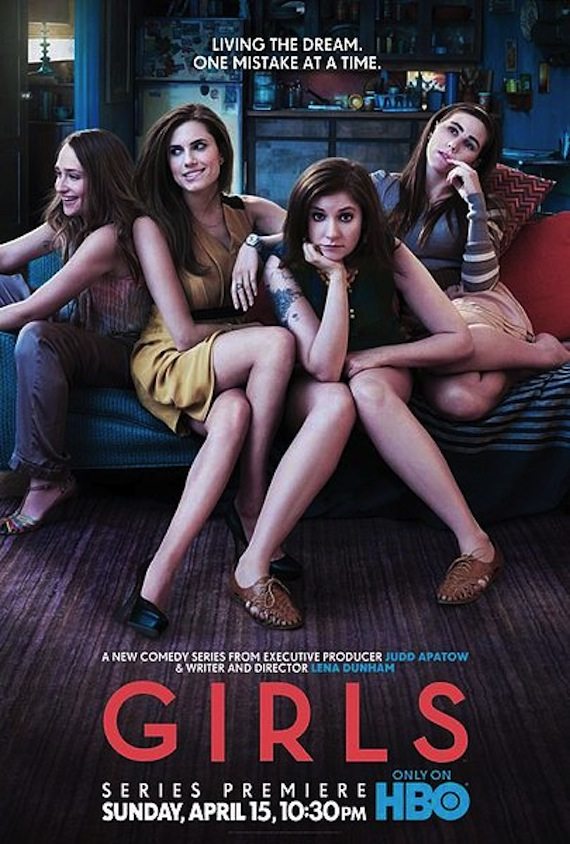
Girls: Why the second season is kicking ass!

by Peter Foy

Girls season 2
Credit: http://www.themillions.com/

It seems like every year a show premieres on American televsion that the critical consensus will label as the “Most talked about new show of the year,” or “best freshman season of the year”. This is Girls season 2, a show currently on HBO. In 2012, however, Girls received both of those designations to such a degree, it almost feels like there were no other new shows that came out last year (correct me if I’m wrong). Receiving highly positive reviews, solid ratings, and an almost instantly devoted fan base, Girls arguably was the first show since Mad Men to come off as both niche and accessible right from the start. Despite it’s acclaim, however, the show didn’t escape some rather nasty criticism either. The more polarized responses to the show tended to feel that the characters on the show were unlikable, and poorly constructed. Also, there were some issues on the series four main character all being Caucasian girls, with ethnic groups only being rarely used. For the most part I found these criticisms a little confounding (Sure there was one use of a black actor portraying a homeless guy. big fucking whoop!), but I couldn’t help but feel that a few segments of the show were struggling a bit to find it’s voice. Now, however, as the show is currently four episodes into its second season it already seems primed to silence these detractors.

For the unknowing, Girls is the creation of 26-year old rising indie star Lena Dunham, who acts, writes and directs the series. After achieving some festival success with her debut film Tiny Furniture, Dunham received attention from Judd Apatow, who was looking to produce a new pilot for HBO. Thus Girls was born, a show that acts both as a semi-autobiographical respot for Dunham, as well as generational statement/satire for contemporary 20-somethings. Stepping into her fiction-suit as Hannah, Dunham has addressed issues that come up daily for post-college kids, such as financial issues, sexuality, and the ever looming sense that one’s generation has a unanimous lack of responsibility.

Almost right off the bat, Girls was likened to Sex and the City, as both shows focus on a quartet of sexually adventurous females living in New York City. Granted, I’ve never really watched a full episode of that previous HBO series, but I feel that people were a little too quick to make that comparison. Girls is far too quirky to have a strong resemblance to Sex and the City, nor is it as polished. Girls certainly gives off an indie film vibe, in everything from it’s use of lighting, set design, and props that are literally bought from relatively cheap flea markets located in Brooklyn.

There’s undeniably a charm to how amateurish this young show is in some regards, but the sophomore season (Girls season 2) is definitely showing some vital signs of maturation. In interviews Lena Dunham said that the issues involving the show’s lack of ethnic groups would be addressed this season, and she certainly kept to her word. In the season premiere we find that Hannah is currently dating a black guy (played by Community star Donald Glover), which could of come off as a gimmicky effort to silence naysayers, but instead Dunham writes the character in a really unexpected way. Avoiding any stereotypes, we find out that this new character is actually a republican, which causes an uneasy tension with Hannah’s liberal policies. It climaxes with a brilliant argument between the two characters.

That’s what is really great about this new season of Girls (Girls season 2). Dunham is aware of the show’s complaints and it’s status as being “hipster-esque”, but she’s combating them while at the same time being a bit self-referential in a mocking way.

I’ll reserve my final judgement on Girls sophomore season till it’s completed, but right now it’s safe to say that the series is going to silence many of it’s detractors this season.

Filed Under: ENTERTAINMENT, TELEVISION Tagged With: Girl Season, Girls, hbo, Season 2, Television In The United States, television recaps, TV, TV reviews

Seven Psychopaths: Why Martin McDonagh’s Crime Comedy is Worth a View, but Not a Purchase.

by Peter Foy

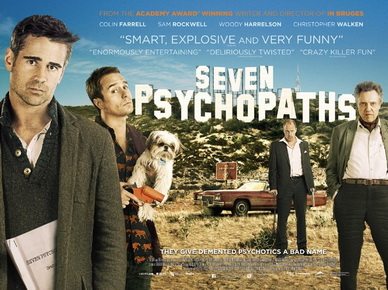
Seven_Psychopaths_Poster

Did you catch Seven Psychopaths last October? …yeah, didn’t think so. Martin McDonagh’s latest film certainly made back it’s modest budget of 15 million dollars, and received plenty of solid reviews, but it certainly wasn’t the talk of the cinema landscape. As a self-proclaimed film critic, I have to say that Seven Psychopaths holds a unique distinction for me, as it was the single film of 2012 that I had the most mixed feelings towards. With the film arriving on DVD and Blu-Ray today, here’s why I feel you might want to catch/skip this underrated/overrated crime comedy.

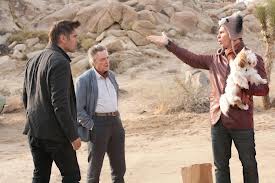
In describing the plot, it’s best to put it like this: It’s a cross between Adaptation and Pulp Fiction. Like the former of those two films, writer/director Martin McDonagh basically writes himself into the film as a fictionalized version of himself (played by Colin Farrell), who is a struggling Hollywood writer trying to complete a screenplay. He’s having writer’s block with his latest screenplay entitled Seven Psychopaths (The film is very self-referential if you haven’t noticed), and idles his time drinking and hanging out with his jerk-ass friend Billy Buckle (Sam Rockwell). The film’s action kicks in when Billy and his accomplice Hans (Christopher Walken) steal the dog of a cartoonishly insane gangster (Woody Harrelson), and Marty finds himself drawn into their hijinks. Throughout the film, we uncover the “psychopaths” that give Marty’s screenplay its inspiration.

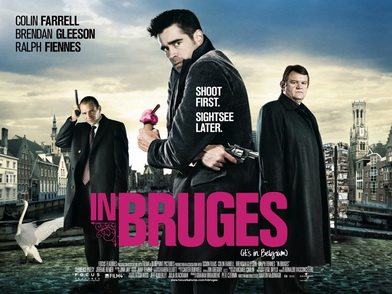
For the uninformed, Martin McDonagh is a rather distinguised writer for both theater and film. The 42-year old McDonagh (a dual citizen of both England and Ireland) spent much of his 20s and 30s creating acclaimed  plays such as The Beauty Queen of Leenane and The Cripple of Inishmaan, before deciding to turn his attention to making movies. In 2004 he wrote and directed a short film called Six Shooter which turned out to he a hell of a debut, as it won the 2005 Academy Award for best short film. His first feature film, In Bruges, came out in 2008 and proved to be a well liked dark comedy, and seemingly a sign of an illustrious film career to follow.

seven psychopaths

Seven Psychopaths is easily his most mainstream work to date, but his sense of black humor isn’t hampered too much by the commercial leanings. Filled with clever fuck-laced dialogue, parodic gangster tropes, and so-bloody-it’s-fun violence, Seven Psychopaths easily finds it’s place amongst other post-Tarantino crime films. It’s clearly not anything new, but that doesn’t keep the movie from being any less watchable. McDonagh certainly proves to be an actor’s director here, as the entire cast shines. The characters are all as playful as they are violent, which is certainly what the film’s tone is going for. Granted, the film is undeniably random and messy throughout, but the acting and scenarios are so creative that Seven Psychopaths remains highly enjoyable for 80 out of it’s 109 minutes.

…Then the final act happens and boy does it disappoint! The film’s creativity seems to suddenly dissipate, and we’re left with a half-assed shoot-out to climax the film. What’s worse, the “pivotal” moments that follow fall flat as well, and the writing just comes off as lazy. Granted, the film visually peaks in a scene that precedes the climax, but it’s still hard not to feel that the end is a bit of a cop-out. Seven Psychopaths needed to have a really crazy yet sublime ending, that would of made up for the film’s random nature, and nicely delivered its message on the arduous process of writing and re-writing a film script. Instead, what ever McDonagh was trying to say goes right out the window through a cliche-heavy ending that truly lacks spark.

So critics were right to call Seven Psychopaths a fun film (at least for the first two-thirds), but it ultimately fails as a commentary on screenplay writing. Certainly worth a view, especially if you love crime movies, but to be honest it’s difficult for me to recommend this film to very many people. It’s possibly too slow for the action movie crowd, and arthouse audiences are likely to find it too flawed or over-the-top to be worth the price of admission. For that reason…I’m gonna have to recommend that you go see In Bruges instead.

In_Bruges_Poster

Filed Under: BREAKING NEWS, ENTERTAINMENT, MOVIES, uncategorized Tagged With: cinema, movie review, movies, Seven Psychopaths

  • « Go to Previous Page
  • Page 1
  • Interim pages omitted …
  • Page 10
  • Page 11
  • Page 12
  • Page 13
  • Go to Next Page »

Primary Sidebar

Navigation

  • HOME
  • OPINION
    • REVIEWS
  • BUSINESS
  • LGBT
  • ENTERTAINMENT
    • ARTS
    • MOVIES
    • MUSIC
    • TELEVISION
    • THEATRE
  • LIFESTYLE
    • TRAVEL
    • FASHION
    • HEALTH
    • FOODIE
    • STYLE
  • POLITICS
  • SCIENCE
  • SPORTS
  • TECHNOLOGY
  • U.S.
    • NEW YORK

Footer

  • ADVERTISE
  • TERMS OF SERVICE
  • CAREERS
  • ENTERTAINMENT
  • Home
  • Contact
  • Legal

Copyright © 2026 · ManhattanDigest.com is run by Fun & Joy, LLC an Ohio company · Log in

Loading Comments...