• Skip to primary navigation
  • Skip to main content
  • Skip to primary sidebar
  • Skip to footer

Manhattan Digest

All you need to know about Manhattan culture and so much more...

  • LIFESTYLE
  • ENTERTAINMENT
  • LGBT
  • OPINION
  • TECHNOLOGY

Peter Foy

Short Term 12: Indie Nirvana!

by Peter Foy

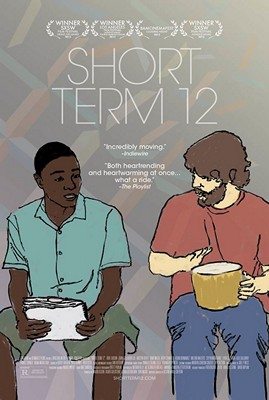
Short_Term_12_poster

There’s an episode from the second season of South Park (entitled Chef’s Chocolate Salty Ball) in which The Sundance Film Festival comes to town. The episode takes a jab at the mentality towards indie cinema, as they show a few of South Park’s residents are really elated to watch all these independent films, only to find that they are all absurd and pretentious pieces of garbage. The episode’s message is communicated vicariously through the character Wendy when she says, “Even though a few independent films are great… most of them suck ass!” As I’ve gotten older, I’ve come to understand what South Park’s writers were trying to say a bit more. As much as I find solace in the fact that independent films are still being made, I feel it’s a myth that indie films are automatically superior to mainstream studio releases, as I have seen enough indie releases over the years to realize that they can be as inept as any big-budget studio’s Transformers-esque release. Still, as Wendy also stated, some indie films are great, and when they are it makes we realize why such a mentality towards indie films exists. Short Term 12, is blissfully that kind of a movie.

Taking place at an America foster-care facility called Short Term 12, the film is told primarily through the eyes of Grace (Brie Larson), a rather young supervisor who comes from a broken past herself. Right from the start we discover that she’s a person that is as tough as she is caring, treating the students at this facility with both respect and authority, and also utmost love and appreciation for her boyfriend Mason (John Gallagher Jr.). When a new troubled young girl named Jayden (Kaitlyn Dever) comes to Short Term 12, however, Grace begins to see quite a bit of herself in her from her tough-as-nails exterior attitude, to her harrowing past. Grace finds herself having to make several major decisions and life choices within the film’s 96-minute window.

There have certainly been other films that have looked at troubled youth in a community, but one of the most remarkable things about Short Term 12 is that it touches on a plethora of different tones, yet feels so cohesive as a whole. Right from the film’s very beginning, it’s apparent that you’re watching something really special, with an opening scene that presents the adult supervisors socializing with each other before starting their work day. Mason, nonchalantly smoking a cigarette, is telling the others a humorous story that involves him “pooping his pants”, when all of a sudden the conversation is put on hold when a young shirtless boy runs screaming out of the facility. Grace and Mason, the two veteran supervisors of the group, then run to hold down the boy peacefully, even while he curses at them and struggles. After calming him down though, Mason continues with his story casually, inciting to the viewer that this is just a regular part of the job for this line of work. A great scene that touches on so much of the film’s voice right from the get-go, and it’s really only just one of many scenes that work so astoundingly well.

An expansion of writer/director Destin Daniel Cretton’s short film, there’s something truly encouraging in finding a director that has already found such a resounding voice for his first feature-length narrative picture. The film certainly is “arty” as it carries a lighting style to it that gives an airy aesthetic, and it’s musings our often meditative. Still, the film never sacrifices realism for it’s artful veneer, and the film is fully plausible throughout. The film is very down to earth in terms of dialogue and character interaction, and just as often funny as it is brutal. The film’s final act is dark as one may expect, but there are so many different reasons as to why it’s so chilling. Perhaps it’s primarily because the film has such an appealing sense of humor to it that it really makes us feel regard for the characters, but the film’s sense of nuance and mystique makes us really ponder what Grace and Jayden have been through. We do find out, but when it happens it will hit you like the most emotionally heavy ton of bricks in the world. Simply put, Desting Daniel Cretton only needed one film for me to start calling him as powerful a screenplay writer as he is a director.

The acting alone would qualify this film as being a must see. Brie Larson is an actress who has held some notable roles over the years such as last year’s comedy hit 21 Jump Street or on Showtime’s United States of Tara, but she was playing fairly generic teenage-archetypes in those titles. Here, the 23-year old actress gives a poetic turn as the tortured Grace, and proves that she is a really magnetic leading lady. John Gallagher Jr. (of HBO’s The Newsroom) also gives his character the right amount of aloofness and seriousness, for him to connect to audiences as Grace’s concerned and affable boyfriend. Cretton also proves that he really knows how to bring out the best in young actors, as the teenage characters are all splendid in their roles, and speak volumes about the film’s message of misspent youth.

Short Term 12 is ostensibly an uncensored view into a foster home for at-risk children, but it’s so much more than that too. It’s a layered character study, a heart-breaking tale of child abuse, and a firm reminder of how beautiful life is around all the ugliness. It really is a film that has something for everyone, and it’s enough to make me shed a tear as I write this review right now. Not just the best independent release so far this year, but an easy contender for one of 2013’s very best films. This, is what I go to the cinema for!
Filed Under: ENTERTAINMENT, MOVIES

The World’s End: Last Call!

by Peter Foy

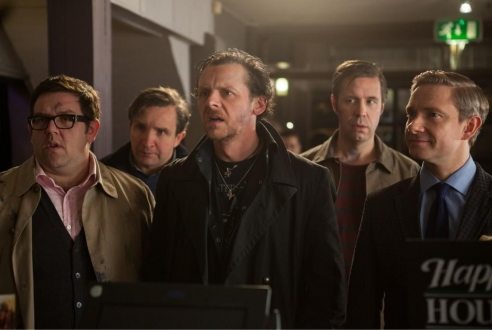
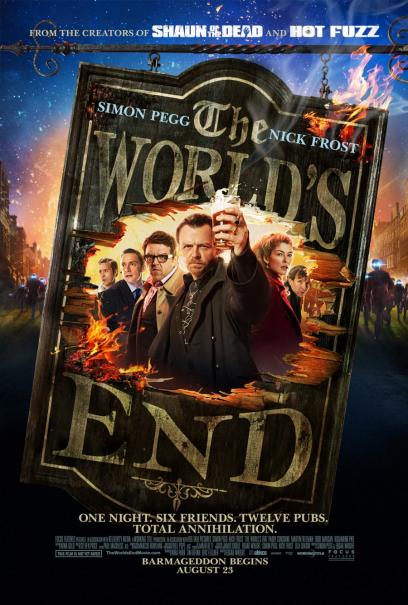
The_Worlds_End_7

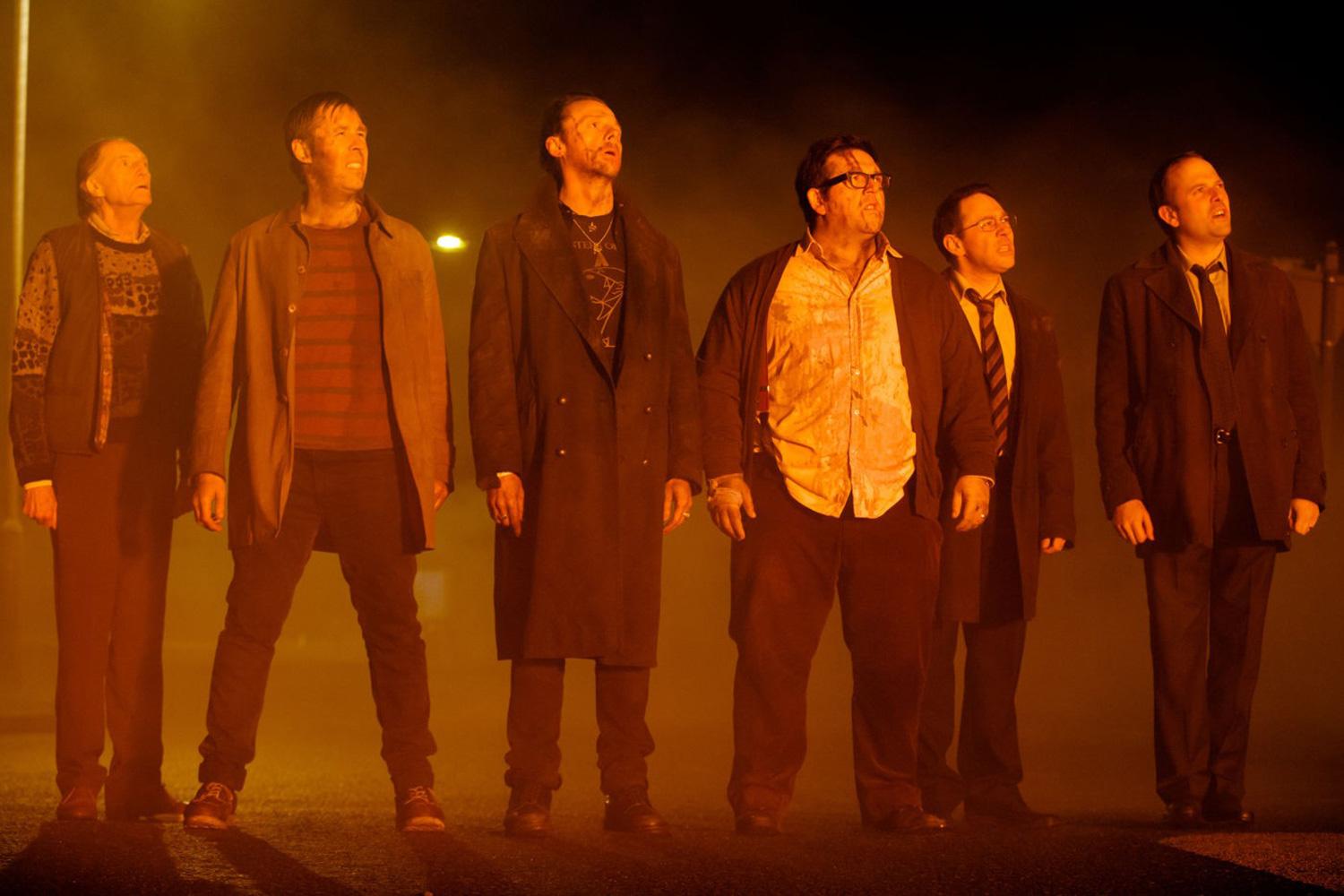
If you’re a 20-something whose had a strong connection to fanboy culture over the years, than I feel that there’s a fairly good chance that the 2004 romantic comedy (with zombies) Shaun of the Dead was a lot more than just a movie for you. It certainly was for me, as it came out during the year that I was really beginning to understand that my interest in film and television could be used to define my character. It was the year I saw Kill Bill for the first time, and also had begun to get into the zombie films of George A. Romero. Then, along comes this British import that combines my love of genre entertainment with realistic characters, and a sense of humor both dry and quick-witted, and presto! I found the final link to making me decide where my passions and myself lied. Director Edgar Wright and his stars Nick Frost and Simon Pegg hadn’t given me a movie, they had given my a rite of passage, and ever since then I’ve just been a progressively evolving film geek.

It didn’t stop there either though. Two-and-a-half years later the trio came out with a follow-up film called Hot Fuzz that actually managed to exceed my expectations. The film was perhaps even  more mad-cap than Shaun of the Dead, but also still managed to have the heart and humor to make it really great, all while doused in buckets of gore. It also certainly didn’t hurt that the film came to America the same month as Quentin Tarantino and Robert Rodriguez’s Grindhouse did, and needless to say both films got me high-off movies again. I would then go on to watch their earlier British sit-com Spaced (my review), and grew increasingly eager for their next project, as Wright, Frost and Pegg had said that they envisioned Shaun of the Dead, and Hot Fuzz as entries in a trilogy, which has since been referred to as The Blood and Ice Cream Trilogy or The Three Flavors Cornetto Trilogy. Thing was, it was a bit of a long wait, as the critical success and recognition that they received led them to plenty of lucrative offers from Hollywood that filled up their schedules for the next few years. Now, six years after Hot Fuzz and nine since Shaun of the Dead, the trio have finally reunited for the concluding chapter of their trilogy, fittingly titled The World’s End. As expected, my anticipation for this film was sky-high…which more often than not leads to disappointment. Fortunately though, The World’s End mostlyy satisfied me, as it’s fast, visceral, clever, thoughtful, but also slightly underwhelming.

Simon Pegg stars in the film as Gary King, a former drug-addict pushing 40, who opens up the film by reminiscing about his high school days while at an AA meeting. He recalls a time when he just finished high school, and he and a group of friends attempted to go on a fabled pub crawl through their hometown. Referred to as “The Golden Mile”, Gary and his friends tried to get drinks from all of their town’s twelve pubs, but they never completed the task. Now, wanting to revisit his glory years, Gary reunites his friends who now all have successful careers and families, unlike him. Upon returning to their place of origin, however, it become predominantly clear that something is amiss, and it just so happens to be…

The-Worlds-End-screenshot-10

To be honest, the more left unsaid about The World’s End’s plot is for the better, as it’s clear that Wright has intended for this movie to be a big surprise, as he kept very mum about the film’s storyline until months before it’s release. I honestly wouldn’t be surprised if he fought the studio to not release a trailer that gave away that the film had supernatural elements in it. Over the years I’ve had several conversations with friends where I’d find myself discussing what Wright, Pegg, and Frost would conjure up for the final installment of their trilogy. We all pretty much agreed that it was logical that they would do a science-fiction movie, as it’s such a rich genre for the these pop-culture addicts to pass up, and it was evident that the success of their last two ventures would give them a bigger budget to work with this time around. I don’t think anyone expected, however, that they would do a movie that wears these particular influences so firmly adjusted on their sleeve. The World’s End borrows elements from Invasion of the Body Snatchers,  as well as channels the cheeky sci-fi tone of Douglas Adams’ beloved novel, Hitchhiker’s Guide to The Galaxy. It’s certainly an out-there idea for a film, but it also is prime territory for these nerdy Brits

In the hands of a lesser director the movie would almost instantly go to being a silly mess, but fortunately Wright once again shows that he’s as firm and dedicated a filmmaker as any other living today. As with all of his previous films, The World’s End shows Wright can capture daily life as well as he can high-end spectacle and goopy viscera. Just like the other two films in the trilogy, it’s very commendable that this film doesn’t have any fantasy material for the first half-hour, as it establishes that the world here-in is not drastically unlike our own. At times the directing and editing can get a bit showy and monotonous (I know it’s jokey, but did we really need rapid close up shots of the character buckling up their seat belts?), but for the most part the viscera is constantly enticing, and it makes me anxious to see how Edgar Wright’s long-gestating Antman movie will look. I for one think it will probably look pretty awesome.

Thing is The World’s End succumbs to a lot of the same issues that other trilogy closers face: it’s just not as fresh as it was the first two times around. Shaun of the Dead and Hot Fuzz felt like passion projects as it was self-evident that these guys didn’t just watch lots of movies, but they understood how they worked too. The World’s End, however, seems to be missing the singularity factor of the previous two films, and while it certainly doesn’t come off as an after-thought, it often seems like it’s sole reason to exist is to merely cap off two greater films. It’s also doesn’t have as many laugh-out-loud moments either, and the film also has a pacing issue that’s similar to the one that was in Wright’s last film. Scott Pilgrim Vs. The World also had a story built around the format of a “hero’s journey” so to speak, where our protagonist had to get from point A to point B to point onward. Once you realize that Gary and his troupe won’t reach their final destination until they hit the 12th pub, then the film can certainly be viewed as being a bit linear. In fact, the film also made me realize that Hot Fuzz is probably the strongest film of the trilogy, as that film also took a really bizarre movie premise stemmed from pop-culture indulging, but did it in a way that felt more natural, while also being funny and surprising at a more consistent rate.

That said, it’s certainly interesting that the archetype roles that Simon Pegg and Nick Frost usually play have been reversed for The World’s End, with Pegg now portraying the loose cannon while Frost is the “straight” one of the group. In fact I’m gonna say Pegg is the film’s ultimate scene stealer, and really does a great job of humanizing the film’s reckless main character. At first it’s easy to see Gary as being a hedonistic prick with a repellent nature, but as the film becomes more fantastic there are plenty of scenes that give the character honor points. With his gothy style and devoted attitude, I wouldn’t be surprised if the character became a bit of a poster boy for nerd culture. Hell, I already have half of this guy’s clothing attire, so don’t be so surprised if I decide to be Gary King come this Halloween.

Before I close this review I will say this: what an ending! I certainly won’t be giving anything away, but I will say that Wright ends this movie in a really surprising fashion, which is even more unexpected giving the logical trajectory the film goes through most of it’s running time. I honestly feel that there was a movie on-par with Shaun of the Dead and Hot Fuzz in World’s End, if only they had elaborated more on the final scenario. Still, while it’s far from perfect, The World’s End is a fine trilogy closer and a very different film to close out the summer movie season with. Neck-to-neck with This is the End for the title of 2013’s best zany post-apocalyptic comedy.

TheWorldsEnd

Filed Under: ENTERTAINMENT, MOVIES

Breaking Bad: The Legend Ends – Buried

by Peter Foy

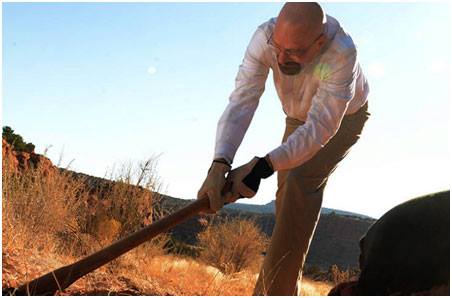
Breaking-Bad-buried


*This will spoil the episode for you*


Breaking Bad has always been the show to push television serials into a hyper and precise mode, and we’re seeing that in full spades for this season. Picking up moments after the last episode ended, we find Walt leaving Hank’s garage, getting into his van, and then trying to call Skyler. Walt finds that she can’t be reached then as her line is busy, and then in true fashion for the show, Walt discovers that Hank is the one calling her. The game is on between these two, and they both seem equally matched!

The scene with Hank and Skyler was truly great. Hank is finally catching on to why she has been so distraught, and tries to comfort her, but it’s also clear that he’s seeing her as the key that he needs to get Walt. The dialogue and acting here is fantastic, with Hank attempting to suade her in a very calming fashion. Still, Skyler ultimately refuses to help Hank knowing what it could do to her, and we already see that their families are going to suffer from this. When Marie confronts Skyler she grows very angry, slaps her, and almost kidnaps her infant daughter, and only stops when Hank asks her to put the child down. It was such good reasoning of the writers to do this as we know that Marie has had kleptomaniac tendencies before in the past, and she’s quick to put blame on whomever was responsible for shooting Hank.

Walt however, is certainly trying his best to cover all his bases. Walt has Saul’s men gather his money for him, and then he buries it in a remore location all by himself. As dark a character as we’ve seen Walt become, one does have to admire how far he’s come since the beginning, and that he is now very efficient at what he sets out to do. There were even moments that suggested that Walt really still has humanity to him, such as when he scolds Saul after he suggest murdering Hank, or when he tells Skyler that he is going to make sure the children receive all the money. Who knows if he’s being honest when he says his cancer is back (the flash forwards seem to suggest otherwise), but Walt does seem to be preparing for the end, and if Jesse is going to earn redemption this season, than perhaps it’s not out of the question that Walt will too.

Plus, it looks like Walt is going to have more to worry about than just Hank. Lydia has teamed up with the neo-nazis that incited the prison riot, and leads them to take out Declan’s drug operation. While I had initially assumed that the flash forwards were suggesting that Walt was planning an attack on a police precinct (maybe to save Skyler), now I’m beginning to wonder if Walt’s final adversary will be Todd and his Uncle, as both of these characters have proven they are beyond redemption at this point. Great character writing for Lydia as well, as when she tells Todd that she doesn’t want to see the dead bodies, he merely replies, “I guess you can close your eyes.” In many ways she’s just like Walt was at the start of this series.

Which now brings us to the ending scene. Jesse has been picked up after his money-throwing spree, and has once again exposed a potential wound for Walt.  At this point, I feel it’s safe to assume that next week’s episode is gonna begin with the Hank and Jesse confrontation we’ve been waiting for for some time…and it’s not gonna play out like any of us expected us to either!


4.5 chem-suits out of 5

Filed Under: ENTERTAINMENT, TELEVISION

The Spectacular Now: Summer’s Surprise Masterpiece?

by Peter Foy


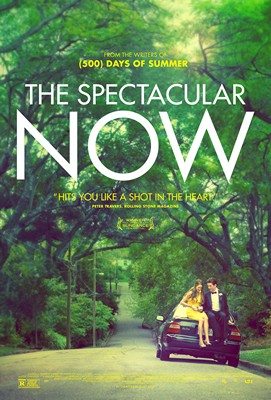
The_Spectacular_Now_film

Now-a-days, it really does takes a lot for me to get chocked up while watching a film. This didn’t always used to be the case, as I remember being on the verge of tears as I watched Darth Vadar cut off his son’s hand in The Empire Strikes Back, or watching two childhood friends hold a battle to the death in Akira, or even seeing Michael Jordan being taunted by alien scum in the vastly underrated animated masterpiece that is Space Jam. In recent years, however,  I’m lucky to catch a new movie that I could even term as “sad” in a manner that’s a compliment. It’s a real shame too, as as I grow older I sometimes wonder whether it’s because I’ve just been exposed to so much more now, or if it’s because I myself am becoming more emotionally cold and didactic. Then, however, something will come along that will come across to me as so human, and so heartfelt, that I will have that pleasing sense return to me, both in a nostalgic fashion and in a way that’s completely fresh to my being. More frequently these are actually real events that happen in my life, but in this most recent case it happened to be from watching a movie. That movie was The Spectacular Now!


Adapted from the eponymous novel by Tim Tharp,the film is a teen-romance set in the present day. The film’s protagonist is Sutter Keeley (Miles Terry), a high school senior who thinks he has it all. He’s popular, has an active sex life with his girlfriend, and equipped with a car and a steady job (something not all teenagers have in today’s economy). Still, Sutter also has insecurities to him, that aren’t completely hidden. He’s a budding alcoholic who constantly needs to be sauced, and he’s also deeply upset that he never got to know his father who left their family while he was still at a young age. After breaking up with his girlfriend, he rebounds by having a long night of drunk driving, eventually waking up after passing out in front of the hous of a classmate, Aimee Finecky (Shailene Woodley). She’s different than the females he usually mingles with as she’s not the wild type, but the two almost immediately seem to bond. Not long after this chance meeting they begin to date.

This is a movie that comes off as realer-than-real in terms of confronting the high school experience. Writers Scott Neustadler and Michael H. Weber (who also penned (500) Days of Summer), really know the lingo of the today’s high-schoolers (albeit slightly exaggerated so that it’s not too esoteric), and ardently avoid coming-of-age story cliches. What’s more, they’ve also found the perfect director for the film in James Ponsoldt. Those that saw last year’s Smashed can verify that he is a solid visual stylist, as well as a film maker that can conduct a satisfying comedy-drama ratio, but his script for the film was very modest and played it a bit too safe at parts. For The Spectacular Now, however, he’s working with a superb script, and one that really tests his girth. The film has a rather dreamy feel to it thanks to effective music and filmmaking cues, and he also knows exactly when to hold back. There are several times in the film where the screen cuts to black, and it serves to have audience members either catch their breath, or evaluate what just happened.

Also, the subject matter in the film is very reminiscent to what Ponsoldt explored in Smashed, only this time the substance abuser is even younger. While the film is about young love, it’s also just as much a film about alcoholism, which is handled in a very delicate manner. Flasks, beer bottles, and pitchers frequently surround Sutter, and while there’s only one scene in the film when a character comments about his drunken state, the raw emotional scenes in the film are enough to tell us viewers that Sutter’s drinking is well past the mentality of simply being a social activity. When the film delivers us a brief yet harrowing image during it’s final act, it could have come off as a cheap shock tactic in a lesser film, but here it feels mandatory towards the film’s communicating on it’s rough message.

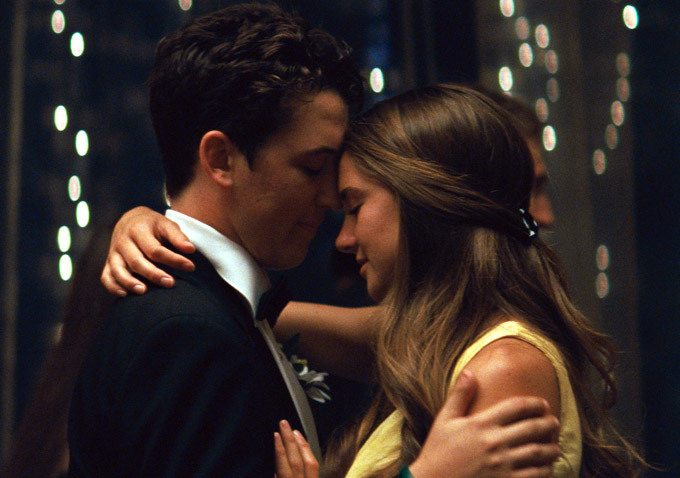
Of course, this is a romantic film, so no matter how great the writing and directing is, the film needs chemistry between it’s two leads above all else. Fortunately, Teller and Woodley are simply resounding, with the two leads not only seeming to really be in love (wait till you see the sex scene!), but they fully understand the unique traits of their characters. Teller’s performance fluidly merges with the fact that Sutter is a character who plays it cool, yet has deep emotional problems in his life. It’s a performance that actually recalls Richard Dreyfuss’ role in the underappreaciated 70s film The Apprenticeship of Duddy Kravitz. Woodley is an actress I’ve been intrigued with for a bit, as while I happened to think that The Descendents was quite possibly the most overrated film of 2011, I was really impressed with her performance. In the Spectacular Now, however, she continues to proves she a vibrant talent in Hollywood’s under-25-crowd, and really went the extra yard to make Aimee connect. She gained a little bit of weight for this role to make the character look more normal, and she also settles on a sense of charm and care for this character that just seems right. Also while we’re talking about cast, I have to mention (even if it’s just of interest to fans of great television), that it was just so great that they managed to cast Bob Odenkirk (Breaking Bad, Mr Show) and Andre Royo (The Wire) in bit parts.


The most remarkable thing about this film is that the complete impact of what I just saw only became apparent the moment the credits began. I was enjoying the film the whole way through, yet I couldn’t shake away from my mind that The Spectacular Now was a bit too generic in some regards. For some reason though, the scene’s ending just had all it’s parts come together in such a sublime fashion, that it made me realize that I had just watched something really special. In my mind, the movie went from a B to an A in just a millisecond. Simply put that this film is the teen-romance that critics have been waiting to see for a very long time, and hopefully this will be the sleeper hit of the summer.


 spectacular-now-miles-teller-shailene-woodley

Filed Under: ENTERTAINMENT, MOVIES

Breaking Bad: The Legend Ends – Blood Money

by Peter Foy

Ed Sanders and Marc Hunt of Owner's Manual Source: AMC

breaking-bad-blood-money-3_article_story_main

*Warning: Spoilers a plenty*


So Hank just got an inkling that Walt is Heisenberg, and he already tried to bust his fucking skull.

That’s what I love about Breaking Bad so much. It always manages to subvert our expectations, while also playing it logically and staying within the show’s very distinct nature. Gilligan has said before that “once you tip  your deck you have to show it.” This serves as the reasoning as to why some revelations on the show have come fairly quickly where other shows would drag them on for perhaps seasons. For example, by season 3 the writers decided Skyler should become aware of Walt’s secret life, which has certainly worked wonders for the show’s direction (even if her character hasn’t exactly become a fan-favorite). Now here we are where we have a face-to-face confrontation between Hank and Walt only one episode after Hank’s shocking reveal, but if you think about it, it’s been a long time coming. Walt’s crimes have been under Hank’s nose the whole time, not to mention it’s been a whole year since we the audience have seen the last episode’s shocking cliff-hanger. In a way, Vince Gilligan was very kind to us patient viewers by letting us catch a glimpse at the long gestating Walt Vs. Hank arc.

Aside from that pivotal scene, however, Bloodmoney acted as a great re-entry point for Breaking Bad’s final season, and once again it began with a flash-forward. Last year’s season premiere started off with a flash-forward in which we see that Walt had changed his identity and purchased some rather heavy artillery for unknown reasons, but now we’ve seen a bit more of what’s to come. This premiere does indeed begin with another flash-forward scene, with Walt returning to his old house which has now been vacated, and left in shambles. We see a group of teenagers skateboarding on his drained pool, and even more damning is a graffiti mark in his former living room that reads Heisenberg. We now know that Walt is going to be revealed to the public as a drug dealer, and perhaps even become a living urban legend. Of course, the real kicker is when we find the reason Walt has returned to his abandoned home. In pure Breaking Bad form, we discover that Walt is here to reclaim the vial of ricin that he hid here back at the beginning of the season. Whatever the reasoning for Walt’s doing this, we know that everything is coming full circle, and that there will be no loose threads hanging.

Returning to the present, however, we find that Walt seems to be doing fairly well with his ordinary life. He’s opened the car wash that he and Skyler have been talking about, and we see that he’s become a family man again (albeit it’s very possibly just a guise for him at this point). Still, Walt’s past is never far behind. Lydia, the cowardly woman who helped Walt commit a brutal prison slaughter-fest last season, has come back and is demanding Walt’s help again. It’s clear to me that this woman is intended to be the proverbial monkey wrench for Walt’s plans, and there’s no question that she’s going to be the sole reason that everything fucks up.

Then, of course, there is Jesse Pinkman. We first see the character hanging out with a few of his stoned-out buddies, who supply a bit of levity for us. His friends are talking about an absurd script idea for an episode of Star Trek, but Jesse’s mannerisms let us know that he isn’t in the mood for such bafoonery right now. He goes to Saul and ask that the millions of dollars that Walt left him be sent to the parents of a boy they killed, as well as the granddaughter of Mike Ehrmantraut. Of course, when Walt hears about this he immediately goes to Jesse and asks him to put such a thought behind him, knowing that this money links them to their crimes. Walt once again shows how casually dishonest he’s become, as he tells Jesse that Mike is still fine even though he is his murderer. Jesse however, finally seems to be catching onto Walt’s lies, as he tells Walt that he feels Mike must be dead, and he thinks that he knows it.

More so than any other character on the show, Jesse has really gone through the most pain and soulful torment. He’s in direct contrast to Walt who has grown power-hungry and merciless, Jesse feels like shit about all the death and destruction their drug dealing ventures have caused. He has become the show’s most sympathetic character. Jesse does something really unexpected later on in the episode, as he drives around town throwing stacks of money out onto the street. It kind of acts as a parallel to Walt’s attempt at morality back in season 3 when he contemplated burning his money after the plane crash he caused. The difference here though, is that Jesse was actually able to give his money away, and perhaps it suggests that the character might achieve redemption before the final credits roll.

Getting back to the Walt and Hank scene though, it really was the perfect way to tie up this extremely successful premiere episode. It shows that both of these characters (whom we know so well at this point) are both onto each other. Walt’s not so thinly veiled threat to Hank (“If you don’t know who I am, then maybe your best course would be to tread lightly”), is the ideal set up for the chess game these two characters are about to play with each other. Walt certainly feels almighty after killing several drug game big-shots, and then being able to “leave” the game physically unscathed. Of course, through the episode’s haunting flash forward, we know that Walt is about to be outed in at least several ways. Next week’s episode can’t come soon enough!

Episode Rating: 4.5 Bags of Blue Crystal out of 5

Filed Under: ENTERTAINMENT, MOVIES

Breaking Bad – The Legend Ends: A Fan’s Look Back

by Peter Foy

So here it finally comes. After six years AMC will begin running Breaking Bad’s final run of eight episodes, and the hype machine is at a all-time high for the celebrated crime drama! Newspapers, blogs, forums and various other media outlets are exploding while reminiscing on the show that has rightfully gone on to be considered one of the very best dramas to ever air on television, and it’s easily the most anticipated series finale since Lost. It’s a particularly massive feeling for me, as Breaking Bad is a show I’ve kept with right from the beginning, unlike many of it’s viewers who tuned in late to party. I watched the show evolve from an underdog (which plenty of people compared to Weeds), into a pop-culture phenomenon (and something no one in their right mind would compare to Weeds!). It’s been a really fascinating process for me, as it really is the first show I’ve watched from start to end while it was airing. All of my other favorite shows (The Wire, The Simpsons, The Sopranos, South Park, Mad Men, etc.) I only started viewing after they had already completed their run, or I caught up with them in later seasons. Breaking Bad is a show that has essentially matured with me, and as early as season 2 people were referring to me as “The Breaking Bad Guy”. I might be sounding overtly dramatic here, but in a way a legacy of my own will be ending with that of Vince Gilligan’s masterful neo-noir-cum-black-comedy-cum-psychodrama, but what a hell of a show we’re talking about.

I remember the first time I heard about Breaking Bad, and now it really does seem to carry the mark of an omen. I saw an article for it in New York Magazine, and it immediately caught my interest. I had watched Malcolm in the Middle as a teen, and was interested to see Bryan Cranston take on a drama. Of more importance however, I was super into crime fiction at the time, as I was reading a lot of crime comics (Criminal, Scalped, Sin City), and just devoured these bloody stories that were certainly removed from reality, but closer to it than the fantasy and sci-fi stories I had previously indulged in. I had started to watch Dexter at that time too and while I was fully enjoying it, I still felt it was missing a bit of the punch that crime comic books had. I decided I’d give Breaking Bad a shot, although I think I never expected to watch more than a few episodes.

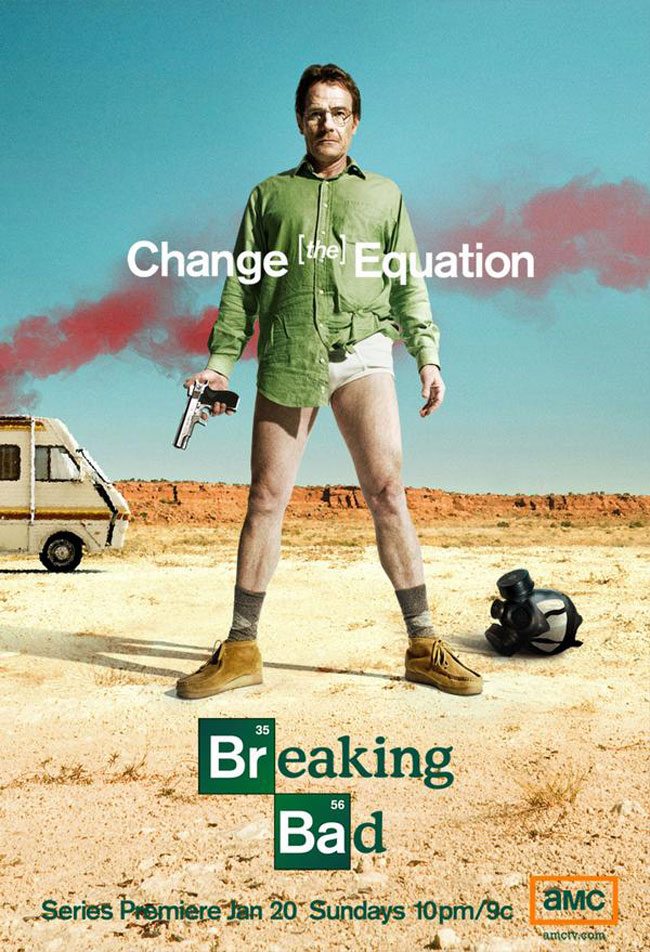
Season_1_AMC_Poster

Needless to say though, the pilot episode just blew me away. Not only was it’s head-and-shoulders above any other contemporary show in terms of style and mood, but I valued that the show had a black sense of humor and non-linear format to it (not unlike a Vonnegut novel). It didn’t take me long to sing the show’s praises and I did indeed find a small group of friends to watch the series with, all while most other people I recommended it too simply dismissed it for the time being. Unfortunately, due to the writer’s strike Breaking Bad’s run was fairly brief that year, with the first season concluding after just 7 episodes airing. The show wouldn’t return for another whole year, but during that time Breaking Bad’s existence remained a constant fixture in my head.

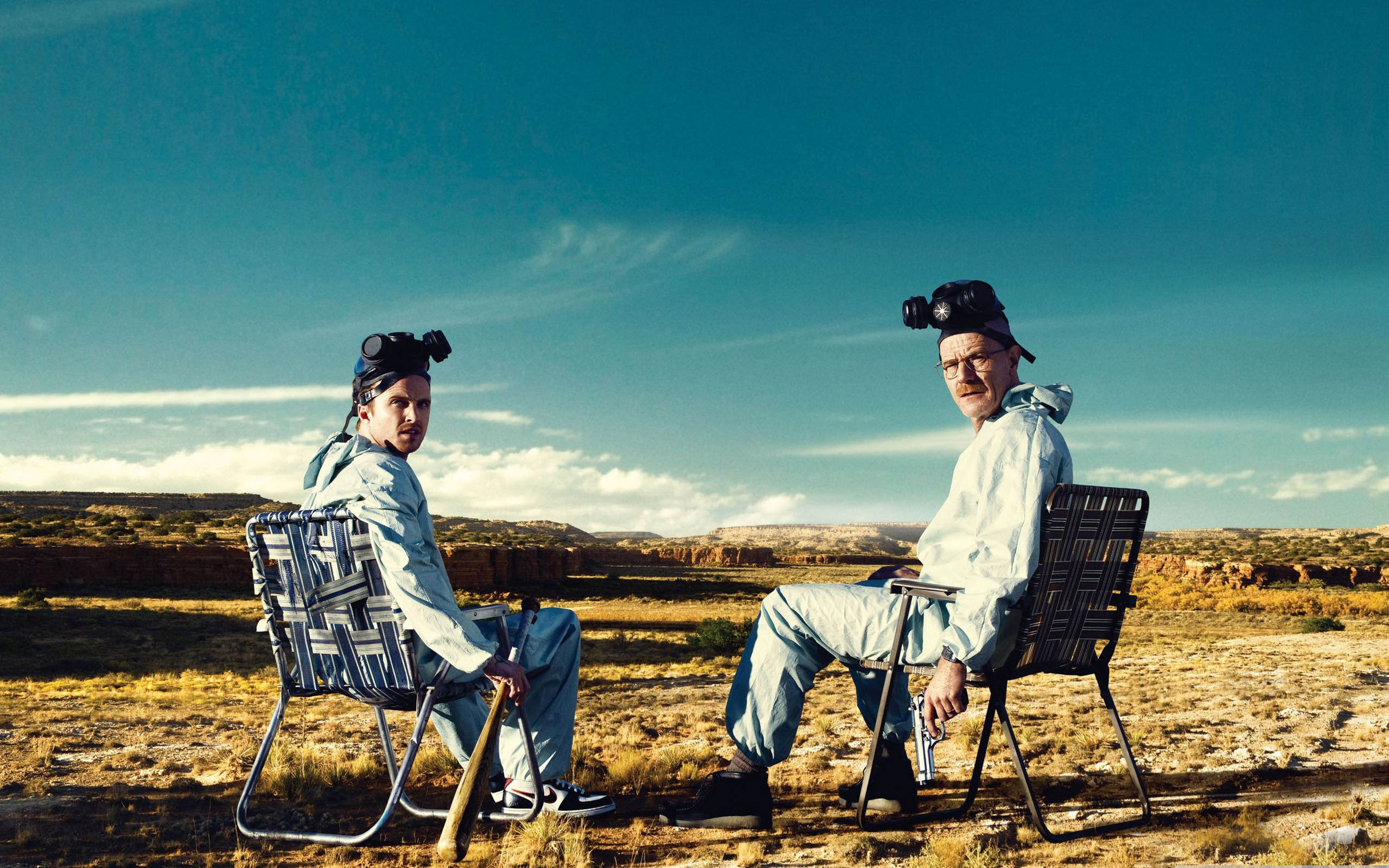
breaking bad season 2

When season 2 finally did arrive, I found myself even more immersed in the show than even before. The season was even more unpredictable and engaging than the first, and it also made me seek out some connected forms of entertainment. The summer after Breaking Bad season 2 aired, I would go on to watch the entire series of The Wire, upon hearing it was an even better crime show (it was), and shortly after that I would go on to purchase the box set for the brilliant sketch comedy series Mr. Show, after hearing that Breaking Bad actor Bob Odenkirk was best known previously for creating that show. In other words, I’m not just thankful to Vince Gilligan for the hours of entertainment he’s giving me in the form of his own show, but also for introducing me to several other great ones in the process.

breaking bad 3

When season 3 premiered, I began to not just follow the show’s weekly premieres, but also scourged as many press interviews and reviews as I could. I would tell my friends interesting factoids pertaining to the show’s production, such as how Jessie was originally supposed to be killed in the first season, or how Vince Gilligan had actually cast two ex-conflicts to play as The Twins. I also feel that this was the first season of Breaking Bad that really cranked out “holy shit!” moments like it was the pope’s outhouse, from Hank’s brutal gun battle with The Twins, to the season’s closing image of poor Gabe getting a most untimely fate. I honesty started to feel bad that people hadn’t been watching the show, as this was above-and-beyond the best thing airing on TV at the time. I started to wonder though if the show would primarily remain merely a critic’s darling, or if it ever would obtain the large audience that it so richly deserved…then season 4 happened.

breaking-bad-season4

By the end of season 4 it felt like everyone had finally caught up to  the fact that Breaking Bad was the bee’s knees. The first three seasons had been put on Netflix shortly beforehand, which gave newcomers the ideal means to get caught up. Not only could they ingest the continuity-heavy show at a swift rate, but they did so in the sanctuary of the internet which promoted conversation and forum discussion. So yes, Breaking Bad had finally found the means to extend their viewership and just in time too, as season 4 was flat out amazing! The tensions, the build up, the pacing, the set pieces, everything about the show’s fourth season was pitch perfect, and it climaxed with one of the most memorable faceoffs (literally) in television history. Also, this was the season that completed Walt’s journey from a sympathetic character into a villain unlike most. His dissent had been immensely twisted, but perfectly calculated by the writers who knew when to pull back when necessary. Walt was no longer sympathetic, but that didn’t make him any less compelling. I was so immensely proud with this season of Breaking Bad, and I also was glad to hear that Vince Gilligan would end the show after a subsequent 16-episode deal. Breaking Bad’s story was finally coming to an end, and I was so eager to see how it would.

breaking bad season 5

Thing is, as the first half of the final season began to rear it’s head, I was starting to realize that maybe I wasn’t entirely satisfied with the newfound popularity Breaking Bad was receiving. Sure, I was glad that Gilligan and his writers were certainly getting more recognition and lucrative gain, but I had a sense of a child-like appreciation for the series, where a part of me wanted to keep it as my little secret. A selfish feeling perhaps, but I noticed there was some backlash to the show when it got popular. As the fifth season aired I was as enthralled by it yet again, but other people I talked to said they were a bit disappointed. They mostly gave me petty reasons for it, such as bringing up why a highly skilled killer like Mike would let someone sneak up behind him, or that they felt the series wasn’t going anywhere anymore as Walter was now pure evil. All of this got me thinking: will people be upset with the show’s ending? Similar series that went on to massive popularity like The Sopranos and Lost had endings that fans complained were half-assed (I agree on the latter but not the former), while less popular shows like The Wire and Six Feet Under had endings that were immediately lauded. When anything gets this popular it’s near impossible to appeal to everyone when it comes time to curtain close, but if there’s one thing I’m sure about Breaking Bad it’s that it won’t leave any loose ends. Throughout the show’s run, I’ve seen Vince and his writers return to story elements you never would of expected, and it all tied so well with the show’s syncopation. If there’s one thing I can count on with the fans, it’s that they want every little last bit of story drained from this thing. THAT will definitely happen.

I will be writing reviews/recaps for each of these eight episodes as they air for this site, and yes I will be calling this column The Legend Ends. It is ostensibly borrowed from the tagline to last summer’s Dark Knight Rises sure, but come on, which franchise do you think deserves that moniker more at this point? Feel free to post predictions on how Sunday’s premiere will go in the comments section of this page. I for one have little idea, and I’d like to keep it that way…for the moment.

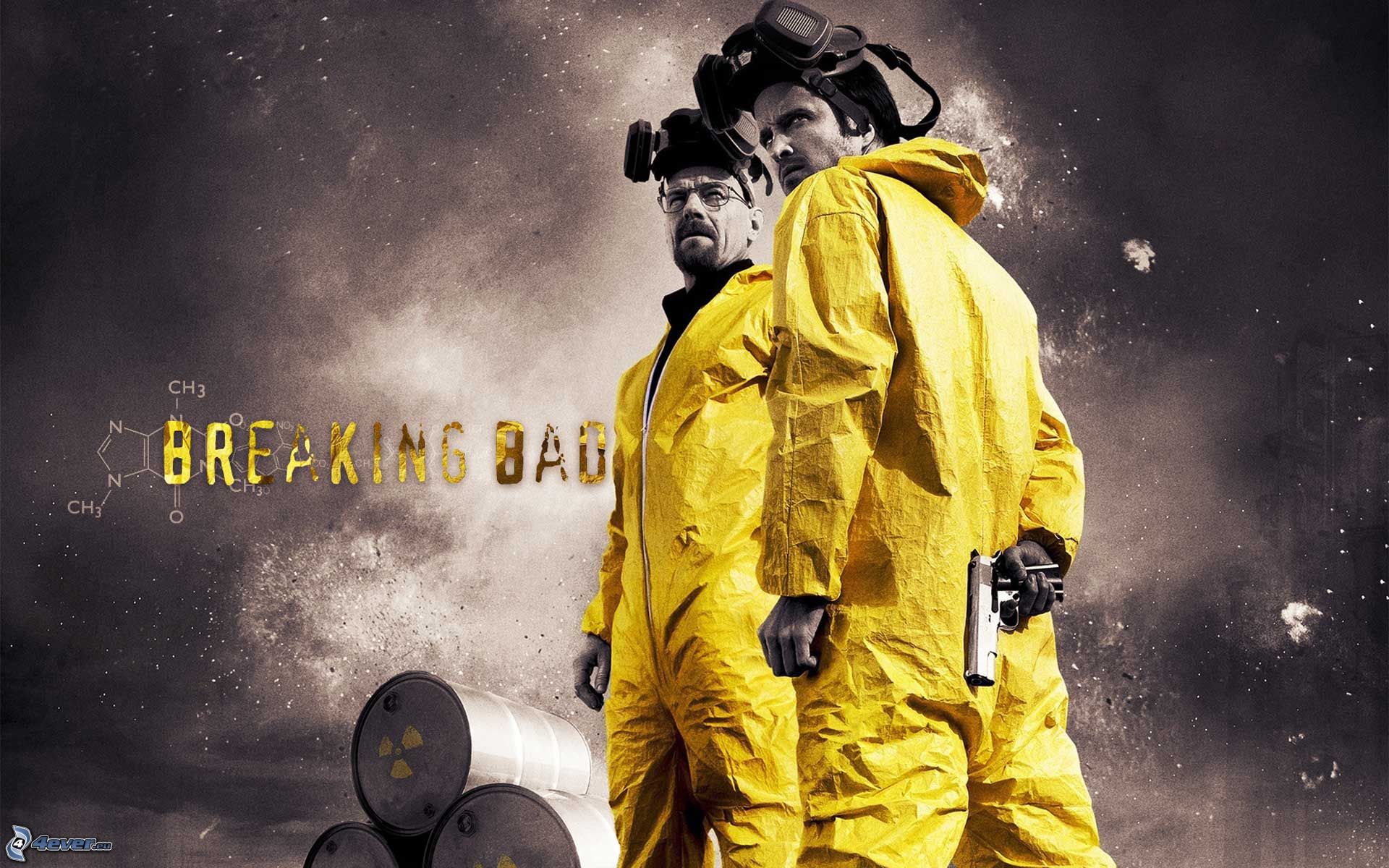
breaking-bad-season-6-poster-full-630

Filed Under: ENTERTAINMENT, TELEVISION

Netflix’d: Peep Show | British Television Netflix

by Peter Foy

Well, some of you might recall from an earlier edition of my Netflix’d column that I had intended to write a review off of Peep Show. Sadly, I discovered that that wonderful series was no longer streaming, so I put it on hold. Six months later, however, the Netflix gods have done right again and placed Peep Show back onto Netflix’s streaming queue, along with the addition of it’s recently aired 8th season. Ah, the sense for having a second chance is truly a resounding one.

Peep Show Netflix | British Television

Format: half-hour long sit-com
Created By: Andrew O’Connor, Jessie Armstrong and Sam Bain
Seasons: 8 (48 episodes)
Air Date: 2003-present
Genre: comedy, British Television
Cast: David Mitchell, Robert Webb, Matt King, Paterson Joseph, Neil Fitzmaurice, Isy Suttie, Olivia Colman
Similar Too: The Office, Spaced, It’s Always Sunny in Philadelphia, Seinfeld, Party Down

As an entertainment critic, perfection certainly isn’t a word I like to throw around lightly, especially when it comes to talking about sit-coms. Even in our current day-and-age with many reviews already calling it the golden age of television, people can attest that so much studio-approved drek comes out in the form of sit-coms this day, be it Whitney or Who Gives a Fuck About Any of This Shit? Us Writers Aren’t Even Trying (one of those two shows doesn’t actually exist). That said, Peep Show certainly comes closer than most to being the perfect sit-com, as it really reads like a laundry list for ingredients needed to make a great half-hour of comedy. It’s got a sly yet irreverent sense of humor, a consistent tone and laugh rate, highly fleshed out characters, killer scripts, a novel film-making style, and it just goes on and on (also the show lacks a laugh track). If it’s not a perfect comedy, then I will just say this: it’s the best long-running live-action comedy show since Seinfeld.

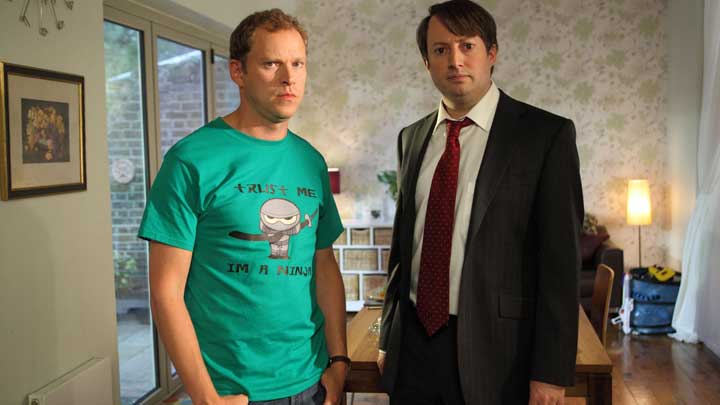
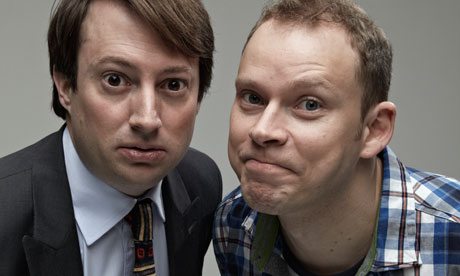
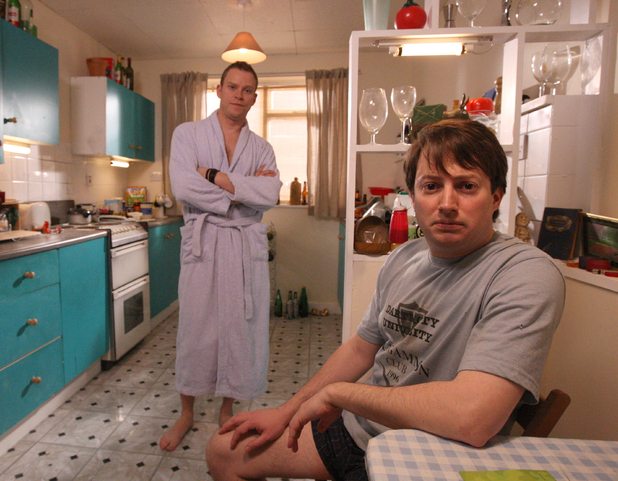
Set in London, the show focuses on two misanthropic flat-mates that are as flawed as they are lovable. David Mitchell stars as Mark Corrigan, a man who has had plenty of success throughout his career, yet he is simply hopeless when it comes to the opposite sex due to his neurotic nature and lack of self-confidence. His flatmate and old college buddy Jeremy Usborne (Robert Webb), on the other hand, is steadily unemployed yet almost always successful with women. Certainly appearing to be the more well-adjusted of the two, Jeremy has plenty of insecurities of his own, and is often overtly selfish, and a failure at obtaining his life goal of becoming a successful musician. Throughout the series we see these two character develop (perhaps not enough though), as they deal with numerous real-life conundrums such as love, career, family and friendship.

For those of you that have just read the synopsis and are flabbergasted as to why a show would be named Peep Show if it isn’t based around porn shops, well then read on. The show gets its title due to its singular filmmaking style: Virtually every shot in the show is a point-of-view shot from one of it’s characters. We see these characters observe people and the world around them, with the camera even acknowledging it when they bring things to their mouth (I.E. drinking, eating, kissing, etc.). It’s a style that could have grown gimmicky and tiresome after a while, but instead it feels completely organic, and the best part is that it really lets us get inside Mark and Jeremy’s heads. Through voice overs, we hear the thoughts of these two complexly flawed main characters, and it’s a tactic that was borrowed from Woody Allen’s Annie Hall, during the highly memorable scene when subtitles revealed the true thoughts of the characters. Still, it feels really original here in Peep Show, and feels completely in tune with its style.

Peep-Show-006

As novel as the show’s look is, however, it’s the writing that really makes it so utterly fantastic. While certainly British, the show is actually more American-friendly than most of it’s peers as it frequently references American movies, television shows, and even politics (this past season referenced both Bernie Madoff and George W. Bush). What’s more though, is that the show’s writers are just so clever with coming up with episode ideas, and then nailing them down as efficiently as possible. From an episode where Mark ponders if things would be better if he and his boss were homosexual lovers, or Jeremy discovering that he’s really good at poker without even knowing the rules, the show constantly finds ways to subvert the viewer’s expectations. It’s an extremely literate show also, that will always follow up a dick joke with a joke that name drops Emily Brontë, all while exploring issues of contemporary class standings regarding sex, well-being, and psychology. Whether you value the highly sophisticated comedy of Rickey Gervais, or if you’re more drawn to the wacky and irreverent humor of a show like The Simpsons, Peep Show is exactly the type of show to keep you in stitches, and it doesn’t slow down at all. Throughout all it’s 8 (albeit brief) seasons, the show remains fresh and hilarious, and yes re-watchings do reveal even more great jokes.

Rounding it all out, Peep Show has the sort of exceptional cast that you almost never see on American television (I.E. Most of the characters aren’t extraordinarily super good looking). David Mitchell and Robert Webb are fairly recognizable in their home country due to their work on sketch comedy shows, but it’s arguably Peep Show that really shows how intrinsic they are as a comedy duo. Mitchell and Webb feel so in tune with Mark and Jeremey and their Odd Couple-esque relationship that it’s hard to believe that Mitchell and Webb aren’t the primary writers for the show (although they do contribute material).

The secondary cast is fantastic too, with special props going to Matt King’s performance as Super Hans, Jeremy’s drug-abusive band mate. In a way, Super Hans acts as the show’s answer to Family Guy’s Quagmire, as he’s a despicable and decadent man, yet his repulsive behavior is almost always spot-on hilarious, and he’s pretty much an ideal example of a corrupt yet highly watchable character. On the more conventionally affable side, however, in season 5 a new love interest is introduced for Mark in the form of a young woman named Dobby. Played by musician/writer Isy Suttie, the character is simply endearing to watch, with her cute demeanor and winning personality, and she strikes me as the best character addition to a sitcom since Danny DeVito in It’s Always Sunny in Philadelphia. Trust me, it’s hard not to develop a celebrity crush on Suttie after watching this show.

Since it’s inception, there have been at least two attempts at making Americanized versions of Peep Show but neither of which have made it past a pilot. In all honesty, I find this to be a relief, as it’s hard to imagine any American channel (even HBO) making a show that feels anywhere near as outstanding as this British original. At eight seasons, Peep Show also proves to be an anomaly amidst some of its Brit-TV peers like The Inbetweeners, Spaced and The Office with none of those series making it even past a third season. Peep Show’s creators really have had a great and fruitful time with making use of the show’s brilliant format and style, and should be proud that they’ve made what could quite possibly be called the most satisfying and all encompassing show to ever air on British television. I started doing this column as I felt a lot of people had Netflix accounts and didn’t know what to watch. While the various movies and tv shows I’ve previously touched on all range from great to excellent, I feel that Peep Show is something special above the whole lot of em’, and it’s pretty much the single best reason to own a Netflix account. Now finish this last sentence, and go watch it immediately!

uktv_peep_show_1_1

Filed Under: ENTERTAINMENT, TELEVISION

Blue Jasmine: Guess Who’s Back?

by Peter Foy

Blue_Jasmine_poster

Woody Allen, at 77, has been one of the most consistent, lauded and  influential American artists of the last 50 years (which also happens to be the amount of time that he’s been an active filmmaker). The Brooklynite basically birthed a brand new era of Jewish humor in his career beginnings with slap-sticky pictures like What’s New Pussy Cat and Bananas, and then went on to make more dense and existential dramadies such as Annie Hall (which is one of the few comedies to win the Academy Award for best picture), and has since continued to output new films at an almost annual basis. It’s a body of work so immense and lengthy that it could cause even his most ardent fans to ponder if there is really anything left for the director to do in his old age, and if he might have even have run out of things to say. A few years ago, this certainly appeared to be the case, as Allen’s films seemed to be stuck in a rut of mediocrity, with some people even calling his technique “dated”. Then, in 2011, a rather great surprise happened when Woody Allen released Midnight in Paris, which not only proved to be a critical favorite, but that $17 million picture happened to make a box office gross of $151,119,219 which easily made it Woody Allen’s most lucrative touchstone to date. Now, two years (and the forgettable To Rome With Love) later, Woody Allen has released another picture that is not just a latter day standout for him, but it’s a telling reminder of how important Woody Allen has really been for American film these last few decades.

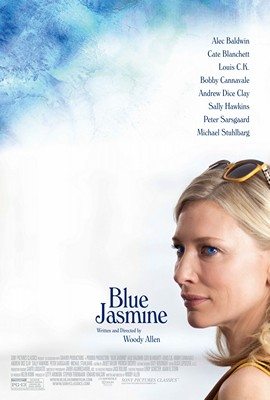
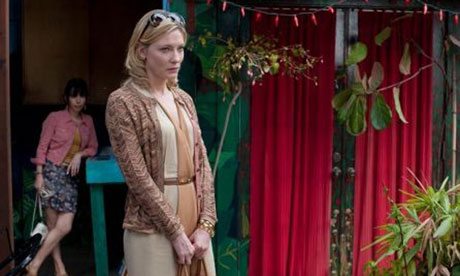
Blue Jasmine is a film that Woody Allen has not made any bones about it being directly inspired by Tennessee Williams’  play A Streetcar Named Desire. The film begins with it’s central character, Jasmine (Cate Blanchett), arriving in San Francisco after her life comes crumbling down around her. Her wealthy husband (Alec Baldwin) had committed suicide after being arrested for a huge Bernie Madoff-esque scandal, and now Jasmine has lost all her assets and become hopelessly distraught and reliant on xanex. Traveling to the west coast so that she may live with her sister Ginger (Sally Hawkins), who lives a lower-middle-class lifestyle, Jasmine only finds more troubling areas for her in this new set-up. The film then proceeds to show us how Jasmine adjusts to her new living conditions, while interspersed with flashback segments that show us how the character got into her current predicament

The film is very much an exercise in melodrama, but it’s done in a fashion that’s both delicious and effective. There is plenty of Woody Allen’s humor throughout the film (seen most ostensibly through Jasmine ditsy moments), but when the more harrowing moments occur they tend to pack a wallop. When we witness characters fight or have intense breakdowns, it’s easy to find it reminiscent of watching a great stage play such as Death of a Salesman, although a lot of that sensation might come from the film’s retro feel. Although set in the modern day, it often appears that Blue Jasmine could have took place in the 70s or 80s, from the look of the film’s decorum. It’s hard to tell whether the film’s characters dress in slightly dated attire on purpose or not, but it certainly reflects the sensibilities of the aging director, even at the odd moment when a cell phone or mac computer shows up.

Blue Jasmine film still

As mentioned earlier, the film has a non-linear style to it, that actually is a bit reminiscent of the complex plotting that Woody Allen used in films such as Hannah and Her Sisters and Crimes and Misdemeanors. The film is rather clever with it’s story, and it manages to place quite a few elephants in our head while watching it. It doesn’t always work though. There’s a seemingly abandoned sub-plot that involves Jasmine being sexually harassed by her employer that comes off as unnecessary, and the film gets a bit predictable in some areas once audiences start to latch on to why Woody Allen is showing us certain scenarios. Still, the pay-off more than makes up for it, and the ending is one of the most harrowing and unexpected that Woody Allen has ever shot. Some will call it a downer for sure, but many others will find it perfectly in tune with the director’s existential leanings.

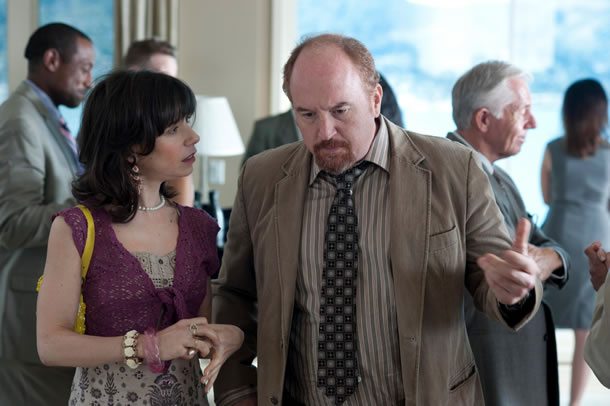
Already much press has been dedicated to Cate Blanchett’s performance. The actress really carries Jasmine with the right degree of humanity, along with aloofness that could only exist in a character of Woody Allen’s creation. The rest of the cast is excellent though as well, with many of them displaying their range in both the comedic and the dramatic. Alec Baldwin is so sinister and forward in his role that it will make you forget about all the times you laughed to him at 30 Rock, Sally Hawkins acts as the intriguing (stereotypical) class-opposite too Jasmine, and Bobby Cannavale (fresh off his scene-stealing turn on season 3 of Boardwalk Empire) shows once again that he knows how to play tough and hot-headed Italian men. One of the film’s best curios, however, is in the casting of comedian Louis C.K., as his sit-com Louie has pervasively been compared to Woody Allen’s work, and he has also worked with Susan E. Morse, a frequent editor of Allen’s films. C.K’s role in the film is limited yet fully likable, and Allen has expressed that he’d like to work with him again in the future.

It’s not a masterpiece, nor is it exactly a crowd pleaser, but it is a more than solid film from a veteran director that does a fine job of addressing most of the cues that has made his body of work such a driving factor towards suggesting that there is still much artisitic merit to be found in American cinema(similar to John Cassavetes). While certainly a relevant film for our time regarding it’s commentary on the economic recession, Blue Jasmine works best when one views it as an homage to the past, and a latter-day standout from one of the most fascinating careers since the birth of the New Hollywood era.

blue-jasmine-pictures-5-04222013-124033

Filed Under: ENTERTAINMENT, MOVIES

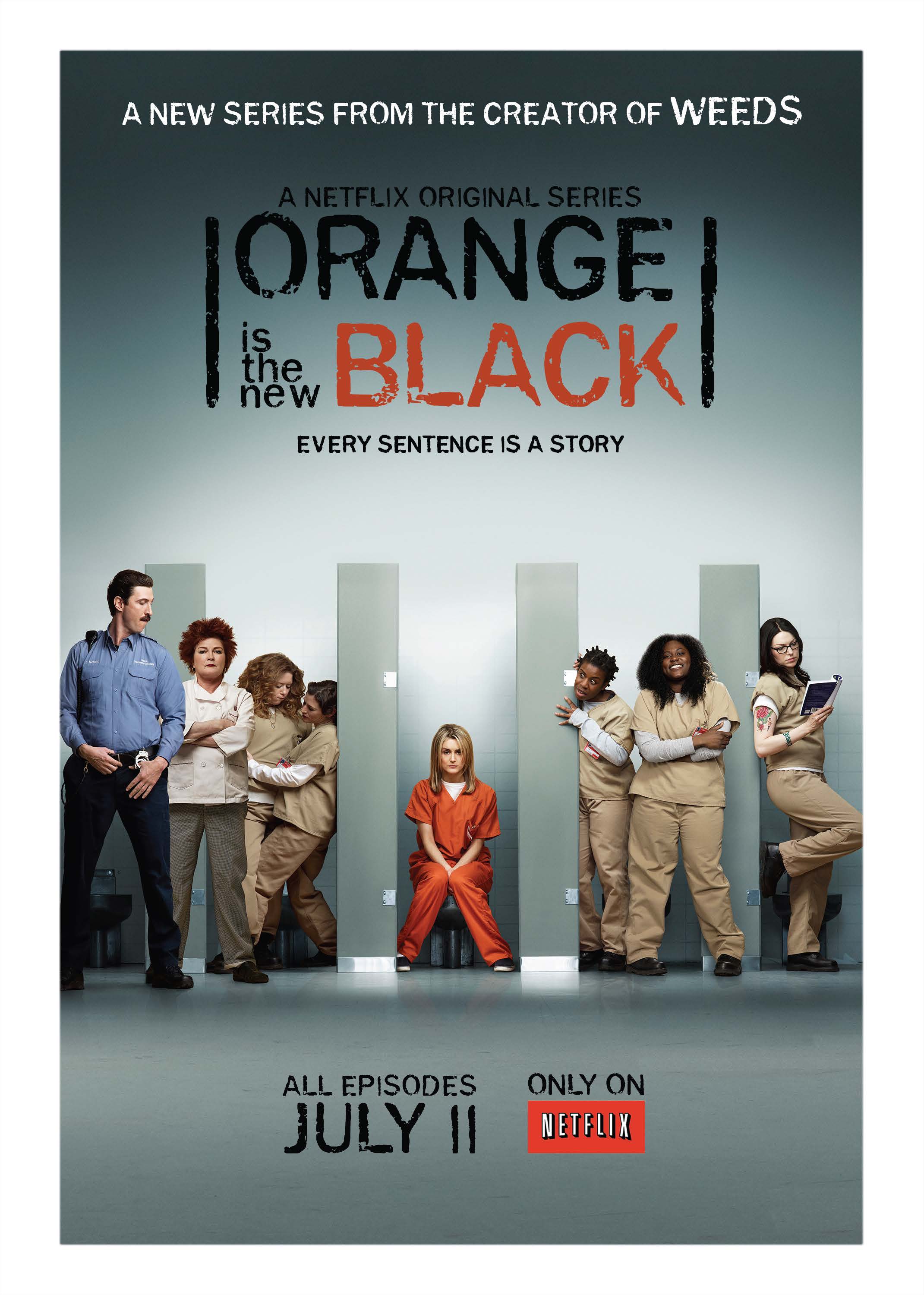
Netflix’d: Orange is the New Black | Netflix Show Episodes

by Peter Foy

Orange is the New Black | Netflix

Creator: Jenji Kohan
Format: Hour-long Drama
Episodes: 13
Genre: Prison Drama, Comedy/Drama, Semi-autobiographical
Cast: Taylor Schilling, Laura Prepon, Michael J. Harney, Michelle Hurst, Kate Mulgrew, Jason Biggs
Similar Too: Weeds, United States of Tara, The Big C
Not Similar Too: Oz, Women in Cages, soft-core porn on cine-max

There are a few sub-genres for television dramas that I feel have become played out beyond the point of redemption. Cop shows have become so regurgitated at this point it’s a wonder that audience members don’t just stick to watching (and rewatching) The Wire, and medical dramas are perhaps even more so. That said, the one television genre that I lastly expected to have a fresh take done on it anytime soon was the prison drama. While you could make a case that there haven’t been very many prison dramas on television, I felt that two good ones were enough for one tv viewing lifetime. Oz explored the problems of the American penal system while also serving up plenty of delicious brutality, while Prison Break used the setting to pull off a rather clever action/adventure serial. Still, it’s hard not to acknowledge that setting a TV show primarily in a correctional facility severely limits story potential, which is probably the reason why those two aforementioned series eventually jumped the shark. Then I found out that Netflix was premiering a series set in a female prison. It made me think this: “…by golly, that could work!?

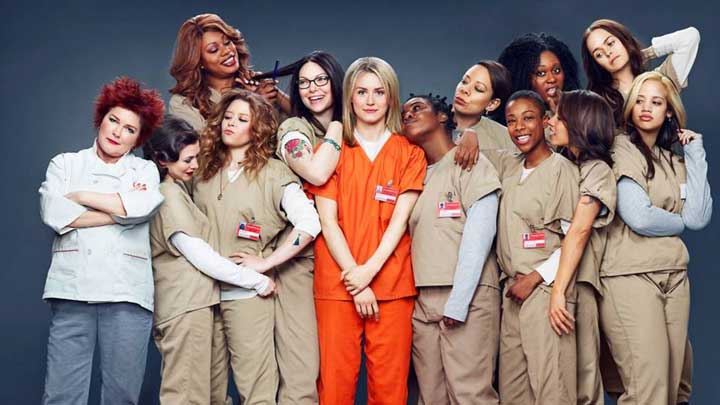
Orange is the New Black is based off the memoir of Piper Kerman, who served 13 months of a 15th-month sentence at FCI Danbury during 2004-2005. The show is a highly fictionalized interpretation of the actual events, but the base plot points have remained unaltered from reality. The show’s protagonist, Piper Chapman (Taylor Schilling), is a women in her early 30s, living in NYC with her fiance Larry (Jason Biggs), but her promising life is put on hold when her past finally catches up to her. It turns out that Piper had a romance with a female drug smuggler ten years ago, and now the authorities have finally fingered her out as an accomplice. She’s sent to a women’s prison in Litchfeld, NY, full of a whole array of colorful inmates and guards, including Alex Vause (Laura Prepon), her former girlfriend and the whole reason she’s in this mess in the first place.

You’re probably now wondering whether the show has a dark or light tone to it, but I can certainly attest that ONB is about as fun as a show about female prisoners can be, which turns out to remarkably be a lot. As the prison’s manager Sam Healey (Michael J. Harney) explains to Piper in the first episode, “this isn’t Oz.” Developed by Jenji Kohan, the creator of Weeds, ONB does indeed have a similar style and tone to that series. Like Weeds, ONB focuses on a strong female character (in this case several, actually), prides itself on using pop/retro music (compare the opening credits for both shows), and most blatantly it’s also a show that will stretch the definition of “realistic”. While certainly grounded in reality, the show often ventures into high-concept television situations, with heightened scenarios and plot developments that would only exist on American television, but this isn’t a bad thing. At a time when a show like Girls is getting major critical points for how real it seems regarding it’s female issues, it’s nice to see another show come around that focuses on women that’s just as raw, but isn’t necessarily trying to be as palpable.

Where ONB does differ from Kohan’s previous show, however, is in it’s format, and the show actually borrows a storytelling device from Lost: Heavy integration of flashbacks. As Piper gets to know her fellow inmates, we as viewers get to know them a bit more, as the show’s narrative will break from the present and look at the lives of it’s characters from before they were behind bars. The revelations we discover are often surprising, and even make us take a full 180 regarding our views on characters we previously thought we had figured out. At it’s best, the effect can be heartbreaking, as we discover that Jenji Kohan does find at least some humanity in all of her characters, no matter how terrible their acts may be. One episode that explicates on a character’s history as a child laborer comes off as particularly meaty.

It’s a fairly complex show, and right from the very first episode it’s clear that Jenji Kohan wants people to take home some social awareness from it. The show’s opening sequence placates image’s of the cast’s faces, in a not so vague attempt to address the show’s concerns about race and identity. Piper is certainly the odd woman out at this prison as she comes from an educated and well-off background. Still, her history as a homosexual gains plenty of attention from the other inmates, with the topic of lesbian sex consistantly brought up to her, and at least one of the show’s character’s refers to her as “wife”. While always provocative, the show is rarely if ever disturbing. The show isn’t afraid to deal with prison sex in a humorous regard, and yes sometimes that does mean rape jokes, but this black comedy is integral to the show’s success. It allows us to perceive the characters both as sympathetic and likable, and then when the show actually does show us onscreen violence (which is not very often at all), we get a much more lasting impact from it.

Besides social commentary, the show also functions brilliantly as a character study for Piper Chapman, who is actually much different from Weeds protagonist Nancy Botwin. While right from the start, Weeds showed that Nancy was fully integrated into her role as a drug-dealing suburbanite, Piper is ripe for growth as while she is fearful and unhappy with her incarceration, we also see her strive to make things better for herself and her inmates. Taylor Schilling does a mighty fine job of showing the character as both insecure yet optimistic, which makes us fully understand her relationship choices throughout the series. Speaking of which, I just can’t end this review without bringing up Jason Biggs performance. As most of us know, Jason Biggs was once a very recognizable leading comedy man in Hollywood due to the success of the American Pie movies, who has since had a much more quiet career in recent years. Here though, his ability for playing underachievers really takes off, and he really does seem like a perfect fit for Larry, the struggling quasi-Jewish writer. As Larry and Piper’s relationship comes more and more entangled, Biggs really shows that he can be a drama heavy weight when called for. The 11th episode features a really all-encompassing scene that involves his character speaking on NPR, and it profoundly addresses the shows themes on stereotypes and misperceived notions.

For my review of the Netflix original series House of Cards, I had said that I was really excited for the next slew of television shows that the site would premiere throughout the year. Unfortunately, I was only met with disappointment as April’s Hemlock Grove proved to be lackluster, and the much-hyped 4th season of Arrested Development was rather unfocused to say the least. ONB, however,is even better than House of Cards, and it’s perhaps the first show to premiere on Netflix that really makes the most of the site’s advantages. With all the episodes lasting between 50-60 minutes, the show really gives the necessary character development needed for its large ensemble cast. Also, besides being super addictive, I feel the fact that the whole season was released at once really works for it’s benefit. Viewers can return to episodes through a simple mouse click, and refresh themselves on certain moments that have a huge impact on the show in latter episodes. It’s a tactic Mitchell Hurwitz said he wanted to incorporate into the fourth season of Arrested Development, but it works far better for the page-turning nature of ONB. A very likely contender for best new show of 2013.

Filed Under: ENTERTAINMENT, MOVIES Tagged With: Comedy/Drama, netflix, New Episodes, Prison Drama

Only God Forgives: Unforgivable?

by Peter Foy

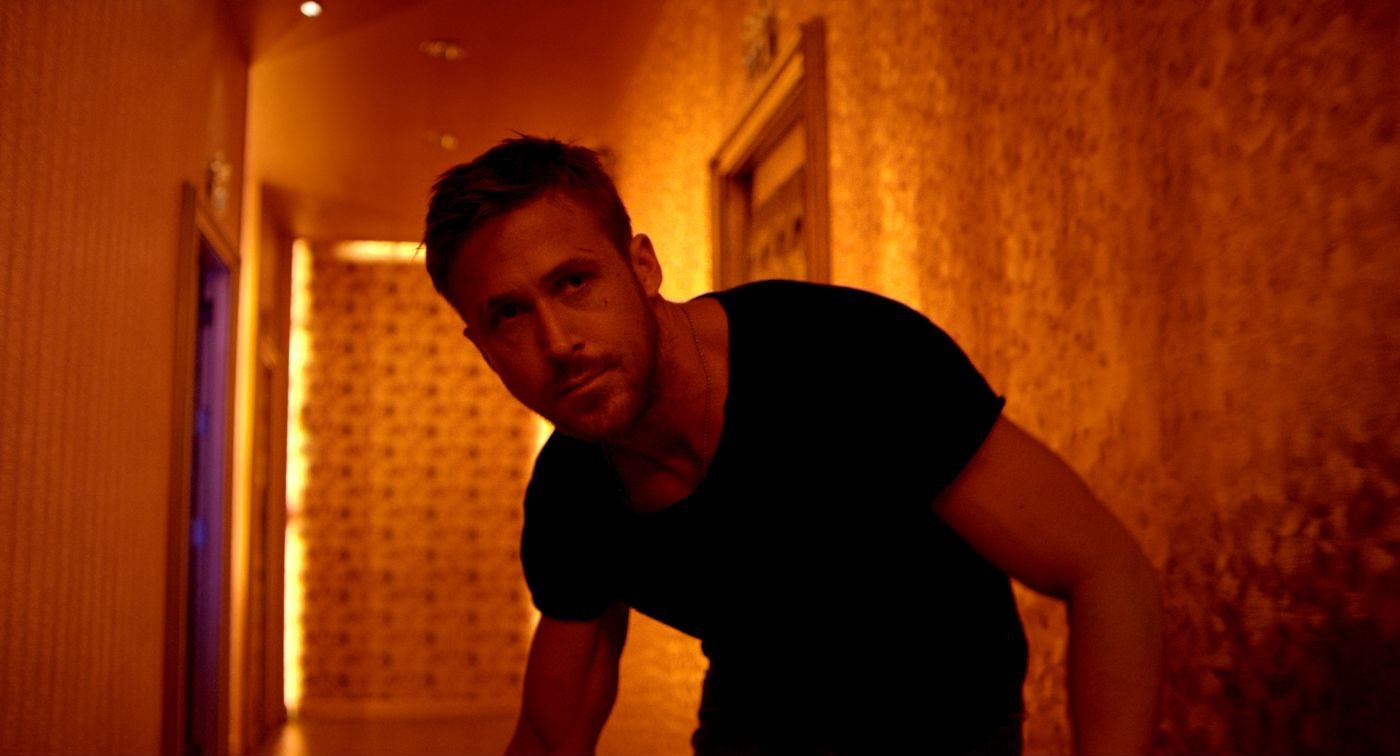
Ryan Gosling & Nicolas Winding

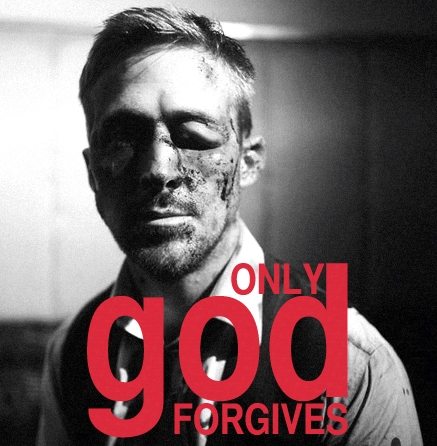
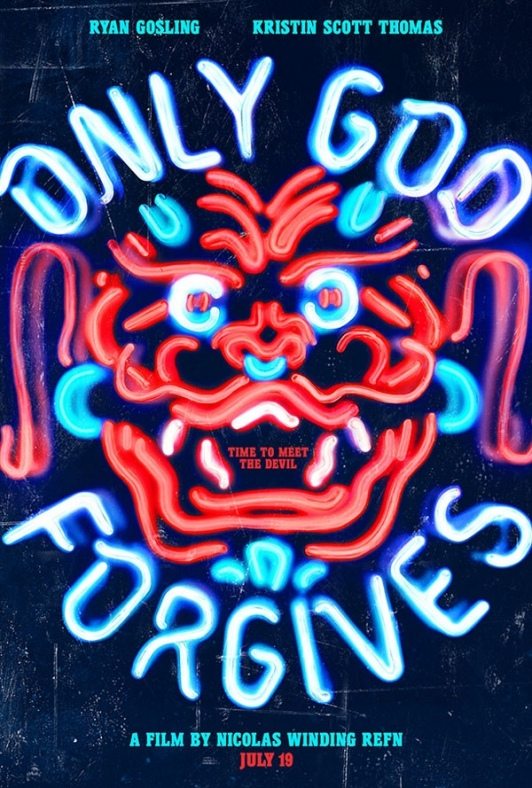
Drive was a great film, but why exactly was that the case? The 2011 crime movie (intrinsically directed by Nicholas Winding Refn and starring Ryan Gosling), was a loose adaptation of a recent crime novel, with a script that was often conventional and predictable, and included plenty of showy violent scenes that could be considered pretentious and/or shlocky, yet the movie went on to be a critical favorite and gather an instant cult follow. The key to the film’s artistic success was that it realized it was pulp fiction, but Refn injected more European arthouse sensibilities to it that actually did accentuate the film’s language. Also, he happened to pull together a dream team of actors for the film, as well as received a soundtrack to the film that was both modern and subversively retro, and what’s more, beneath all it’s violence and viscera, Drive was a thinking man’s love story. All these elements pulled together to make the film a brilliant piece of pop-art, and fans certainly became intrigued when Gosling and Refn announced that they would be re-teaming on another project: Only God Forgives. Two years later, that very film premiered at Cannes Film Festival, the same festival that had awarded Refn the best director accolade for Drive…and it was booed and met with harsh reviews. It’s easy to see why, as Only God Forgives is not to the same level of Drive, nor is it really a good movie for that matter. Still, the most maddening aspect about the film is that  it had all the elements present for it to truly have been something special: the best film that Refn or Gosling have done to date.

Set and filmed in Bangkok, the movie centers around Julian (Ryan Gosling), an American gangster who runs a boxing club/drug operation in the city’s underbelly. Despite his role as the protagonist, however, very little of the movie’s story is driven by Julian’s actions. The movie’s conflict is actually sparked by Julian’s brother Billy (Tom Burke), who rapes and kills a young teenage girl for unknown reasons, who is in turn executed by  Lt. Chang (Vithaya Pansringarm), a police officer with a particularly strange code of justice, and appears to run a sect of the city’s police force that is outside of lawful jurisdiction. The death of Billy brings Julian’s mother (Kristen Scott Thomas) to Thailand. who hopes to invoke revenge on her favorite son…which of course leads to more violence, torture and what have you.

Only God Forgives is unmistakeably the product of a cine-phile, as it has numerous allusions to films from varying genres within it. Many critics have likened the film to the work of David Lynch, due to it’s heavy surrealism, haunting use of lighting, stilted acting and bizarre visual cues (there’s a reoccurring karaoke motif in the film that seems like a nod to Blue Velvet). The film also bears a strong surface resemblance to Asian films such as Audition and Oldboy, due to it’s setting, fight choreography, and grisly scenes of violence. Most ostensibly though, Only God Forgives  appears to be Refn’s attempt at channeling films that really seek to shatter the boundaries of genre and mood. During the credits it’s said that the film is dedicated to film makers Gaspar Noe, and Alejandro Jodorowsky, which definitely makes sense, especially in regards to the former. Like the work of that controversial French director (Irreversible, Enter the Void), the film is an artfully rendered spectacle of decadence, with little interest in making clear-cut themes or telling a conventional storyline. Also, like a Gaspar Noe film, the film is inherently flawed and unappealing, despite the hard work that went into the voluptuous craft.

First the good though. It’s a brilliantly shot film with an engaging soundtrack and visual scape, but the most remarkable (or damning?) thing about Only God Forgives is it’s tone. The film has a really other-worldly feel to it that is best described as hellish, and it works best within the film’s first 20 minutes. The film opens up to Julian walking out of a shadowed hallway and into a bright red gymnasium that’s holding a Thai boxing match. The scene has some rather beautiful camera work from cinematographer Larry Smith, who helped shoot Stanley Kubrick’s Eyes Wide Shut as well, including an overhead shot of the match that seems to suggest that we’re about to witness some really brutal shit. That we certainly do, but the film actually works best as a mood piece as opposed to the film’s more violent sequences. Perhaps the most focused scene in the whole movie comes in an early scene where Julian watches a prostitute masturbate, and it’s about as ethereal as a scene like that could possibly be. Refn had stated that this movie was envisioned as a “nightmare” version of Drive, which is absolutely commendable, but the movie is trying to do more than just be a mood piece and there-in lies the Achilles heel.

only-god-forgives13-2

Only God Forgives has some of the most experimental use of storytelling and subtext that I’ve seen in a recent film, and it doesn’t pay-off. Scenes will often go on for a very long time with very little happening, and the actions his characters take are often inexplicable. I’m sure many people were wondering where Refn would go in terms of violence for this film, but while viscerally the film is bloody, viewers may feel that they’re watching something painless overall. The characters are all rendered as being stoic or even soulless, and there are numerous scenes where the victims will accept their fates almost willingly. With so little substantial characterization in the film, Only God Forgives leaves us scratching our heads in determining why these characters are motivated as such, or why we should care about their gruesome deaths. Why would you call such a movie Only God Forgives, then? Drive was a film that mystified us with complex character relations through it’s familiar yet dream-like neo-noir aesthetic, and then made us gasp at it’s graphic scenes of violence. Only God Forgives is a film that can only really elicit us to say, “huh?”

Also, one has to ask why Refn hired a cast of such talented actors to star in a film where the characters are little more than inhuman tools. Ryan Gosling shows virtually no emotion throughout the film, speaks less than a dozen sentences, and doesn’t do a whole lot besides get the shit kicked out of him. You can pretty much blame Drive for transforming Ryan Gosling from the guy from The Notebook into a heralded leading-man actor (and an internet meme obsession), but he feels miscast in this movie as he’s playing a character who is essentially a weakling. Vithaya Pansringarm is more well suited for his role, as he performs his own fighting and singing in the movie, but when it comes to acting he also is mostly a blank. Kristen Scott Thomas gives the most memorable performance, but mainly as her character is so trashy. It appears like Only God Forgives is trying to say something about bad parenting, with Julian’s mother being portrayed as a foul-mouthed bitch, who domineers her son as much as she mercilessly ridicules him (I’m talking dick jabs, here), but this idea is not developed upon nearly as much as it should. The film’s end contains a scene that seems to symbolize Julian’s violence is connected to his birthright, but it comes off more as a cool image that was unearned.

One positive thing that can be said about Only God Forgives is that it’s not a film experience you will forget anytime soon. Days after I’ve seen it, I still have been returning my thoughts to it, and have been trying to assess what Refn could have been aiming for it. Alas, more often than not I find myself grasping on air, but it speaks to what a unique viewing experience Only God Forgives is: It’s a weak film that is both fascinating and fully memorable. I for one would love to see a film that uses a similar tone as this one, but doesn’t forsake it for characters, plot or meaning. With Nicholas Winding Refn expressing that he has interest in doing a horror film (with an all female cast no less), I’m hoping that next time he’ll craft us a more perfect nightmare.

OGF_poster

Filed Under: ENTERTAINMENT, MOVIES

  • « Go to Previous Page
  • Page 1
  • Interim pages omitted …
  • Page 7
  • Page 8
  • Page 9
  • Page 10
  • Page 11
  • Interim pages omitted …
  • Page 13
  • Go to Next Page »

Primary Sidebar

Navigation

  • HOME
  • OPINION
    • REVIEWS
  • BUSINESS
  • LGBT
  • ENTERTAINMENT
    • ARTS
    • MOVIES
    • MUSIC
    • TELEVISION
    • THEATRE
  • LIFESTYLE
    • TRAVEL
    • FASHION
    • HEALTH
    • FOODIE
    • STYLE
  • POLITICS
  • SCIENCE
  • SPORTS
  • TECHNOLOGY
  • U.S.
    • NEW YORK

Footer

  • ADVERTISE
  • TERMS OF SERVICE
  • CAREERS
  • ENTERTAINMENT
  • Home
  • Contact
  • Legal

Copyright © 2026 · ManhattanDigest.com is run by Fun & Joy, LLC an Ohio company · Log in

Loading Comments...