• Skip to primary navigation
  • Skip to main content
  • Skip to primary sidebar
  • Skip to footer

Manhattan Digest

All you need to know about Manhattan culture and so much more...

  • LIFESTYLE
  • ENTERTAINMENT
  • LGBT
  • OPINION
  • TECHNOLOGY

MUSIC

Album Review: These New Puritans – Field of Reeds

by Rio Toro

these-new-puritans-field-of-reeds1-608x539

These New Puritans: Field of Reeds

Similar Artists: Talk Talk, Mark Hollis, Julia Holter

Genre: Art Rock

Label: Infectious


Summer is now upon us, and once again, the last few weeks have seen the term “summer album” being thrown left and right at LP’s which contain music of a more playful and sunny variety. While Field of Reeds, the third album by Southend four piece These New Puritans, is by no means a “summer album”, it is certainly a brighter reinvention of the stark post punk inspired sound of the group’s first two LP’s. Because of this, Field of Reeds is in the perfect position to become the summer album for people who don’t like summer albums — or if you will, the year’s anti-summer album.

The closest genre that TNP’s new sound comes in contact with is art rock, but seeing how most of these tracks are made up of series of orchestral vignettes, using the term “rock” even in it’s loosest context doesn’t seem to fit. “Roxy Music” are clearly not an influence here, and neither are the group’s previous influences, “The Fall” and “Public Image Ltd”. Trying to figure out exactly how TNP arrived at this destination is surely a head scratcher, as this is certainly not a traditional progression. Unlike the heavy beats heard in their previous work, there is rarely any sort of streamlined pulse to keep us in a steady groove for more than a few measures. Even drum lines and vocals are noticeably absent for minutes at a time. At first, the album can even seem a bit fragmented, because often as soon as we grab hold of an identifiable rhythm, it fades out in favor for something completely different.

If you can tell by how I’m describing it, Field of Reeds is a difficult record — even compared to the group’s viscerally arresting last opus, Hidden. This is a much slower paced record (at least at first), but the tracks prove to creep up on your senses in highly unusual ways. Much of this can be contributed to the sonically intriguing production, which incorporates field recordings, deadly drones, noir-esque horns, children’s choirs, and a guy who apparently has the deepest voice in all of Britain. It’s a perfectionist’s record for sure, but there is also a very natural component to the music that is occasionally hair raising. One such instance, which happens during the tail end of the title track, there is a bell sound that repeatedly fools me into thinking the door to the subway train is about to close. Moments such as these make the music jump out into the real world, and It’s incomparable to much else.

Even “Fragment Two”, easily the most accessible song of the bunch, has an incredible array of instruments present throughout its four and a half minutes. However, most tracks run much longer, and prove to be more groundbreaking as well — “V (Island Song)” being the longest (and quite possibly strongest) at 9:16. The longer tracks contain their own interludes and are held together only by loose threads, such as distant piano or violins. Of course, this isn’t all quiet new age music; the band does break into the rock threshold occasionally, and when they do, the result is nothing less than extraordinary. All the musicians put in painstakingly  detailed efforts — the orchestration is tremendously varied, baselines are all perfectly placed, and the drums (when they are present) penetrate on a near tribal level.

Many people are going to refer to this band as pretentious, but to me that is a term as overused and contrived as the world’s current favorite word: “hipster”. Neither of those terms do anything to commemorate talent, and they both talk about something that isn’t even really related to music. Sure, these musicians are not particularly modest; as it happens, they want to do something profound, they want to create a masterpiece — I am glad to say that with Field of Reeds they have done just that.


Track Listing:

1.) This Guy’s in Love With You

2.) Fragment Two*

3.) The Light in Your Name*

4.) V (Island Song)*

5.) Spiral*

6.) Organ Internal

7.) Nothing Else

8.) Dreams

9.) Field of Reeds*


Album Highlight – *
Filed Under: ENTERTAINMENT, MUSIC, OPINION, REVIEWS Tagged With: album, field of reeds, music, review, these new puritans

Album Review: Thundercat – Apocalypse

by Rio Toro

Thundercat__Apocalypse

Thundercat: Apocalypse

Similar Artists: Flying Lotus, Jaga Jazzist, Herbie Hancock

Genre: Nu-Jazz, R&B, Funk

Label: Brainfeeder


It’s no secret that Stephen “Flying Lotus” Ellison has been obsessive about all things jazz through his last few releases, so it is no wonder that he has chosen to work so closely with stylized bassist Stephen “Thundercat” Bruner to achieve his painstaking vision. Thundercat is an undeniable virtuoso with his instrument, and he is able to warp standard bass into unbelievable shapes and time signatures. At his best, it’s even tempting to relate his mastery of bass to Colin Stetson’s mastery of the saxophone.

FlyLo and Thundercat first collaborated together on Cosmogramma standout “MmmHmm”, (a track that was worthy enough to be covered by the Vijay Iyer Trio) and in 2011 Thundercat’s debut album was released on Flying Lotus’ own record label, the always dependable Brainfeeder. Thundercat later appeared on Flylo’s 2012 record “Until the Quiet Comes”, so their frequent collaborative history should tell you that these artists work well together — within the LA beat making scene they are even seen as somewhat of a duo.

As on “The Golden Age of Apocalypse”, this similarly titled follow up lists FlyLo as the executive producer, and as it incorporates elements of jazz-fusion, nu-jazz, R&B, and funk, the two albums certainly cover similar ground stylistically. However, these songs more adequately show Thundercat’s talent as a vocalist — and despite his moderate range, it is a talent that should not be ignored — even if his bass truly is the defining aspect of his releases. Songs such as “Special Stage” put his multi-part vocal harmonies in front and center stage while his bass provides backup support. While the bass is always a present and commanding factor in all 12 of these songs, there are only  two real improvisational freakout sessions (the end of “Lotus and the Jondy” for one). The rest of the time, Thundercat proves he has learned how to emit a more emotional response from the listener with full bodied songs that each contain dozens of elements. While most of the tracks are short, the six minute finale, “A Message for Austin/Praise the Lord/Enter the Void” is a three part suite that blends disparate elements together in a beautiful and unpredictable way. While some people won’t like the gloomier, more sedated tracks on the album (“Evangelion”), in the incredibly brief running time we are offered a gratifying amount of musical styles, and it should be seen as a positive part of the album.

Lyrically, this album is largely based off of the death of good friend and frequent collaborator Austin Peralta, who overdosed last year. Thundercat incorporates his grief and coping in standard but appropriate ways through the album, such as on “The Life Aquatic”. Even on the boogie down ferocity of “Oh Sheit it’s X”, lyrics like /I just wanna party, you should be here with me/ can be related towards losing a loved one.

There’s so much in today’s music that seems to be brought upon by accidental discovery and endless knob twiddling. Artist’s who are coming out with seemingly distinct records when in actuality they just don’t know how to play their instrument. While I am usually all for these (often interesting and surprising) “accidents” in music, it is very refreshing to hear someone who has absolute control over his instrument. Apocalypse plays as a homage to Stephen Bruner’s endless talents as a bassist as well as introducing him as a soulful vocalist and a credible pop songwriter. If you’re looking for something a little different from the common strains of indie electronic music and UK house, this one comes highly recommended.


Track Listing:

1.) Tenfold*

2.) Heartbreaks + Setbacks*

3.) The Life Aquatic

4.) Special Stage

5.) Tron Song

6.) Seven

7.) Oh Sheit it’s X*

8.) Without You

9.) Lotus and the Jongy*

10.) Evangelion*

11.) We’ll Die

12.) A Message for Austin/Praise the Lord/Enter the Void


Album Highlight – *

Filed Under: ENTERTAINMENT, MUSIC, OPINION, REVIEWS Tagged With: Album Review, apocalypse, flying lotus, jazz, music, thundercat

Album Review: Boards of Canada – Tomorrow’s Harvest

by Rio Toro

boards-of-canada_tomorrows-harvest-608x608

Boards of Canada: Tomorrow’s Harvest

Similar Artists: Future Sound of London, Ulrich Schnauss, Global Communication

Genre: Downtempo Electronica

Label: Warp Records


Technically, 2013 isn’t even half over yet, but regardless of what happens in the next six months, this is quite unmistakably the year of the comeback album. The bulk of this year’s “comeback albums” — which have ranged from being mediocre (Iggy and The Stooges’ Ready To Die), good (David Bowie’s The Next Day) great (Nick Cave’s Push the Sky Away and Daft Punk’s Random Access Memories), to superb (My Bloody Valentine’s M B V and arguably The Knife’s Shaking the Habitual) have all been easy to overrate simply because they are clearly not bad. Also, it has been surprising to find out that after so many years of absence, these artists still have the creative juices flowing through their worn veins. Many fans have even gone to the lengths of saying that these “comeback albums” represent some the best music of the artists’ careers. While you shouldn’t mistake me for saying the contrary, I think we should all give these albums some time to settle before declaring them masterpieces equal to their predecessors.

———————————————————————————————–

The seven years since Boards of Canada’s last EP have been achingly quiet ones for the Scottish pioneers. When news began surfacing that the group was releasing their fourth album, fans were ecstatic, as the duo’s hiatus had left an irreplaceable gap in the world of electronica. After a mysterious coded message marketing campaign that gave Daft Punk a run for their money (kind of), we finally have the new Boards of Canada album. As expected, this is an album that is destined to be everything we want, yet not enough of it.

Tomorrow’s Harvest is a double album, but it’s considerably shorter than both Music Has the Right to Children and Geogaddi. Compared to BoC’s last full lengthThe Campfire Headphase, TH is more cinematic, more apocalyptic, and much darker overall. Although nothing here is as creepy as “Beware the Friendly Stranger”, here BoC have regressed inward and made an album that oozes woe. If anything, the duo’s thematic traits have become clearer and more pronounced since their time off — which makes this the most BoC sounding BoC album yet!

Michael Sandison and Marcus Eoin have stated this album was inspired by 70’s and 80’s film scores of the John Carpenter variety, and on dark ambient tracks like “Uritual” and “Sundown”, the album truly plays like a soundtrack to a moody sci-fi movie. However, TH is also more engaging that your average film score, and it succeeds as a full listening experience unlike Broadcast’s Berberian Sound Studio (which to be fair, was the score to an actual film). Also, the tracks that are solely ambient are few and far between, which prevents this from being something like Brian Eno’s underwhelming Music For Films. Instead, BoD have created an album full of tracks that are intricately layered and often downright busy — even when a 4-5 minute track is based off of a single repeating motif, it never feels repetitive.

Pretty much, this album is showing BoC do what they do best. Although BoC have changed in slight ways, part of what makes this album so appealing is that they haven’t changed much at all. If you are one of the few people who never liked BoC in the past, then there is no reason for you to try listening to them now; for everyone else, this is a reminder that Boards are king of downtempo electronica.

Like their previous successes, many of the standout moments here are the tracks where we see the duo working within genres. “Split Your Infinitives” and “Come to Dust” both carry strains of techno beneath the group’s ominous keyboard fragments, and “Transmissiones Ferox” is even close to being dub. The few cases where vocal samples come into play, the voice sounds gnarled and ancient — completely unrecognizable as human. Not all of TH is dark though, “Nothing is Real” stands out as having one of the brighter, more optimistic melodies on the album. It also helps that the lengthier tracks, such as the pivotal “Jacquard Causeway” and “New Seeds”, carry a relieved sense of levity with them.

They played it safe here, there’s no real denying that — even the tricky humor found on the group’s early releases is traceless here. Still, TH isn’t a late in career money making scheme from two unimaginative blokes. Like I said, you’re not likely to be disappointed by this music, even if it doesn’t reach the heights of the group’s first two masterpieces, BoC are working at a much higher degree than most electronic acts that peaked in the 90’s. In a way, this shouldn’t be compared to Music has the Right to Children and Geogaddi, because those were albums that really changed the game in electronic music. On TH, BoC prove they are still way better at the game than most, and that’s certainly enough for me.


Track Listing:

1.) Gemini

2.) Reach
For the Dead*

3.) White Cyclosa

4.) Jacquard Causeway*

5.) Telepath

6.) Cold Earth

7.) Transmissiones Ferox

8.) Sick Times

9.) Collapse

10.) Palace Posy*

11.) Split Your Infinitives*

12.) Uritual

13.) Nothing is Real*

14.) Sundown

15.) New Seeds*

16.) Come to Dust*

17.) Semena Mertvykh


Album Highlight – *

Filed Under: BREAKING NEWS, ENTERTAINMENT, MUSIC, OPINION, REVIEWS Tagged With: Album Review, boards of canada, downtempo electronic, music, tomorrow's harvest

Album Review: Disclosure – Settle

by Rio Toro


disclosure-settle-1500x1500-1370291426


Disclosure: Settle

Similar Artists: Lone, Basement Jaxx, Sepalcure

Genre: House, House, and more House

Label: Interscope


I’ve never been one who enjoys listening to music in social settings. Most of this has to do with wanting to keep the music personal to me — almost like witnessing someone else’s reaction will inevitably tarnish the part of the music that I find to be special. It might sound like a phobia, but it’s more about me wanting to concentrate on the music and nothing else. Because of this predicament, headphones have always been my way of life, and i’m not entirely sure if I would listen to music if they didn’t exist. With them, I am in my own world, and my judgement is all internally based.

You could guess that I don’t particularly like clubs, and it is even rare that I will attend a concert and walk out with any kind of higher appreciation for the music. However, every once in a while an album arrives that simply must be listened to in large, club oriented settings to really hear it. An album that contains such a crazed amount of dance floor energy that it is unable to be contained between a pair of earbuds. Disclosure have made that album.

England house duo Disclosure, made up of siblings Guy and Howard Lawrence, are currently riding a wave of hype (and a few top charting singles to boot) resulting from the fiery, dance floor intensity of their debut album Settle. I’ll say it again, this is a really shitty headphones record; it’s not particularly subtle, and listening to it on repeat will do little to change your initial reaction (whatever that may be). It’s rooted in standard vocal house for sure, and there is nothing out of the ordinary in terms of sounds — but in terms of accessibility and overall quality, this stands out from much of the house music being produced in the 00’s – 10’s (maybe even since the fall of Basement Jaxx). To put it simply, Settle is not only commercial, it’s some of the most pop oriented house music I’ve ever heard. Depending on your relationship with pop music, this is either good, or bad news, and it will dictate the amount of enjoyment you get out of Settle.

This can largely be contributed to the representation of some of Britain’s hottest vocal talents (AlunaGeorge and Jessie Ware for starters) throughout the 14 tracks. While “White Noise” was the first track to be released off this album, probably any of the other (female led) ones could have been released instead, resulting in an equal effect. It’s not that the tracks sound all that similar — although some of them certainly do — but the whole album carries a sense of bravado that, like the acclaimed first single, has an appeal that is hard to deny.

Arguably the most notable aspect of the record is it’s perfect flow, which offers near constant gratification. While there isn’t a whole lot here that truly stands out, each track has its own pleasures, and the perfect sequencing means you will never have to hit the next button. The album starts off with “When a Fire Starts To Burn”, which is a true stroke of sampling genius, and the best possible starting off point. From there we hear a slew of other vocalist heavy tracks that take influence from Garage, 2 Step and even Dubstep. These guys are first and foremost bass producers, and they do a good job of resurfacing bass sounds in interesting ways throughout the album.

Like most pop music, there is a formula that carries Settle, but the performances are so exquisite that the experience feels imaginative despite it’s common tendencies. If it’s played in the right setting, it is a record that can even transcend its obvious shortcomings. Keep in mind, this isn’t anything people will be talking about years down the line — at times I wonder why people are even making such a big deal of it now — but if nothing else, Settle is a reaffirmation of the powers of dance music.


Track Listing:

1.) Intro

2.) When A Fire Starts To Burn*

3.) Latch (Feat. Sam Smith)

4.) F For You

5.) White Noise (Feat. AlunaGeorge)*

6.) Defeated No More (Feat. Ed Macfarlane)

7.) Stimulation

8.) Voices (Feat. Sasha Keable)

9.) Second Chance

10.) Grab Her!

11.) You & Me (Feat. Eliza Doolittle)*

12.) January (Feat. Jamie Woon)*

13.) Confess To Me (Feat. Jessie Ware)

14.) Help Me Lose My Mind (Feat. London Grammar)*


Album Highlight – *

Filed Under: BREAKING NEWS, ENTERTAINMENT, MUSIC, OPINION, REVIEWS Tagged With: Album Review, disclosure, house music, music, settle

Album Review: Baths – Obsidian

by Rio Toro

images

Baths: Obsidian

Similar Artists: Toro y Moi, Bibio, James Blake

Genre: Synth Pop, Electronica

Label: Anticon


Despite being a small album on a small label, Cerulean, the debut album by Los Angeles native Will Wiesenfeld as Baths, contained some of the catchiest and most distinctive electronic pop music of 2010. Although his style incorporates elements from left field electronic genres and indie rock, at it’s core, this is essentially modern pop music — albeit a stranger, queerer version than most are used to. In fact, many of Wiesenfeld’s lyrics speak about his homosexuality and sexual turmoils, so it is tempting to lump this music in with Antony & the Johnson’s or Xiu Xiu — especially since Weisenfeld employs a vocal prowess similar to the former and embraces synth pop similarly to the latter. Still, something about this music (perhaps the vibrant ornamentation or childlike approach) seems ultimately more accessible than either of those artists’ work; thus pertaining to a world view larger than even Wiesenfeld probably imagined.

His second album for Anticon, titled Obsidian, is a much darker record than his first, both in lyrical content and production. More than half of the tracks contain a lyric (or two) about the speaker wanting to either kill himself or be killed. From the first 40 seconds of opener “Worsening”, it sounds like Wiesenfeld ditched his appealing childlike nature for gloomy goth; but soon enough, a glitchy LA beat comes in that brings us into a world that is (despite the subject matter) warm and inviting. Occasionally, on “Miasma Sky” or “No Eyes”, we even get something close to dance floor synth pop. Don’t get me wrong though, Obsidian is a more mature album than his first, but it is also a more daring one both instrumentally and vocally, and it acts as a continuation of his style rather than a reinvention.

Similar to James Blake’s amazing vocal turn on Overgrown, Wiesenfeld has gotten tremendously better as a vocalist for this release. His voice is often quivering with emotion at incredibly high octaves, and he pulls off the album’s central theme of agony while still sounding lovely and accessible. He is taking bold risks here — on tracks such as “Ironworks” and “Incompatible” he scales back the keyboards to engage us with more personal heartfelt matters that focus on his solo voice and piano. Even when he is merely humming or moaning, his voice carries these songs in a unique and beautiful way that keeps the listener on edge.

His singing and lyrics often lack an awareness and are direct to the point that you at first won’t know what to think of them — one such instance being the opening lyric to “Incompatible” /First boyfriend,You live in my house and we share a toilet seat/, or later in that song /Nurse this erection back to full health/. He has been receiving some mixed critical reception due to questionable lyrics such as these, but in the larger picture of the song, which chronicles a relationship devoid of emotion, they are revelatory and even quite poetic.

Musically, these songs are more complex than the ones on Cerulean, but they end up being just as catchy if not more so. Only occasionally do we come across a slight misstep, such as the not quite fitting piano snippets that break up the otherwise great “No Past Lives”. While there are a few other tracks that fail to stand out, Wiesenfeld is making leaps of faith here, and he hits the ground running more often than not. The excitement this album contains can largely be contributed to Wiesenfeld’s exquisite ear for melody and sound design — in the end, it’s what makes tracks like “No Eyes” stand apart from its comparisons to Nine Inch Nail’s “Closer”. When Obsidian is at it’s best, it’s an album that is as equally appropriate for getting pumped up before a party as it is for a quiet morning train ride.


Track Listing:

1.) Worsening*

2.) Miasma Sky*

3.) Ironworks

4.) Ossuary

5.) Incompatible*

6.) No Eyes*

7.) Phaedra*

8.) No Past Lives

9.) Earth Death

10.) Inter


Album Highlight – *

Filed Under: ENTERTAINMENT, MUSIC, OPINION, REVIEWS Tagged With: Album Review, baths, obsidian, Will wiesenfeld

Album Review: Eluvium – Nightmare Ending

by Rio Toro

Eluvium-Nightmare-Ending

Eluvium: Nightmare Ending

Similar Artists: Tim Hecker, Max Richter, Brian Eno

Genre: Ambient, Experimental, Modern-Classical

Label: Temporary Residence


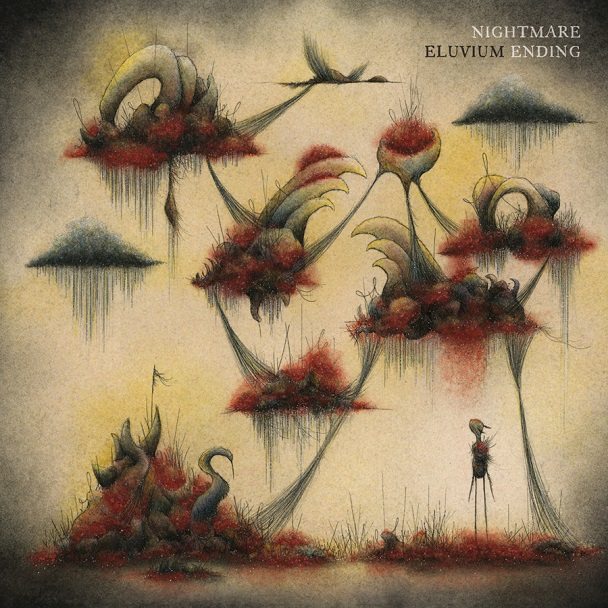
For me, ambient music goes along with food and shelter as one of the true necessities of life. It’s the way I fall asleep at night, it’s how I dream, and it has also taught me how to focus on life’s subtleties. While it is a genre that will possibly always be mocked (wrongly I might add) for being unobtrusive, or worse, easy to make, it is also a genre that has its horde of devoted followers, and because of that it will likely never die. The way I see it, ambient music is the music that most closely resembles life — you must know where to look in order to find it interesting and surprising, yet you must also let it sweep you off your feet until you are immersed in its beauty.

Portland’s Matthew Cooper, who has recorded as Eluvium for a decade now, might be the closest thing our generation has to a Brian Eno. I say that with the most positive of connotations, as his six previous full lengths under the moniker have seen him jumping from shoegaze atmospherics (Lambent Material), impressionistic piano (An Accidental Memory In The Case Of Death), emotionally charged post rock (Talk Amongst The Trees), to grand orchestral arrangements (Copia). Nightmare Ending, the artist’s seventh full length, is a double album that acts as a summing up of all the ground he has previously covered — while still throwing in a few necessary surprises as well.

The album starts off with “Don’t Get Any Closer” and “Warm”, which are the only two gapless tracks on the album. Together they form a 15 minute spectacle of harpsichord, dense piano chords and keyboards that are both majestic and airy. Seven minutes in, right when we begin to feel we’ve gotten the gist of where the song is going, an ethereal Himalayan vocal comes into play, shaking our expectations. It’s something you’d be more likely to hear on a dub techno track along the lines of BvDub, and it casts away any fears of this artist having run out of ideas.

The tracks all evolve in interesting and appropriate ways such as the first. While there are certainly moments of traditional ambient fare — where we feel as though we are floating through the clouds (“Covered in Writing”), the album covers a broad emotional arc throughout its 14 tracks. Tracks range from being unsettlingly dark to being as uplifting as an “Explosions In The Sky” anthem (EITS guitarist Mark T. smith is in fact featured here). It’s music that can work as well in murky, cloud covered days as bright, sun drenched ones.

Some of the most surprising moments come with the tracks that flirt with the idea of noise. While there is nothing too ear shattering here, “By The Rails” and “Envenom Mettle” are two of the rare percussion minded tracks in Eluvium’s discography, and they stand out as angrier and more raw representations of his style. ‘Envenom Mettle’ is one of the most epic tracks he’s ever put out (rivaling Lambent Material’s “Zerthis Was A Shivering Human Image” on Lambent Material), and it’s the album’s moment of full release. Meanwhile, solo piano tracks such as “Caroling”, and “Impromptu” recall Erik Satie, and act as interludes for the lengthier tracks. He also proves himself to be a class ‘A’ sound designer among the likes of Tim Hecker, with the fractured piano soundscapes of “Strange Arrivals”, and the radiant guitar plucking on “Chime”.

It can be tempting to loop this music on your stereo and let it play out while you go about your daily activities — and while that can be an enjoyable experience in its own right, this music is best appreciated on headphones. Calling this music “Loop-Based”, along the likes of William Basinski or GAS would be wrong, as this music has a very natural and human aspect to it. Everything here is in a constant state of motion, whether you notice it or not. Although this project was originally supposed to be released soon after 2007’s Copia, only to be put aside for a few years, B-sides these are not — and it certainly holds up to today’s standards. In fact, with Nightmare Ending, Matthew Cooper has made his most grandiose statement yet.


Track Listing:

1.) Don’t Get Any Closer*

2.) Warm

3.) By The Rails

4.) Unknown Variation*

5.) Caroling

6.) Sleeper

7.) Envenom Mettle*

8.) Chime

9.) Rain Gently*

10.) Impromptu (For the Procession)

11.) Covered in Writing*

12.) Entendre

13.) Strange Arrivals

14.) Happiness*


Album Highlight – *

Filed Under: ENTERTAINMENT, MUSIC, OPINION, REVIEWS Tagged With: Album Review, eluvium, matthew cooper, Nightmare ending, temporary residence

Colton Ford- His Past, Present and Hopeful Future

by Ryan Shea

The name Colton Ford can be synonymous with many different things.  People who know him or know of him can say he is a handsome and stunning man who took the gay porn world by storm in the early 2000’s.  Others who are more in the know like myself can say that he has done a phenomenal job at transitioning from that arena to a full fledged recording artist who has released several great original and cover records not only in the past couple of years but has been since the 90’s. [Read more…] about Colton Ford- His Past, Present and Hopeful Future

Filed Under: ENTERTAINMENT, MUSIC Tagged With: brandy, chaka khan, Colton Ford, luther vandross

Album Review: Mount Kimbie – Cold Spring Fault Less Youth

by Rio Toro

mount-kimbie-cold-spring-fault-less-youth

Mount Kimbie: Cold Sprint Fault Less Youth

Similar Artists: Darkstar, James Blake, Caribou

Genre: 2-Step, Garage, Dubstep

Label: Warp


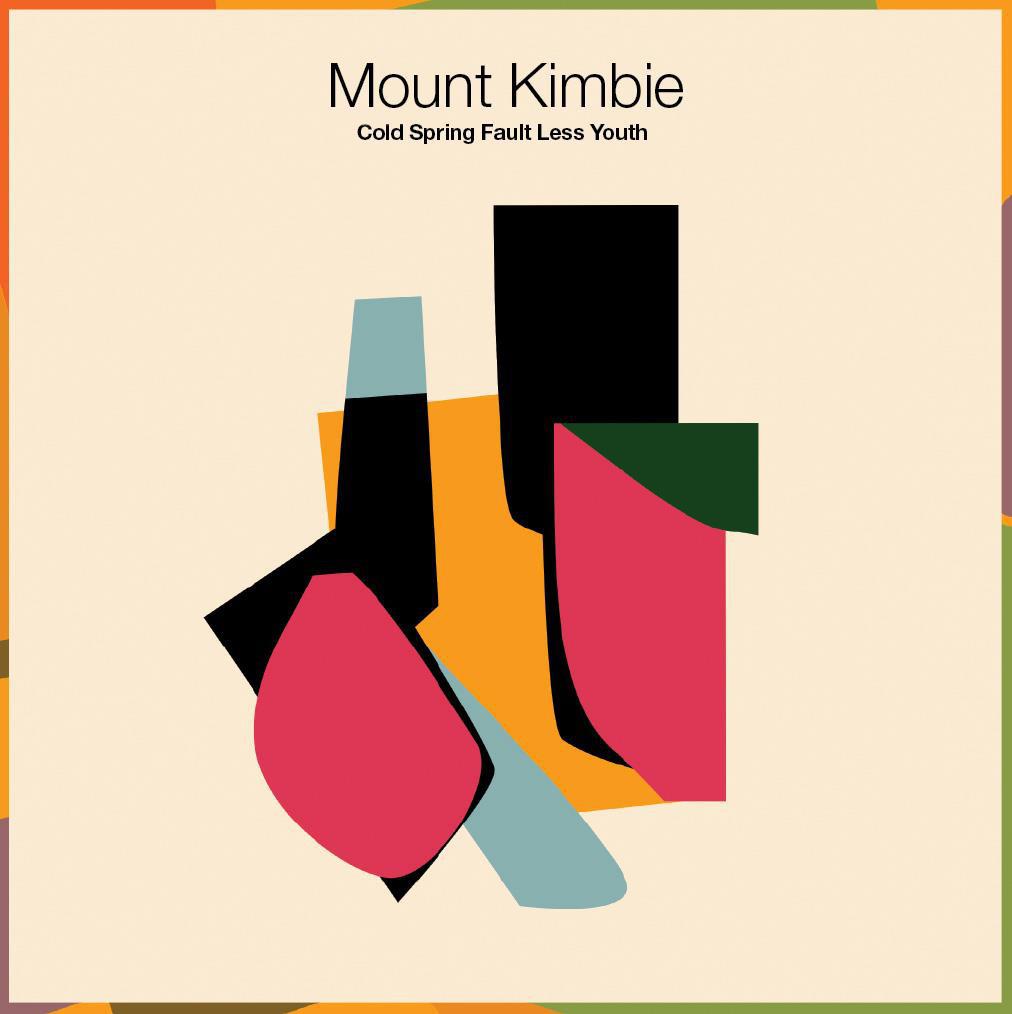
When Mount Kimbie debuted with their “Maybes” EP in 2009, they were the rare electronic duo who sounded like no one else; they were even distinct enough to spark the new term “post-dubstep” – and whether you like it or not, that term is still being used today. As ridiculous as that term may be, at the time it was especially fitting, as Mount Kimbie were making music that was aesthetically familiar to a large amount of “step” based music coming out of the UK at the time, yet undeniably ahead of most in terms of artistry. Being ahead of the curve has a lot to do with Mount Kimbie in a lot of respects, and in a way, I shouldn’t be reviewing this album until I have spent much more time with it. Looking back, I can remember being at first disappointed with Mount Kimbie’s seemingly modest first full length, “Crooks and Lovers” after being so blown away by their first two EP’s – only to realize how brilliant is was after revisiting it months later.

Cold Spring Fault Less Youth is the band’s second full length, and first for Warp Records. It sees the band undergoing a somewhat drastic change in approach, as it heavily incorporates live instrumentation and vocals on nearly every track. While many of the songs are still led by the duo’s brilliantly warm chord sequences and dramatic percussion, all in all this music stands apart from their previous material and offers a different feeling. This expanded sonic approach calls to mind another London group -one who also put out their debut album for Warp just earlier this year. Of course, I am speaking of the garage/dubstep duo turned experimental pop act Darkstar. The similarities between the two don’t stop there, and although this music isn’t quite as pop as “News From Nowhere”, it certainly travels similar terrain.

The one main difference is that on Cold Spring, the vocals are far less produced and even distanced from the listener, such as on the quite beautiful opener, “Home Recording”. Mount Kimbie’s own Kai Kampos sings on the majority of the tracks, and although his vocal melodies are nice enough, he really isn’t a naturally gifted singer, and it would have been interesting to see more production being used to enhance its effect. The exception are the two tracks that feature teenage rapper on the rise “King Krule”, which are both excellent representations of his unique voice, which is a deep gruel that goes back and forth from being deliciously sloppy to impressively controlled throughout the course of a track. If you can appreciate his vocal style, “You Took Your Time” and “Meter Pale Tone” offer some of the best moments on the album.

Now, on to the rest of the album. While Mount Kimbie has always specialized in short tracks — a trick they have used to leave the listener wanting more — the problem here is that far too many songs float on by without leaving much of an impression at all. It’s sure not from a lack of trying though, as the tracks here are excellently produced, and it couldn’t have been easy to make. The live instrumentation in particular sounds great, like the jazzy bass lines on the downtempo lounge excursion “So Many Times, So Many Ways”, and the fiery bongos on”Meter Pale Tone”. In the end, the album’s flaw might be that while it offers a varied amount of soundscapes, it never fully indulges in dance fare. Even on the centerpiece “Made To Stray”, which is at least twice as fast as anything else on the album, it’s still only 1/2 of a club banger. Also, despite the duo’s reluctance against long tracks, the 3:42 “Break Well” really should have gone on for a bit longer, as it branches into a quirky, steadfast groove before ending abruptly.

Then again, maybe I just haven’t been in the right mindset to fully appreciate this music. The 11 tracks here, while not catering to any of our obvious pleasures, are almost always interesting. The stage Mount Kimbie are in right now will likely go down as their “difficult” period. It’s even tempting to call Cold Spring a transitional stage for the duo, but in the end, this music is as fully formed as anything else the have put out, the difference is that it may not be as enjoyable.


Track Listing:

1.) Home Recording*

2.) You Took Your Time*

3.) Break Well

4.) Blood and Form

5.) Made To Stray*

6.) So Many Times, So Many Ways

7.) Lie Near

8.) Meter, Pale, Tone*

9.) Slow*

10.) Sullen Ground

11.) Fall Out


Album Highlight – *

Filed Under: ENTERTAINMENT, MUSIC, OPINION, REVIEWS Tagged With: Album Review, cold spring fault less youth, mount kimbie, music

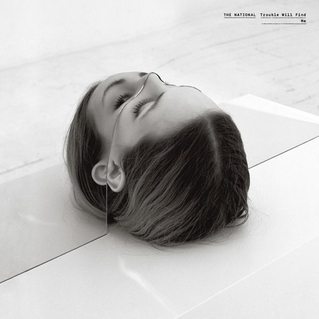
Album Review: The National – Trouble Will Find Me

by Rio Toro

homepage_large_91787d75

The National: Trouble Will Find Me

Similar Artists: Spoon, The Walkmen, Arcade Fire

Genre: Indie Rock

Label: 4AD


Brooklyn’s The National perfected their style, a brooding and quietly anthemic brand of indie rock, quite early on in their career (or around the time of their 3rd full length Alligator). But if so, why is it that every time they release a new album it is deemed their most definitive? It’s true that the National haven’t done anything radically new or different with their sound in some time, but with their stability of sound they have proved they are the rare band, along with Baltimore’s Beach House, that don’t need to reinvent themselves.

So although any words you might use to describe this music could also be used to describe any of their previous albums, on Trouble Will Find Me, The National manage to tweak their songwriting approach and production methods to keep things interesting. Throughout the 13 songs, we hear the band honing their nearly unrivaled professionalism in some (slightly) unexpected ways. Several of the songs, one such being early single “Sea of Love”, contain tricky time signatures while still containing the anthemic pulse that carries their best material. While this band has always employed a subdued sense of atmospherics, on “I Need My Girl”, they bring it to the forefront to make one of their most memorable and dreamy ballads.

As they’ve always been known for, the five piece implements some incredibly sleek subtlety to these songs that takes a few listens to rightfully sink in. “Humiliation”, which might be the highlight of the entire album, has a gorgeous arpeggiator buried in the mix, and on tracks like “Fireproof” the bass seems conspicuously absent, but then comes in like a dropping bomb after you begin to familiarize yourself with the song structure. These moments, which obviously take a whole lot of talent to pull off, are plentiful, and they never fail to impress — which is saying a lot for a band working firmly within a pop/rock framework.

The whole album is led by what is likely Matt Berninger’s best vocal performance to date. He is almost always in the front of the mix, so his provocative and often hilariously deadpan lyrics can be heard loud and clear. On “Pink Rabbits” he uses the phrase / I was a white girl in a crowd of white girls in the park/ , and / I was a television version of a person with a broken heart/ to display how he felt ordinary and unnoticed.  Best of all, on the rousing “Graceless”, he sings /God loves everybody, don’t remind me/ in a tone that is almost too cooly nonchalant to be true. While there are certainly comical moments, these songs contain the same sense of dreadful remorse that the band is known for, which is a good thing, because they certainly haven’t run out of entertaining ways of expressing it.

When everything is working together in unison, from the pounding drums, to the minimal but essential orchestration, to the piano and guitar melodies that give Sigur Ros a run for their money, this band is an unstoppable force. Ok, so maybe the album isn’t always as great as I am making it out to be – although it often is. The occasional low point occurs when the song is too vocal based (ex: “Skeletons”), or vice versa, too melody based. However, as a band – a complete entity where each member’s contribution is nothing short of essential, there are not many who can claim to be as exceptional as this one.


Track Listing:

1.) I Should Live In Salt

2.) Demons

3.) Don’t Swallow The Cap*

4.) Fireproof

5.) Sea of Love*

6.) Heavenfaced

7.) This Is The Last Time

8.) Graceless*

9.) Slipped

10.) I Need My Girl*

11.) Humiliation*

12.) Pink Rabbits

13.) Hard to Find

* – Album Hightlight

Filed Under: BREAKING NEWS, ENTERTAINMENT, MUSIC, OPINION, REVIEWS Tagged With: Album Review, music, the national, trouble will find me

Album Review: Dirty Beaches – Drifters/Love is the Devil

by Rio Toro

Dirty-Beaches-Drifters-Love-Is-The-Devil

Dirty Beaches: Drifters/Love Is The Devil

Similar Artists: Suicide

Genre: Loner Music, Experimental

Label: Zoo Music


Some may disagree, but personally, I’ve always felt the main reason double-albums are often so prone to failure because the artist attempts an exploration of genres outside their forte, and in doing so creates a listening experience that is ambitious, but overall uneven and not representative of his/her talents. Plus, especially in these backward looking times, cohesiveness has been something to strive for in music. While it’s certainly impressive to make songs that run upwards of 20 minutes, or an album that requires 2.5 hours worth of subway trips to finish, in the end are those really the albums you are going to play again and again throughout the year?

Alex Zhang Hungtai, mastermind behind “Dirty Beaches”, has avoided many of the pitfalls associated with double albums by making one in which each disk appropriately complements the other. Both are entirely distinct from one another and even have their own titles. The first one, titled Drifters, is an outward looking record heavy on freak-outs and detailed drum programming, while Love is the Devil is a more personal, ambient heavy affair. If you are familiar with Dirty Beaches’ first proper full length, Badlands, which was released in 2011, you will likely be very surprised with how radical a departure much of this music is. While Badlands was a grimy, 70’s inspired lo-fi record heavily influenced by Suicide, here the influences are much harder to pinpoint. While I seriously doubt these were primary influences, without the saxophone that is heard throughout “Landscapes in the Mist”, it could easily pass off for a Wolfgang Voigt track, and similarly, “Berlin” has an ethereal piano backdrop that wouldn’t be out of place on an Eluvium record.

Thankfully, despite his broadened horizons, Hungtai hasn’t abandoned what made his first album such a standout. This guy is a loner if there ever was one, and his lack of a proper home (a statement he has made in several interviews) is felt throughout the entirety of the album. Many people are saying that the first disk here is much more accessible, but let me make this clear; in the traditional sense, absolutely none of this music is accessible. Only on Elli do we arrive at what could be considered a “song” with a naturally flowing chord structure. Furthermore, it took me until the end of my first listen to realize I had yet to understand, or ever properly hear, any of Hungtai’s lyrics. While part of this is because he occasionally sings in a different language, such as French on “Aurevoir Mon Visage”, mostly, it is because he sings/screams in a deadened drawl that is so drenched in reverb it is almost 100% indecipherable. Everything here, including the edgy guitars and pulsing synths, is heavily corroded and bursting at the seems with dense, mind-altering pressure. However, instead of being too harsh, these factors actually give the album a lot of personality.

The two disks here represent two sides to a very experimental coin, and each style is sought out with the utmost precision. Which disk you prefer is ultimately based on your musical tastes, as I have to deem them equal in quality. With that said, the majority of people are going to find Drifters more appealing than its ambient based counterpart. As most of Hungtai’s work has been released on cassette-only labels, what he has given us here feels like a very generous offering. While 75 minutes is a big chunk of music and time, I find this album to be relatively easy to listen to, because hidden under the brutal textures and noise there is something here that remains interesting, unique and undeniably beautiful.


Track Listing:


Drifters

1.) Night Walk

2.) I Dream in Neon*

3.) Belgrade

4.) Casino Lisboa*

5.) ELLI

6.) Aurevoir Mon Visage

7.) Mirage Hall*

8.) Landscapes In The Mist*


Love is the Devil

1.) Greyhound at Night

2.) This is Not My City*

3.) Woman

4.) Love is the Devil

5.) Alone at the Danube River*

6.) I Don’t Know How To Find My Way Back To You

7.) Like the Ocean We Part

8.) Berlin*


Album Highlight*

Filed Under: ENTERTAINMENT, MUSIC, OPINION, REVIEWS Tagged With: album, Dirty Beaches, Drifters, Love is the Devil, review

  • « Go to Previous Page
  • Page 1
  • Interim pages omitted …
  • Page 31
  • Page 32
  • Page 33
  • Page 34
  • Page 35
  • Interim pages omitted …
  • Page 41
  • Go to Next Page »

Primary Sidebar

Navigation

  • HOME
  • OPINION
    • REVIEWS
  • BUSINESS
  • LGBT
  • ENTERTAINMENT
    • ARTS
    • MOVIES
    • MUSIC
    • TELEVISION
    • THEATRE
  • LIFESTYLE
    • TRAVEL
    • FASHION
    • HEALTH
    • FOODIE
    • STYLE
  • POLITICS
  • SCIENCE
  • SPORTS
  • TECHNOLOGY
  • U.S.
    • NEW YORK

Footer

  • ADVERTISE
  • TERMS OF SERVICE
  • CAREERS
  • ENTERTAINMENT
  • Home
  • Contact
  • Legal

Copyright © 2026 · ManhattanDigest.com is run by Fun & Joy, LLC an Ohio company · Log in

Loading Comments...